Standing beside Donald Trump, after tech executives signed the White House Accord on Super Intelligence, Elon Musk told reporters that an “age of abundance” is by far the most likely outcome of advanced AI and robots. He said the world would get not just basic income but “universal high income,” with medical care for everyone better than anything available at that table, his own included. He conceded that jobs will change and added that he would not press a stop button even if one existed.
Few economists doubt AI can sharply raise output. The fight is over who gets the claim on it. IMF analysis puts about 40% of global jobs, and about 60% in advanced economies, in AI’s path. Goldman Sachs has 300 million full-time jobs affected, and the WEF projects 92 million displaced against 170 million created by 2030. Optimists cite a net gain of 78 million. The WEF figure reflects a 22% churn of today’s jobs, and the winners and losers are not the same people.
Exposure is not yet destruction. Only around 13% of US job-cut plans in early 2026 cited AI, so for now tasks are being replaced faster than whole roles. But the damage is uneven. Entry-level postings are down about 35% since January 2023, according to Revelio Labs. UNDP finds employment among 22-to 25-year-olds already falling in AI-touched occupations, with women’s jobs almost twice as exposed to automation. Singapore’s president, Tharman Shanmugaratnam, warned that demand for entry-level workers is shrinking, and a first job matters far more than its salary because it is where a young person learns how work happens. The ladder is being cut at the bottom rung, the one today’s twenty-somethings, already on the streets over housing, schools and jobs, are trying to stand on.
Then there is the person who builds and owns the machines. High-income countries, home to 17% of the world’s people, produce 87% of notable AI models, 86% of AI start-ups and 91% of venture funding, according to the World Bank. Internet use is 93% in those countries against 54% in lower-middle-income and 27% in low-income ones. UNDP warns that the half-century of poorer countries catching up could now reverse. Abundance gets produced where capital and compute sit and reaches everyone else only if politics routes it there.
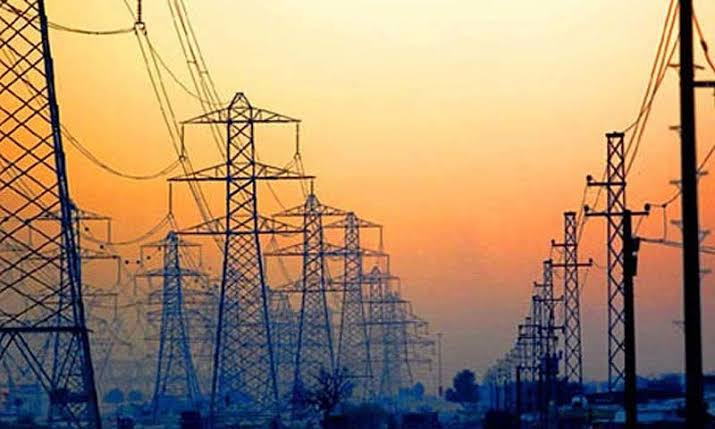
The physical constraints are real, though often overstated. The IEA expects data-center electricity use to more than double from about 415 TWh in 2024 to roughly 945 TWh by 2030, close to Japan’s total consumption today, with the US and China accounting for nearly 80% of the growth. A large AI data center draws as much power as 100,000 households. Data centres drive only about a tenth of global demand growth, less than air conditioning or electric vehicles, but on specific grids the strain is local and political, which is why Trump himself acknowledged public concern over data-centre expansion at the same event. In countries with fragile grids, the question is not abundance but whether the lights stay on for those who need them.
The deeper problem is political economy. Work is how most people claim a share of what society produces. If labour stops being needed, that claim turns from something earned into something granted, held at the discretion of whoever owns the machines and whichever government taxes them. Bill Gates’s question, what happens to the tax base when robots replace taxable wages, goes straight at this. Safety rests on the same soft foundation: the accord signed that day relies on self-policing by the firms building the systems, an agreement the White House itself described as morally binding.
That gives four plausible outcomes:
- Shared abundance: Productivity soars and tax and ownership reforms spread the gains, though some economists argue that redistribution must be built before displacement peaks, not after.
- Concentrated abundance: Output soars while ownership narrows, and most people live on transfers that can be cut.
- Transition shock: Displacement outruns retraining, the young and women absorb the first blow, and unrest follows.
- Hype fade: Progress proves slower and costlier than promised while layoffs get blamed on AI anyway.
For Pakistan, with one of the youngest populations in the world and a large pool of freelancers earning foreign income from routine digital tasks, none of these paths runs through Musk’s promise. A universal high income financed by US-based owners of the robots has no route to a Pakistani household. What the country can build is its own: connectivity, since only about half of lower-middle-income populations are online; digital skills from school; tools that work in Urdu and regional languages; and rules on data and tax so that value created here is not simply exported.
The question Musk’s promise leaves unanswered is not whether machines can produce more. It is who holds the claim about what they produce, and what happens to everyone else in the decade before that is settled.
Read more: https://digdebate.com/ai-global-economic-divide-pakistan/

Our News Desk represents a rapidly expanding frontier in contemporary journalism, focusing on the intersection of technological advancement, geopolitical narratives, and the shifting dynamics of public information.