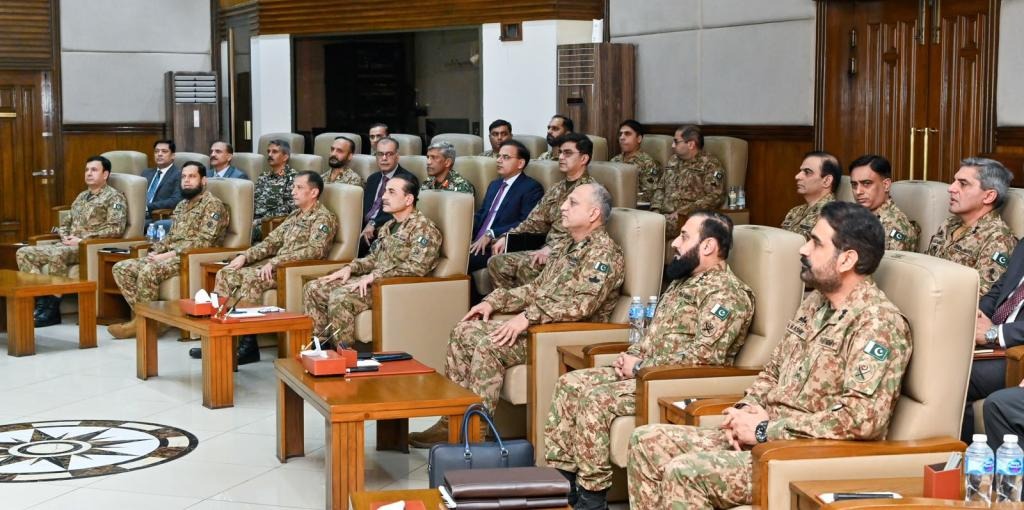
On 21 October 2026, Türkiye, Qatar, Pakistan and Indonesia signed the Badr memorandum of understanding in Doha. The signatories included the four defence ministries, along with Pakistan’s Defence Industrial Production Organization and Türkiye’s Presidency of Defense Industries.
Qatar’s Ministry of Defence says the agreement covers defence manufacturing, technical training, and research and development. It is an MoU, not a treaty, and it contains no commitment to defend one another.
What Badr is
Badr is a framework for industrial cooperation. Türkiye’s defence industry authority describes its goals as joint production, technology transfer, interoperability and integrated supply chains.
Turkish officials also say it provides for joint military exercises and training programmes, though the full text has not been published, so the details remain unconfirmed.The agreement does not start cooperation from zero. Reports say it brings existing projects under one framework.
Türkiye and Qatar signed industrial cooperation protocols in February 2025 between Turkish state firms ASFAT and MKE and Qatar’s Barzan Holding. Indonesia already buys Turkish armoured vehicles and is involved in a combat aircraft programme with Türkiye. Pakistan and Indonesia have reportedly discussed a sale of combat jets and drones. Badr gives these separate arrangements a shared structure.
Each country brings something different. Türkiye has the largest defence industry of the four, with strong output in drones, naval systems and armoured vehicles. Pakistan has decades of experience in production, training and maintenance, and has been expanding its defence exports. Qatar contributes capital and a stated wish to build its own defence capacity. Indonesia offers a large procurement budget and a strategic position in Southeast Asia.
The name Badr means full moon in Arabic. It also recalls the Battle of Badr, which many readers will notice. Officials have not publicly explained their intent behind the choice, so any reading of it is interpretation.
How it differs from the Makkah pact
Badr should not be confused with the defence arrangements Pakistan and Türkiye already have with Saudi Arabia. Pakistan signed a Strategic Mutual Defence Agreement with Riyadh in 2025, under which aggression against one is treated as aggression against both.
Türkiye has since joined Pakistan and Saudi Arabia in what reports call the Makkah pact, which carries mutual defence commitments. Badr covers different ground. It is about building and sharing industrial capacity, and it has no collective defence clause.
The distinction matters because of the loose talk of an “Islamic NATO”. Badr does not fit that description. Türkiye is a NATO member, and nothing in the reporting suggests Badr replaces its alliance commitments or Pakistan’s existing security ties.
What it could mean for Pakistan
Pakistan has the most to gain from access to partners with money and large markets. Possible benefits include joint manufacturing with Turkish and Indonesian firms, Qatari investment and financing, and wider export opportunities.
Cooperation with Türkiye could also help Pakistan in areas where Turkish industry is ahead, such as drones and modern manufacturing methods. These are possibilities, not announced projects.
Working with several partners could also reduce reliance on a small number of foreign suppliers. Pakistan has depended heavily on China for major systems, and more partners would give it more options for sourcing, repair and upgrades. This benefit depends on follow through, though.
For Pakistan to gain, three things need to happen. Its products must meet the quality standards its partners expect. Intellectual property rules must be agreed and enforced. And it needs enough skilled engineers and technicians to take part in advanced joint projects.
Why the timing matters
Conflicts in the Middle East, disruption to supply chains, sanctions and rapid changes in drones and electronic warfare have pushed many governments to want more control over how weapons are built and repaired. A country that cannot produce or maintain its own equipment is exposed when a supplier restricts exports. Badr is one response to that problem.
The limits
Defence industrial cooperation often stalls. Partners have different priorities, export controls can block transfers, funding runs short, and national industries are hard to align. Türkiye and Pakistan also compete in some export markets, which could make cooperation harder in areas where their products overlap.
Badr should be judged by what follows the ceremony. The measures that matter are signed joint production contracts, shared research programmes, trained personnel and equipment delivered.
If those appear, Badr could become a working model for defence cooperation among middle powers. If not, it will remain a statement of intent. Right now the evidence supports the second description more than the first, and the next twelve months will show which one is right

Our News Desk represents a rapidly expanding frontier in contemporary journalism, focusing on the intersection of technological advancement, geopolitical narratives, and the shifting dynamics of public information.