India often has this image of the emerging global giant, a technological power, the voice of the Global South, and a confident leader showing the way forward in the 21st century. But underneath this smooth surface, there is a sequence of big political and social changes that are putting major stress points. With the looming 2026 delimitation and the strategic encircling fears of its neighbours, the route to Indian hegemony is further complicated by internal division and a shifting regional environment.
The North-South Divide: A Demographic Time Bomb
The looming tension between the Northern and Southern states in India is the most immediate internal threat. This has always been a cultural and linguistic difference, but it is now a high-stakes battle over who is able to control the political power and the distribution of resources. Central to this conflict is the impending delimitation of 2026, the process that involves the redrawing of parliamentary constituencies on a population basis.
In some of the southern states, such as Kerala and Tamil Nadu, which had managed to implement educational, health, and population control programs, have ended up facing a paradoxical penalty of getting lesser political representation. The states of the North, with more people and slower demographic transitions, on the other hand, would receive a substantial number of parliamentary seats. This leads to one of the key questions concerning the nature of the Indian Union: Is the Indian Union a union of equals, or is it becoming a demographic majoritarianism bent on serving the North?
Centralization vs. Federalism
Along with this change of demographics is a growing centralization of power. Such initiatives, like “One Nation, One Election,” are considered by critics as more than administrative changes; they are regarded as efforts to coerce the great linguistic and cultural diversity of India into one ideological form. The concern of political intellectuals is that the attempt to undermine regional identities to strengthen a central story may end up destabilizing the federal system that has traditionally held the country together.
Moreover, the emergence of the BJP and the RSS, now in its “Hindutva 2.0” phase after a 100-year history, has been marked by the achievement of old ideological ambitions, such as the building of the Ram Temple, the repeal of Article 370 in Kashmir, and the agitation towards a Uniform Civil Code. On the one hand, these actions consolidate a nationalist foundation; on the other hand, they bring discomfort when it comes to social cohesion, especially among Dalit communities and the relations of minority groups in states such as Punjab and West Bengal.
The Pakistan Perspective: Deterrence and Dialogue
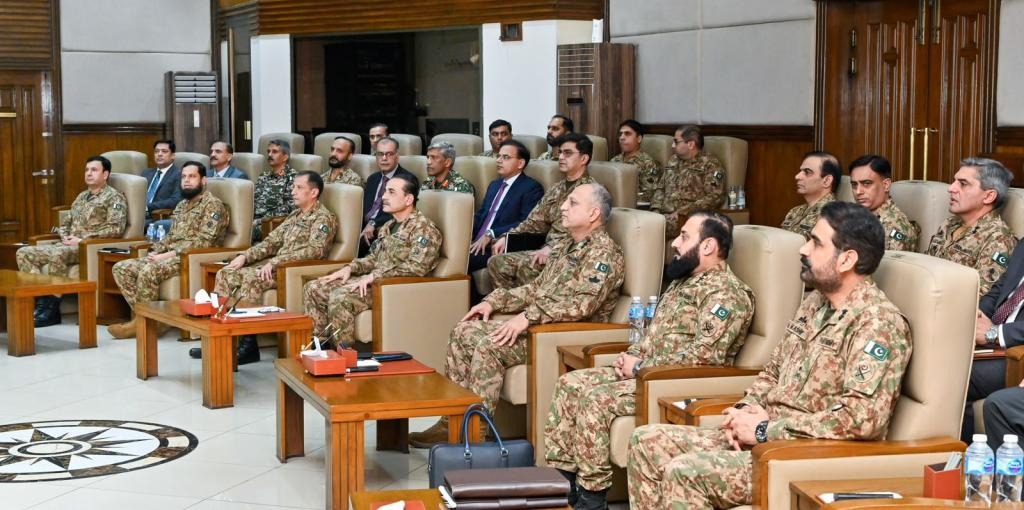
The geopolitical aspect of the rise of India cannot be separated from its relationship with Pakistan. Pakistan has implemented a 2D policy in regard to India, i.e., Deterrence and Dialogue. Although Pakistan remains open to dialogue, including on Kashmir and terrorism issues, there is a sense that the existing Indian leadership is not interested in normalization. Rhetorical threats of redefining the borders of Pakistan by Indian officials have been firmly responded to by Islamabad. The changing military policy led by Field Marshal Asim Munir underlines that, although Pakistan is progressive and willing to negotiate, it has the deterrence to ensure that any drama of a surgical attack will not turn into a permanent territorial change.
The “Net Security Provider” Myth?
India is frequently viewed internationally as a net security provider in the Indian Ocean. Nevertheless, a critical examination indicates that India is not yet fully entitled to this title. An effective net security provider should be capable of addressing the conflicts in the region on its own, guard sea lines of communications without outside assistance, and sustain a self-sustaining arms supply system.
At present, India is heavily reliant on imported technology, be it Russian S-400 or American General Electric jet engines. Moreover, its intervention in international conflicts, including those in Ukraine or Palestine, has been described as strategic non-intervention or passivity, instead of being proactive. The label of the regional power is rather an economic definition than a strategic fact without the actual technological independence and a more assertive foreign policy.
The “China Option” and Regional Pushback
The most notable external change is perhaps the declining power of India over its immediate neighbours. Countries such as Nepal, Bangladesh, the Maldives, and Sri Lanka are increasingly adopting independent foreign policies. The Indian out movement in the Maldives and the internal backlash in Bangladesh against leaders who are seen to be pro-India are an indication of the increasing anger towards New Delhi due to its perceived interference in internal politics.
Most importantly, these smaller states now possess a new option. i.e., Beijing. China is a potentially effective strategic and economic counterpoint, particularly with the Belt and Road Initiative (BRI) and massive investments, more than 90 billion dollars in some cases. This South Asian contest implies that New Delhi is no longer the only capital where regional decisions are made.
Toward a New Regional Arrangement
As India deals with these domestic and global issues, there is a possibility of a South Asian Quad, perhaps China, India, and smaller states such as Nepal and Sri Lanka, doing some form of cooperation with each other as a way of finding stability, but this is just a hypothetical and yet needed direction.
In the case of India, the coming decade will prove whether this nation can balance its nationalist desires with the federalist institutions. For its neighbours, it will be a period of balancing between a historical hegemon and a rising global superpower. The position of India as a world leader will not be measured by the polished image it offers to the outside world but rather by its capacity to mend the broken windows at home and treat its neighbours as equals in sovereignty.
Dr Khurram Abbas is the director of the India Study Center (ISC) at the Institute of Strategic Studies, Islamabad (ISSI).