Pakistan’s debate over new provinces often begins with a map. It should begin with a citizen.
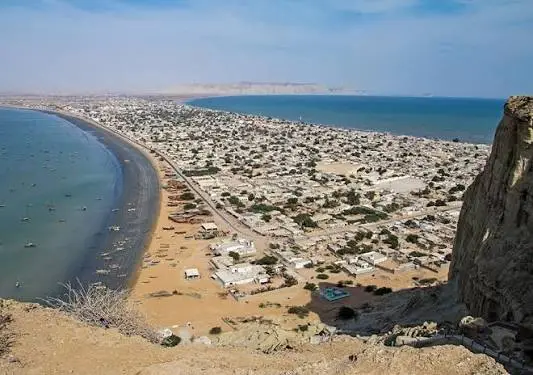
How far does a resident of Rahim Yar Khan, Chitral, Gwadar or Tharparkar have to travel institutionally, politically and sometimes physically, before the state responds? That is a more useful starting point than simply asking whether Pakistan should have 8, 12 or 20 provinces.
The numbers explain why the question has returned. According to the Pakistan Bureau of Statistics — 2023 Census, Pakistan’s population stood at 241.5 million. Punjab alone had 127.7 million residents, accounting for 52.9 percent of the national population. Sindh had 55.7 million, Khyber Pakhtunkhwa 40.9 million and Balochistan 14.9 million. Yet Balochistan covers about 347,190 square kilometres, considerably more territory than Punjab and Sindh combined.These are not merely demographic curiosities. They represent vastly different administrative challenges.
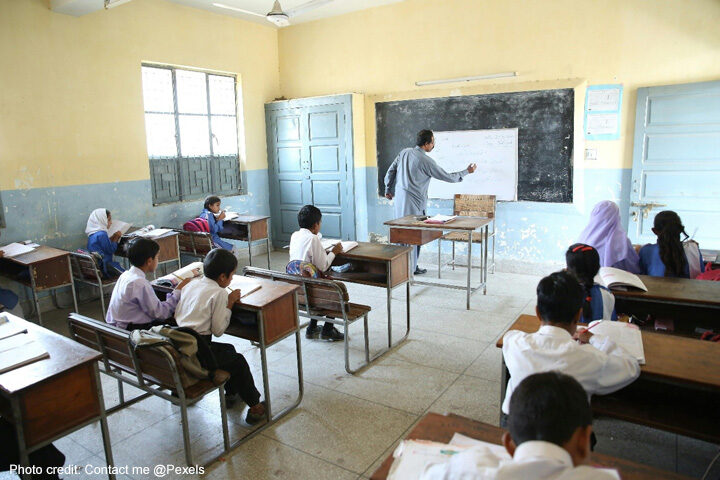
Pakistan also has a service-delivery problem that cannot be separated from its governance structure. Census data recorded roughly 25.4 million children aged 5–16 as out of school in 2023, more than one in three school-age children. More recent 2023–24 education statistics put the figure at about 25.15 million, according to the Pakistan Institute of Education publications.The instinctive response is that smaller provinces would make government more accessible. Perhaps. But creating another chief minister, assembly, secretariat and provincial capital does not automatically put a functioning school, police station or basic health unit closer to a village.
Pakistan has already conducted a major experiment in decentralisation. The 18th Amendment shifted important responsibilities, including education, health, agriculture and environment, toward the provinces. Yet the next stage of devolution has remained much weaker.
That may be the more important statistic in this entire debate. According to the World Bank’s 2026 assessment on strengthening fiscal federalism in Pakistan, local governments accounted for around 10 percent of total government expenditure in 2005; by 2024, their share had fallen below 5 percent. The same assessment found that more than 80 percent of provincial expenditure in FY2023 went to recurrent costs.Pakistan therefore risks confusing territorial decentralisation with actual decentralisation.The Constitution already provides another route. Article 140A of the Constitution requires provinces to establish local governments and devolve political, administrative and financial authority to elected local representatives. A serious reform agenda could consequently combine any debate on new provinces with empowered metropolitan, district and municipal governments.
There is also no constitutional shortcut to redrawing provincial boundaries. Article 239 of the Constitution requires a constitutional amendment to secure two-thirds support in both houses of Parliament, while any change to a province’s limits also requires approval by two-thirds of the affected provincial assembly.That safeguard matters because administrative efficiency is not the only issue involved. Provincial boundaries intersect with language, identity, representation, water, jobs, taxation, resource distribution and political power.So Pakistan should resist turning the debate into a slogan, whether “more provinces” or “no division.”The better question is measurable: which level of government should control the school, hospital, police station, road, transport system, land record and development budget closest to the citizen?
If redrawing the map helps answer that question, new provinces deserve serious examination. If power merely moves from one distant capital to another, Pakistan will have created more governments without necessarily creating better governance.

Usama Qazaffi
Usama Qazaffi is Sub Editor at Digital Debate.