
On Monday, 31 August, Pakistan, Saudi Arabia, and Türkiye sat down in Istanbul and gave a three-week-old defence pact its first real shape: a name, a headquarters, and a leader. This is the alliance’s first real move, and it matters because of what it starts, not because of what it finishes.
Here’s what actually happened. Pakistan, Saudi Arabia, and Türkiye met at Istanbul’s Çırağan Palace for the first session of something called the Strategic Political and Defence Committee, a body created under the Makkah Joint Defence Agreement that Prime Minister Shehbaz Sharif, President Erdoğan, and Crown Prince Mohammed bin Salman had signed a few weeks earlier, on 7 August.
This was the first time the three countries sat down to actually operationalise that agreement, and by the end of the day they had three concrete things to show for it: a name (the Makkah Defence Alliance), a home address (a secretariat in Riyadh), and a first leader (Pakistan, for a three-year term as Secretary-General).
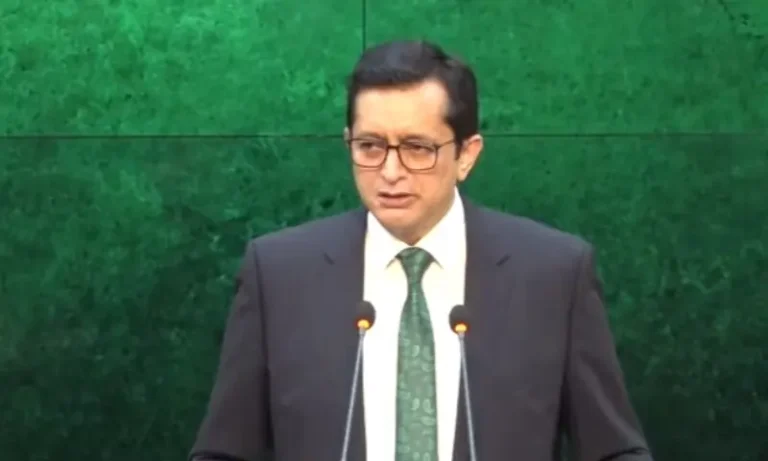
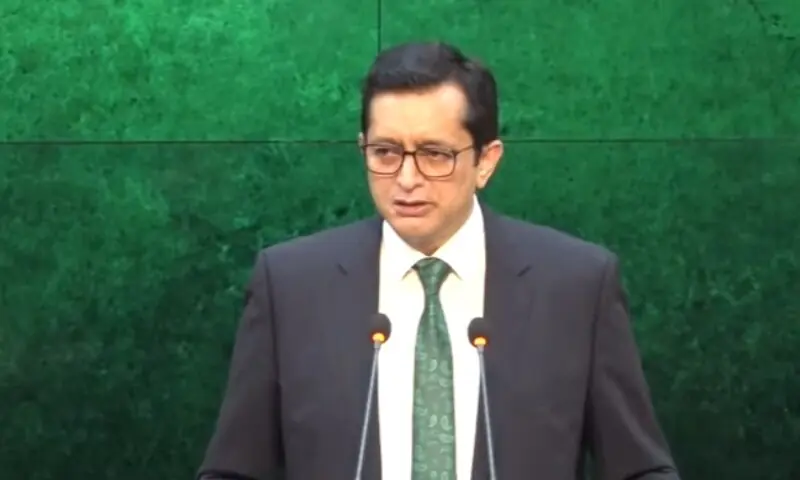
Fidan himself put it plainly at the post-meeting press conference: “there is a secretariat that has been established in Riyadh,” he said, before naming Pakistan as the source of the alliance’s first Secretary-General. It’s a short line, but it’s the moment the agreement stopped being paper and started being an address.
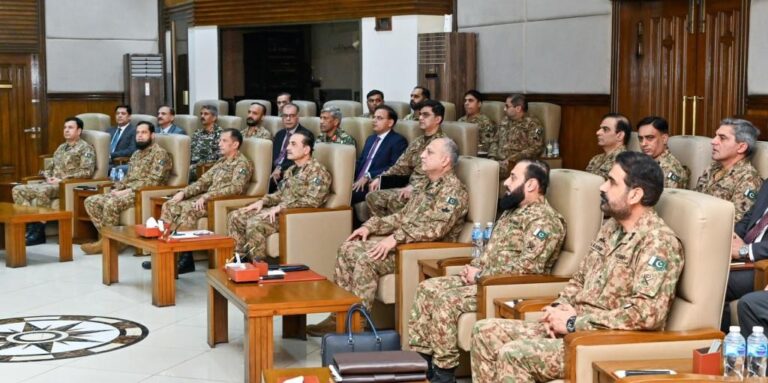
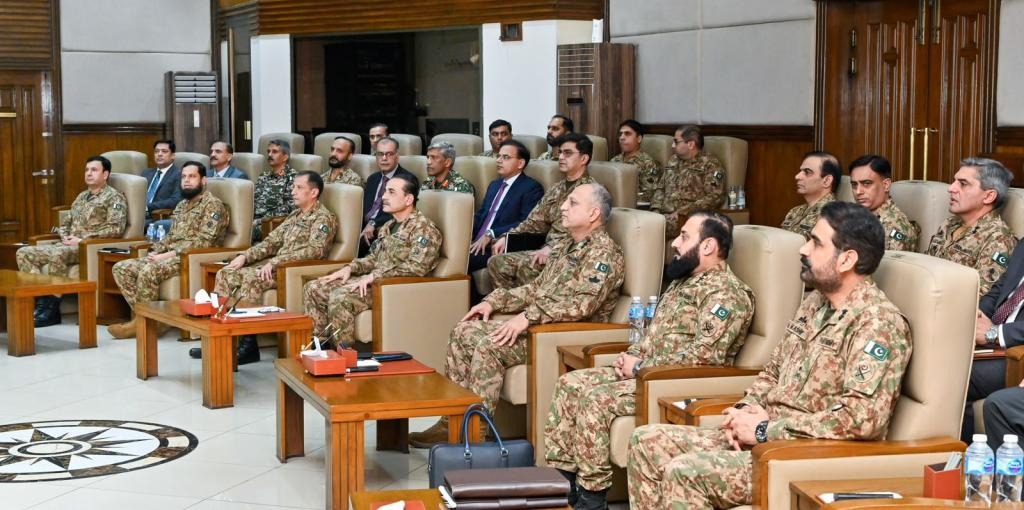
It’s worth pausing on the room itself for a second, because it tells you something about how seriously the three states are treating this. This wasn’t just foreign ministers making a symbolic gesture. Pakistan sent Deputy Prime Minister and Foreign Minister Ishaq Dar, Defence Minister Khawaja Asif, and Field Marshal Asim Munir, the Chief of Defence Forces. Türkiye sent Foreign Minister Hakan Fidan alongside Defence Minister Yaşar Güler.
Saudi Arabia sent Foreign Minister Prince Faisal bin Farhan and Defence Minister Khalid bin Salman. That’s the top diplomatic and military leadership of all three countries, in one room, on the same day. It signals that this alliance is meant to fuse policy and force planning rather than leave them running on separate tracks.
There’s also a piece of timing that the original coverage of this story tends to skip past: Istanbul’s meeting landed on the same day that US-Iran hostilities flared back up after roughly a month of relative quiet. I don’t think anyone should read too much into that coincidence, but it’s the kind of detail that shapes how an announcement like this gets received across the region, and it’s worth having in the frame.
Turning an agreement into an institution
Agreements between states are cheap to sign. Anyone who has followed regional diplomacy for more than a few years has watched a founding communiqué get issued with great fanfare and then slowly evaporate for lack of follow-through.
What actually makes an agreement durable is unglamorous: a building, a staff, a budget line, someone whose job it is to pick up the phone when something goes wrong at three in the morning. Istanbul supplied the first real pieces of that machinery: a secretariat, a name, a leader, and a committee structure meant to keep officials meeting on a regular cadence rather than only at moments of crisis.
Institutions rarely come together all at once. They get built piece by piece, and what usually separates the ones that last from the ones that fade is whether anyone keeps showing up after the cameras leave. That’s a genuine institutional step forward, and it shouldn’t be waved away.
But it’s also worth being precise about what it isn’t. Nothing in the public reporting describes a joint command structure, forces assigned to the alliance, a defence budget, or a written protocol for how the three states would coordinate a response if one of them were attacked.
The “an attack on one is an attack on all” language attached to the Makkah agreement describes an intention, not a tested mechanism. Nobody has had to find out yet whether it holds up under pressure. Calling this a Middle Eastern version of NATO’s Article 5 gets ahead of what’s actually been confirmed.
Why Pakistan first
For Islamabad, the most immediately consequential detail here isn’t the name or the secretariat’s location. It’s the fact that Pakistan holds the first Secretary-General’s chair. Whoever occupies that post for the next three years gets to shape the secretariat’s internal procedures, set the early meeting agendas, and largely define how the alliance presents itself to any outside country weighing whether to join. That gives Pakistan a real head start in an institution that’s still being built from scratch.
It cuts both ways, though. Pakistan will be judged on whether the secretariat manages to turn Istanbul’s commitments into working routines: regular meetings, actual joint activity, some early sign of substance. If the alliance stumbles in its first few years, it will be much harder for outside observers to separate that from Pakistan’s stewardship than from the ordinary teething problems any new institution goes through.
Saudi Arabia’s calculus looks a little different. By hosting the secretariat while Pakistan holds the top job, Riyadh keeps the institution’s physical and administrative center of gravity inside the kingdom even while sharing the political spotlight.
That’s a fairly comfortable division of labour. It also lines up neatly with Saudi Arabia’s broader push toward defence-industrial self-sufficiency: less dependence on any single outside arms supplier, more emphasis on joint technology development and local production, both of which are explicitly part of the Makkah agreement’s stated work programme.
Türkiye brings something the other two don’t have at the same scale: a mature, export-oriented defence industry with real operational experience in drones and electronic warfare. And Ankara has been careful, publicly and repeatedly, to frame the Makkah alliance as additive rather than as a substitute for its NATO membership. That’s an important qualifier, since Türkiye is the one country in this trio with a pre-existing collective-defence commitment to a much larger bloc.
Opportunities and open questions
Fidan has said the alliance is designed to grow, and that a roadmap for admitting future members is already being worked on. If that’s true, it suggests the three founders see themselves less as a closed trilateral club and more as the nucleus of something bigger. If that plays out, it’s a real opportunity for Pakistan to extend its diplomatic footprint across the wider Muslim world, using the credibility of having been the alliance’s first Secretary-General.
But the list of things that haven’t been settled yet is long. There’s no public accession criteria for prospective new members. No confirmed budget or staffing plan. No named individual actually running the Riyadh office day to day. Joint exercises, intelligence-sharing arrangements, and specific industrial co-production projects have all been mentioned in principle, but none of them have been scheduled. None of this is unusual for an institution this young. Every alliance goes through this phase. But each open question is also a place where good intentions can quietly stall out if nobody keeps pushing.
A framework, not yet an alliance
The most accurate way to describe where things stand right now is this: a trilateral collective-security framework that has just begun institutionalising itself, not yet a fully operational military alliance. Istanbul supplied the structure: a name, a location, a leader, a stated agenda, and now a recurring committee to keep the three sides talking.
What it didn’t supply is the harder proof that this alliance actually works, which only comes from the unglamorous stuff: staff-level planning meetings, standardised procedures, and eventually a track record of coordinated response when something real happens.
Pakistan’s three years at the helm will be the period in which the rest of the world finds out whether the Makkah Defence Alliance turns into a genuine coordinating body between three states with real complementary strengths: Pakistani manpower and nuclear-armed deterrence, Saudi capital, Turkish defence-industrial capacity.
Or whether it settles into the pattern so many regional pacts have followed before it, where the founding photograph gets remembered far more clearly than anything the institution ever actually did.
Alliances are judged less by the speeches that launch them than by what they’re still doing on an ordinary Tuesday, three years in, when nobody’s watching. The secretariat’s first term will answer that question well before anyone starts talking about who succeeds Pakistan in the chair.