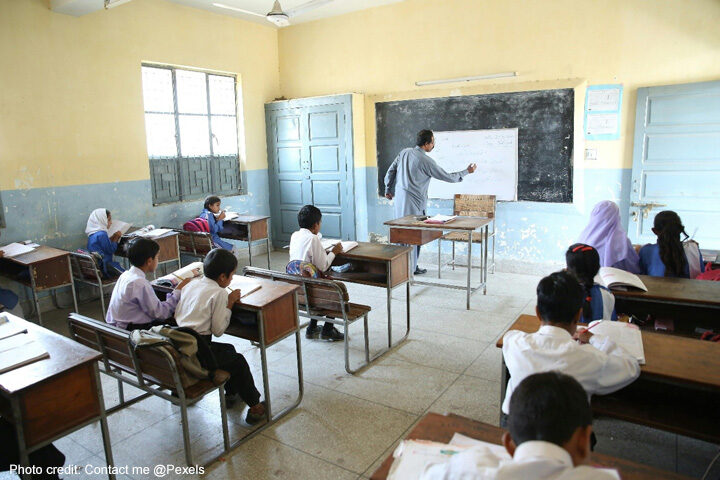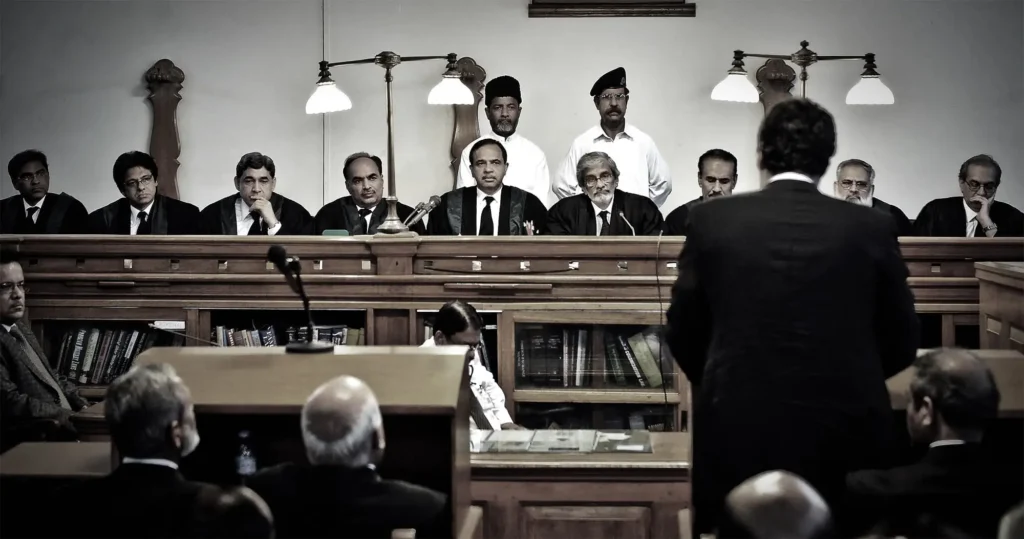
Pakistan’s institutions face significant structural pressures, and understanding the scale of these challenges is important for informed discussion of potential reforms. Twenty-six million cases are currently pending in Pakistan’s courts, in a country of roughly 250 million people. It is estimated that a high percentage of these cases may be disputes which could reasonably be settled via alternative methods rather than litigation.
Problems in the judiciary, the slow pace of court proceedings, and the fact that many conflicts, once resolved in local or informal ways, now go to the formal court system are cited as some of the reasons. Historically, land title conflicts, family issues, inheritance issues, and community conflicts were resolved via Jirgals, Panchayats, and Bodies at the Union level. The mechanisms gradually lost formal status and increasingly lost that caseload to a court system that was designed for a different level of volume and nature of disputes.
A reform that is often mentioned by both legal professionals and policy makers is the expansion of local dispute resolution bodies in family law, inheritance and land possession cases, with potential to effectively ease the caseload. The implementation of such reforms is fraught with legal, administrative, and political challenges, and stakeholders have different perspectives on the balance between formal judicial supervision and local dispute resolution processes.
A substantial share of Pakistan’s court cases involves land disputes. This is usually due to the lack of proper land registration in the country, which means that there is a challenge of overlapping or unclear documentation to establish clear title. Land records modernization is a topic that has been on the policy agenda for a long time. Pakistan has satellite mapping technology that can be used for an expanded land registry, and several officials and reformists have suggested development based on that technology.
Progress on comprehensive land record digitization has been gradual, which observers attribute to a mix of factors: the scale and cost of such an undertaking, coordination challenges across provincial revenue departments, competing budget priorities, and, according to some analysts, resistance from stakeholders who may benefit from the current ambiguity. Reasonable people differ on how much weight to give each of these explanations.
Perspectives on Provincial Reorganization
Public opinion on creating new provinces is mixed, with some polling suggesting notable support for the idea, though such polls (including informal social media surveys) don’t necessarily reflect a stable or representative consensus, nor do they indicate agreement on implementation details. The provincial boundary issue is a sensitive one in Pakistan’s history. The partition of Bengal in 1906 is frequently mentioned as an instance of the use of boundary changes to reshape political demography. The partition of Punjab and Bengal in 1947 was a period of great turmoil. This “One Unit” policy of 1955, which abolished the provinces and replaced them with a single administrative unit, had been opposed by many and was reversed by 1970; the present boundaries of Balochistan, which cover approximately 43 percent of the country’s area, have been a matter of political debate about representation and distribution of resources.
The proposal worth taking seriously is not the creation of new provinces with new identities but the subdivision of existing ones under their parent names. Punjab becomes Northern Punjab, Central Punjab, and South Punjab. Sindh becomes Northern Sindh, Central Sindh, and South Western Sindh. The identity stays intact. The administrative unit changes. This is not a radical idea; it is what functional federations do when populations grow, and governance distances become unmanageable.
But there is a prerequisite for this conversation to have any meaning, i.e., the Senate elections must become direct. If new provinces are created and Senate representation expands, indirect Senate elections will simply replicate the existing patronage and money dynamics at a larger scale. A senator who owes his seat to a party leader’s goodwill is not a senator accountable to a province. Direct Senate elections, with defined constituencies and popular mandates, would create the accountability architecture that provincial subdivision requires to be meaningful.
The issue of local government empowerment is a recurring theme in the debate on dysfunctional Pakistani politics. The issue of local governments and devolution has been discussed by various governments with different aspects by different observers. Delays and adjustments to local government timelines and powers have occurred under multiple governing parties over the years, and explanations offered range from administrative and legal complications to differing views among provincial leadership about the appropriate pace and scope of devolution.
This is a pattern that isn’t unique to Pakistan. The tension between central and local government is faced by many federal systems, as devolution entails a re-distribution of decision-making power, and the costs and benefits of devolution are subject to reasonable differences in assessments by various political actors that depend upon assessments of administrative capacity, accountability structures, and governance outcomes.
Political Party Structures
Historically, Pakistan’s big political parties have been strong bastions of family or individual leadership continuity, which has its supporters and detractors. These can be contrasted with earlier movements like the All-India Muslim League or the Indian National Congress, which held more formalized internal deliberative processes, though comparing organizations across very different historical eras and contexts has its limits.
The phenomenon of family leadership in political parties is not peculiar to Pakistan and can be seen in many democracies in other countries. Advocates of the existing party system in Pakistan may cite stability and continuity as benefits it can provide in times of political turbulence; critics have noted that it can restrict institutional memory and intraparty mobility. There is validity in both views and they are representative of the general conflict in political science regarding the balance of centralism versus decentralization within the party.
Areas of Potential Reform
A number of ideas are commonly discussed when considering how to improve governance delivery. Improved transparency and accountability, via real-time public dashboards of service metrics, e.g., hospital staffing, medicine availability, or progress of public works projects, have been proposed and in some cases piloted. Some of these have persisted and expanded, while others have been abandoned, for various reasons, including problems with funding, technical maintenance, and administrative priorities.
Another option that is often talked about is the financial devolution to the district government level, as district government structures already exist in most of the country. This has been proposed as a means to enhance responsiveness to local demands without the need for constitutional amendments, but others have commented that devolution should be carefully managed in terms of accountability mechanisms, capacity development, and coordination between levels of government.
The governance issues facing Pakistan are well documented and widely discussed in the media, academia, and policy sectors of the country. The country is faced with a real challenge to make the right balance between central coordination and local responsiveness, between judicial capacity and judicial modernization, between political stability and institutional reform. Reasonable observers, including those within Pakistan’s government, civil society, and international policy community, differ on both the diagnosis of specific problems and the most effective path forward. A reform program always entails dealing with legal complexities, budgets, and the often-conflicting demands of various political and administrative players.

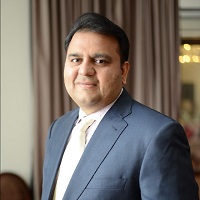
Fawad Chaudhry is a Pakistani lawyer, political strategist, and former Federal Minister for Information and Science & Technology. A former senior leader of PTI and ex-Member of the National Assembly from Jhelum (NA-67), he is recognized for his influential role in state media communications, legal advocacy, and political strategy.