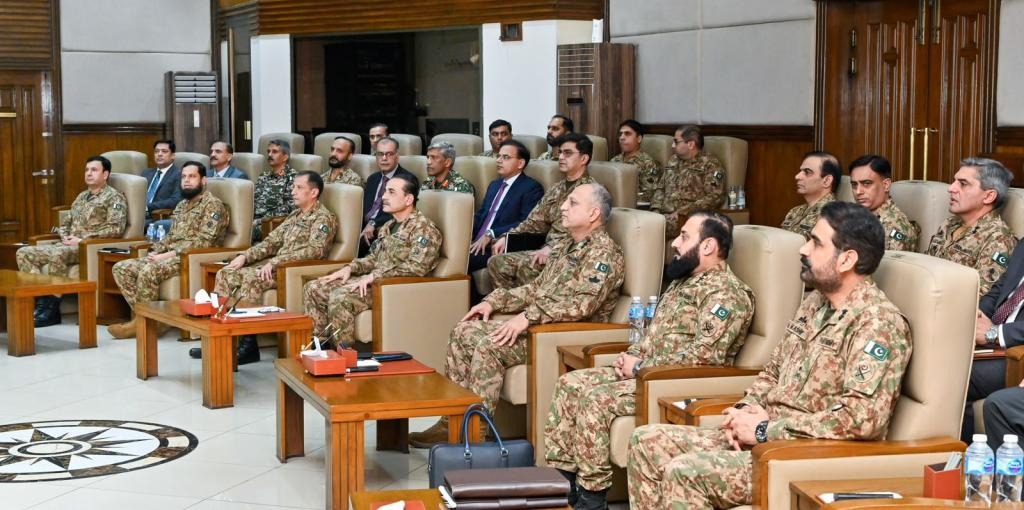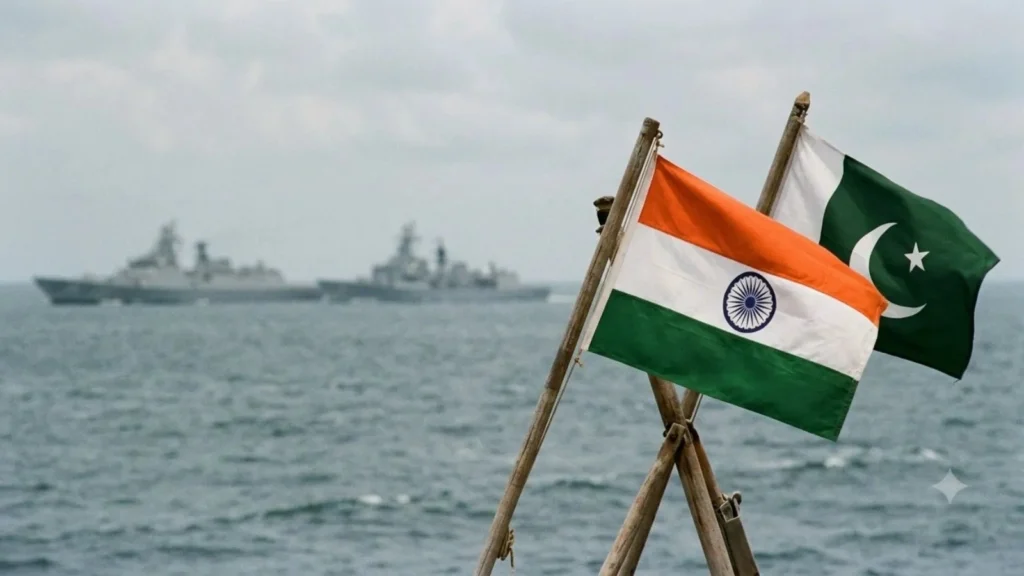
The signing of the Makkah Joint Defence Agreement by Pakistan, Türkiye and Saudi Arabia marks a significant shift in the security architecture of the Muslim world. The agreement states that an armed attack against any one of the three countries will be regarded as an attack against all three, making it a genuine mutual defence pact, not merely another framework for military exercises or arms sales.
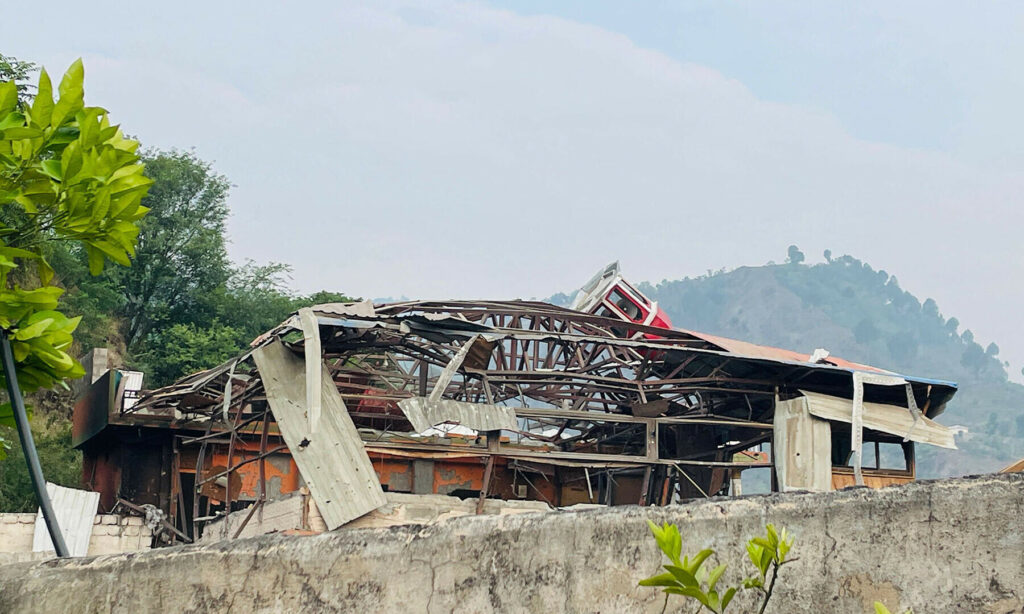
The timing is crucial. The agreement comes as the conflict involving Iran, Israel and the United States has destabilised the Gulf, threatened energy infrastructure and disrupted maritime traffic through the Strait of Hormuz and the Bab el-Mandeb. For Saudi Arabia, the issue is existential: the Kingdom’s economic power depends on the safe export of oil, while both chokepoints remain vulnerable to missiles, drones, mines and attacks on commercial shipping.
A NATO-style commitment, but not NATO
The language of the agreement resembles Article 5 of the North Atlantic Treaty, under which an armed attack against one NATO member is considered an attack against all. That comparison is useful, but it should not be overstated.
Article 5 does not automatically require every NATO member to declare war or send troops. Each ally takes “such action as it deems necessary,” which may include armed force but may also involve intelligence, air defence, logistics, naval support or other assistance. The same distinction will matter in the Pakistan-Türkiye-Saudi agreement.
The pact therefore creates a powerful political and strategic commitment, but its practical strength will depend on details that are not yet fully public: what qualifies as an armed attack, how quickly consultations must occur, whether assistance is automatic, who commands joint operations and how the three governments will respond when their interests do not perfectly align.
In short, this is a mutual defence pact with a NATO-like principle. It is not yet a NATO-style organisation with a permanent command structure, integrated forces or a common budget.
Three countries with complementary strengths
The agreement brings together three states whose capabilities are different but potentially complementary.
Saudi Arabia contributes financial power, energy resources and strategic geography. Its large oil reserves and position at the centre of Gulf energy routes give it enormous economic importance. Saudi Arabia also has the resources to finance advanced air defence, naval surveillance, drones, satellites and other technologies. Its vulnerability is equally obvious: oil facilities, ports, airports and shipping routes are attractive targets during a regional conflict.
Türkiye brings one of the region’s most capable conventional militaries. As a NATO member, it has decades of experience with alliance operations, military planning and interoperability. Its defence industry has also become a major strategic asset, particularly in unmanned aerial vehicles, precision weapons, naval systems and electronic warfare. Türkiye is developing the KAAN fifth-generation fighter, although that programme should be described as an emerging capability rather than an already operational fifth-generation fleet.
Pakistan contributes a large, experienced military, nuclear deterrence and longstanding defence ties with Saudi Arabia. Pakistan has trained Saudi personnel for decades and has extensive experience in air defence, counterterrorism, expeditionary operations and military planning. It also has a substantial Pakistani workforce in Saudi Arabia, creating an important social and economic link between the two countries.
Pakistan’s nuclear capability adds weight to the alliance’s deterrence message, but it should not be interpreted as a nuclear guarantee for Saudi Arabia or Türkiye. Pakistan’s nuclear doctrine is primarily focused on deterring India. The new agreement may strengthen Pakistan’s strategic importance, but it does not automatically extend Pakistan’s nuclear umbrella to its partners.
Pakistan as the bridge
Pakistan may be the country best positioned to hold the pact together.
Islamabad has deep historical and military ties with Saudi Arabia, while its relationship with Türkiye has expanded through defence production, naval cooperation, diplomacy and political solidarity. Pakistan is also geographically close to the Gulf and has a large community working in Saudi Arabia. Unlike Türkiye, it is not a NATO member. Unlike Saudi Arabia, it does not have the same level of economic exposure to Western markets and global energy routes.
That gives Pakistan a valuable bridging role. It can help translate Turkish defence technology into Saudi investment, connect Saudi financial capacity with Pakistani military expertise and maintain political communication between Ankara and Riyadh.
But this role also creates a difficult balancing act. Pakistan has traditionally sought friendly relations with both Saudi Arabia and Iran. It cannot afford to be dragged into a sectarian confrontation, especially one portrayed as a Sunni alliance confronting Shia Iran. Islamabad’s diplomatic challenge will be to present the pact as a defensive and stabilising arrangement, rather than an anti-Iran coalition.
Iran and the danger of sectarian interpretation
From Tehran’s perspective, the agreement may look less like a neutral security arrangement and more like the formation of a Sunni strategic bloc backed by a NATO member and a nuclear-armed state.
That perception could become dangerous even if the three signatories insist that the agreement is not directed against any country. Iran is already concerned about Israeli and American military pressure, US assets in the Middle East and the security of its own regional network. Attacks on Saudi energy facilities, ports or military sites could be justified by Tehran or Iran-aligned groups as retaliation against the United States and its partners.
The Pakistani government has condemned attacks on Saudi energy infrastructure while also maintaining channels with Iran. That dual approach will be essential. Pakistan should support Saudi Arabia’s territorial integrity without accepting a wider sectarian war as the inevitable consequence of the agreement.
The pact will be more durable if it includes a diplomatic track with Iran. A security arrangement that protects shipping, energy infrastructure and national sovereignty is easier to defend internationally than one that becomes an instrument for regime competition or religious polarisation.
Hormuz and Bab el-Mandeb
Saudi Arabia’s strategic concerns are not theoretical. The Strait of Hormuz carries roughly one-quarter of global seaborne oil trade, while the Bab el-Mandeb connects the Red Sea with the Gulf of Aden and the Indian Ocean. Any disruption can increase insurance costs, delay shipments and push up global energy prices.
The two waterways also create different operational demands. Protecting Hormuz requires surveillance, mine countermeasures, missile defence and coordination with Gulf states. Protecting Bab el-Mandeb requires naval patrols, drone defence, intelligence cooperation and the ability to monitor threats originating from Yemen and the Red Sea.
Here the three countries could divide responsibilities. Saudi Arabia could finance and host much of the infrastructure. Türkiye could provide drones, naval systems, electronic warfare and defence-industry support. Pakistan could contribute maritime personnel, training, air defence expertise and a military presence where politically acceptable.
However, the agreement should not be mistaken for an instant solution to maritime insecurity. Protecting shipping requires constant operations, shared intelligence, rules of engagement and cooperation with countries such as Oman, Egypt, the United Arab Emirates and international naval forces.
The biggest test: unequal interests
The pact’s greatest weakness is the different threat perceptions of its members.
Saudi Arabia is primarily concerned with missile attacks, drones, maritime disruption and the protection of energy infrastructure. Türkiye is focused on its borders, regional influence, Kurdish militancy, Syria, Iraq and its independent foreign policy. Pakistan’s central security concern remains India, with Afghanistan and economic stability also high on its agenda.
An attack on Saudi oil infrastructure may be an immediate crisis for Riyadh, but Ankara and Islamabad may not want to enter a direct war with Iran. Likewise, a confrontation involving India would create intense pressure on Pakistan, but Saudi Arabia and Türkiye might seek to remain politically supportive without committing forces.
This is why the wording of the pact matters. “An attack on one is an attack on all” creates deterrence, but implementation will depend on political decisions made during a crisis. If the members respond differently to the first serious test, the credibility of the entire arrangement could suffer.
What would make the alliance durable?
The agreement can stand the test of time, but only if it moves beyond symbolism.
First, the three countries need a permanent coordination mechanism, including a joint military committee, secure communications and regular ministerial consultations. Second, they should conduct exercises focused on air and missile defence, drone attacks, cyberwarfare, maritime security and protection of critical infrastructure.
Third, they need clear rules on the meaning of aggression. A missile strike, a proxy attack, sabotage by an unidentified group and a border incident should not automatically produce the same response. Ambiguity may help leaders avoid escalation, but too much ambiguity weakens deterrence.
Fourth, the alliance needs economic and industrial foundations. Joint production of drones, air-defence systems, naval platforms, ammunition and electronic-warfare equipment could give the pact practical depth. Saudi capital, Turkish technology and Pakistani manufacturing and manpower could form a powerful defence-industrial triangle.
Finally, the three governments must avoid sectarian language. The agreement should remain open to cooperation with other regional states and should repeatedly affirm that it is defensive, not directed against a specific third country.
Conclusion
The Makkah Joint Defence Agreement is important because it combines three different forms of power: Saudi financial and energy power, Turkish conventional and technological strength, and Pakistani military experience and nuclear deterrence.
Its central promise is clear: an armed attack on one member will be treated as an attack on all. That gives the pact a NATO-like political character, but not yet NATO’s institutional strength. The difference between a historic declaration and a functioning alliance will be measured by planning, funding, interoperability and the willingness of each member to accept costs for the security of the others.
Pakistan is uniquely positioned to serve as the bridge between Türkiye and Saudi Arabia, but it must also protect its relationship with Iran and avoid being pulled into a sectarian conflict. If the alliance remains defensive, builds credible joint capabilities and leaves room for diplomacy, it could become a durable pillar of regional security. If it becomes an anti-Iran bloc or a vehicle for competing national agendas, it may remain impressive on paper but fragile in practice.
The future of the pact will therefore depend less on the strength of the three countries individually than on whether they can convert political solidarity into disciplined collective security.