A crisis is the temporary breakdown of a normally operating system. Chaos means that the system itself has collapsed. Pakistan’s police force is the second thing. And until the country acknowledges that distinction, no amount of coffee shops in police stations, no fleet of new vehicles, no renamed elite unit will change a single outcome on the ground. There’s a lot that one learns in thirty years in uniform that can’t be learned from a policy paper. The first lesson is that institutions do not fail from the outside. They fail from within, quietly, over years, through accumulated compromises that each seem small at the time.
Two Universes, One Force
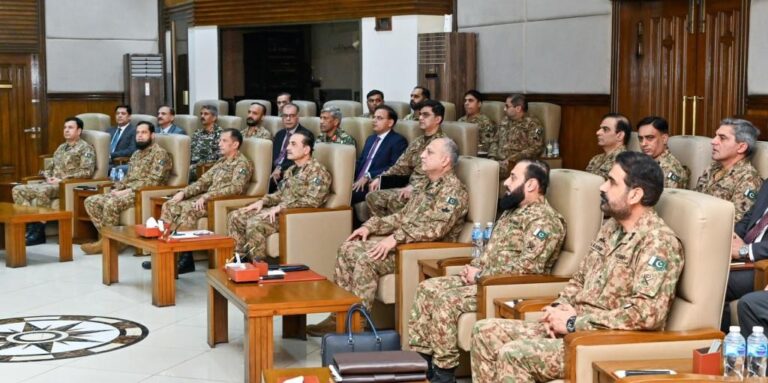
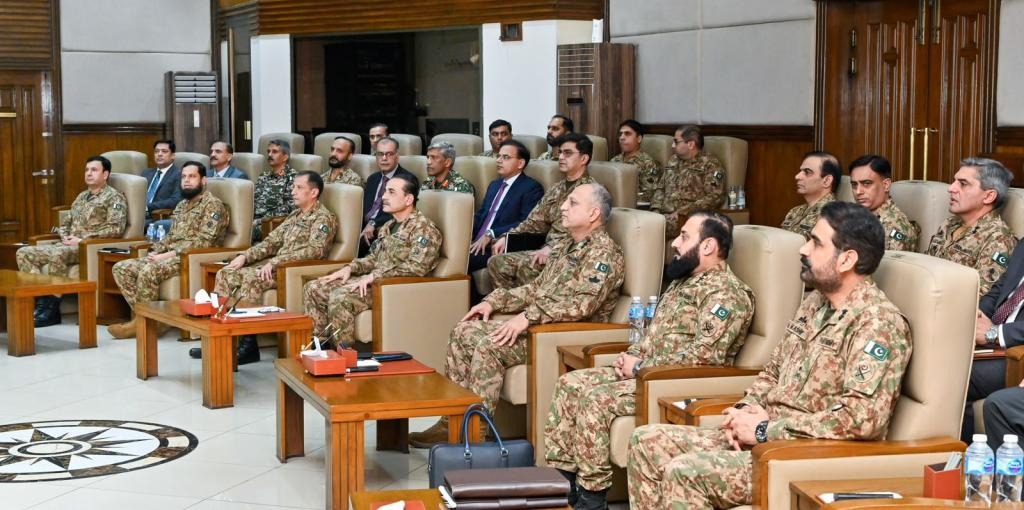
The most visible fissure that has surfaced within Pakistan’s police today is not the one between the police and the public. It is a matter of conflict between the officer cadre and the constabulary. These two groups are operating in parallel universes. Officers are in a world of briefs, directorates and political connections. Constables work in a society of 12 hour shifts at poorly maintained checkpoints with inadequate equipment and no institutional support if things go wrong.
When officers do not stand up for their subordinates, subordinates do not stand with their officers. That is not a morale problem. It is a structural one. And it has consequences that reach all the way to a checkpoint in Chakwal where a young girl was shot dead by personnel who had been trained to fire first and ask questions later.
Over the decades, resources have been improved. Their physical infrastructure is stronger than it’s ever been, with weapons, vehicles, office buildings, and police lines. One prime minister, at a police durbar, told his staff to give the IG everything on the demand list before even hearing it out. Infrastructure improved but not the culture.
The Chakwal Killing and What It Actually Reveals
The incident near Shaheen Chowk in Chakwal, where a child accompanying a family visiting from abroad was killed by CTD personnel, is not an anomaly. It is the logical endpoint of a specific set of institutional choices. Every institution rests on two pillars: recruitment and training. Pakistan’s police have compromised both. Recruitment through recommendations and payments rather than merit produces a force that owes its loyalty to the recommender, not the institution. When training officers to copy and repeat rather than develop new skills, they lose their ability to innovate and learn.
The deeper problem is militarization. In the last 20 years, Pakistan’s police learned military policing and military policing skills. Military training is binary: friend or foe, zero or one, clear and decisive. Police work is not binary. It works in shades of grey where the same person in the same shoes and the same shawl might be a civilian or a threat, and the decision has to be made right, in milliseconds; there’s no room for error.
If a militarized mentality combines with unconditional immunity, the result is reckless units with no liability. They fire first. There’s nobody responsible for it. The Sahiwal incident came before Chakwal. The lesson was not taken in. The Chakwal incident came after Sahiwal.
The 2002 Reform That Was Abandoned
Police Order 2002 is the most detailed attempt for structural reforms that Pakistan has ever produced. Its central pillar was security of tenure: the IG would be appointed by a National Public Safety Commission, not by the chief minister. DPO appointments would follow a defined criteria, not a phone call. A Public Safety Commission, comprising six official and six non-official members, selected by a board under the Chief Justice of Pakistan, would be independent of policing plans and complaints.
The architecture was sound. When elected governments came after Gen. Musharraf, they gave an ultimatum: If we are not able to change the IG and change the show, we will deal with our own police. Musharraf did not hold firm. The political accountability pillar collapsed. All that was constructed on it fell with it.
The error was not only political. The reform was drafted without sufficient inclusion of provinces, academics, civil society and the public. Laws are made for people. When the people most affected by a law do not know it exists, the law has no constituency to defend it when it comes under pressure.
The Amaan Lashkars and the Wrong Lesson
The expansion of peace militias, Amaan Lashkars, in Khyber Pakhtunkhwa and now Balochistan, is being presented as a community-based counter-terrorism solution. It is not. It’s the delegation of state functions to non-state actors, and this is something that is well-documented and has a history in Pakistan.
Fighting is the state’s job. The role of community volunteers is to assist with peace maintenance after state forces have cleared an area. Once non-state actors receive weapons, authority and operational roles in an active conflict, Nietzsche’s words are pertinent: In fighting a monster there’s a risk of becoming one. Personal scores get settled. Local power dynamics get weaponized. A sentiment against the Lashkar develops among the very population it was meant to protect. The state’s credibility in any contested area depends on its monopoly on legitimate force. Each Amaan Lashkar weakens the monopoly.
What Would Actually Change Things
The police have no shortage of resources in Pakistan. They lack a culture of accountability, a recruitment system based on merit, training that builds critical thinking rather than replicating existing behavior, and political leadership willing to accept that they cannot both demand police reform and direct police transfers.
None of this is new information. Reports from think tanks have been published. Former officers have given lectures. Media have covered the incidents. The Sahiwal family is still waiting for justice. The Chakwal family has joined them. The public is also implicated. When citizens are complainants, they want the police to be forceful. When they are accused, they discover human rights. This inconsistency gives politicians cover and gives the institution no clear mandate from the people it serves.
Nation-building takes centuries. A government that measures reform by the length of its own term will always be in too much of a hurry to build anything that lasts. The road has to start somewhere, with merit-based hiring, job security, officer independence, and eliminating immunity from law enforcement officers who kill for no good reason.

Ihsan Ghani is a retired senior civil servant, educational administrator, and foremost counter-terrorism expert in Pakistan. He is a former Director General of the Intelligence Bureau (IB), National Coordinator of NACTA, and Inspector General of KP Police. He currently serves as the CEO of the Centre for Learning Law and Business (CLLB) and remains a prominent strategic speaker on de-radicalization, asymmetric warfare, and intelligence sharing.