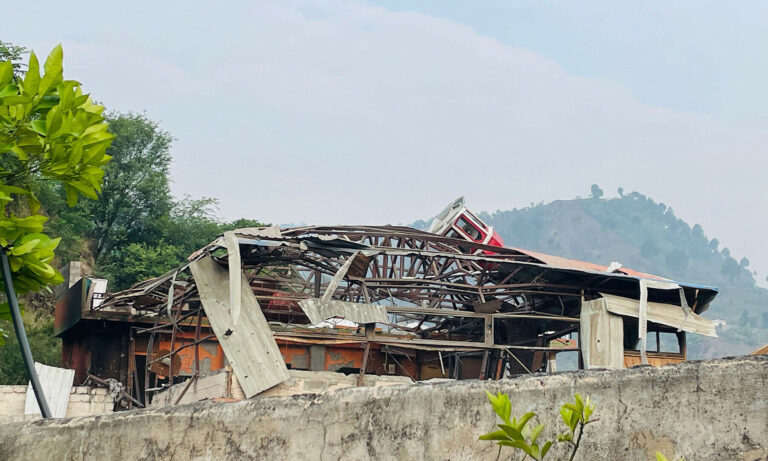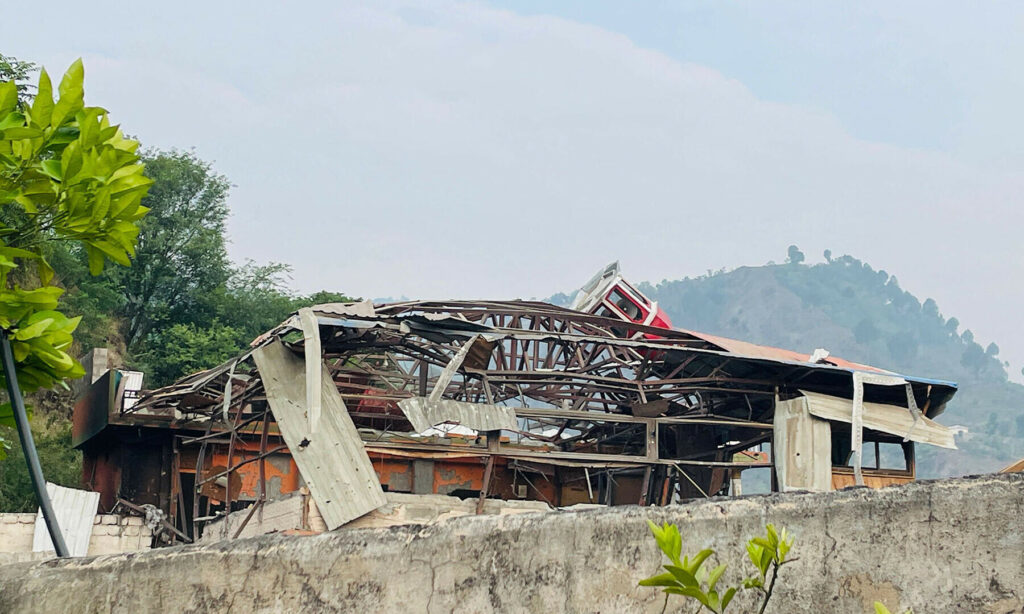
On February 28, 2026, the United States and Israel launched airstrikes on government sites in Iran. This operation, called Operation Epic Fury, resulted in the death of Iranian officials, including Supreme Leader Ali Khamenei. In 12 hours, nearly 900 strikes hit Iranian missiles, air defenses, and other military infrastructure. The United States called this operation a success. Iran responded quickly and strongly. They launched hundreds of drones and ballistic missiles at Israel, Bahrain, Jordan, Kuwait, Oman, Qatar, Saudi Arabia, the United Arab Emirates, and US bases in the region. Some of these projectiles even reached Azerbaijan, Turkey and British territory in Cyprus.
At the same time, the conflict between Hezbollah and Israel escalated into a full-blown war in Lebanon, which killed more than 2,000 people. The war saw some events. An Israeli F-35 fighter jet shot down a Russian-made plane, which is the first time an F-35 has shot down a manned fighter jet in combat. NATO got involved when NATO air defenses in Turkey intercepted a ballistic missile from Iran. A US submarine sank a warship near Sri Lanka. Iran blocked the Strait of Hormuz, which is a very important route for oil, and this caused fuel shortages in Asia and affected the global economy.
Why Did This Actually Start?
The reason for the war is not entirely clear. The Trump administration gave explanations for the war, including stopping an Iranian retaliation, destroying Iran’s missile capability, preventing a nuclear weapon from taking control of Iran’s oil and gas resources, or changing the Iranian government. When a government gives reasons for going to war, it is often a sign that none of these reasons are the real reason. The idea that the war was started because of a nuclear emergency does not hold up to scrutiny.
A report by Reuters found that the operation had been planned for months and the launch date was fixed weeks in advance. This is not the timeline of a war started because of an emergency but rather a war that was chosen while diplomacy was still ongoing. The US intelligence community’s own assessment in 2025 concluded that Iran was not building a weapon and that Supreme Leader Ali Khamenei had not restarted the weapons program that was suspended in 2003. It is important to note that having the technical capability to build a bomb quickly is not the same as having decided to build one. Iran was a proliferation risk, but it was not racing towards building an actual nuclear weapon.
Before the strikes, Iran had a stockpile of uranium, including 184 kg enriched up to 20% and 441 kg enriched up to 60%. This is beyond the limits set by the JCPOA. Iran’s foreign minister offered to dilute this material to lower enrichment levels as a concession during talks. However, one of the US negotiators, Steve Witkoff, may have misread the evidence, which pushed the US towards war. Witkoff claimed that there was “subterfuge” at Iran’s Tehran Research Reactor and that fuel was being stockpiled to push towards weapons-grade enrichment. However, arms-control analysts who reviewed the evidence reached a different conclusion.
The location of Iran’s uranium is still unknown. After the war, the IAEA assessed that Iran’s stockpile had not been moved from its declared facilities. The IAEA had no access to these facilities and could not verify the size or location of the stockpile. Iran’s foreign minister said that the enriched uranium is “under the rubble” left by the strikes, but this cannot be confirmed. Iran appears to be digging and not giving up.
Satellite imagery suggests that while the strikes on Iran’s missile bases looked devastating, assets hidden in underground complexes likely survived intact. Excavation has intensified at a facility near Natanz, which is estimated to be 80-100 meters deep. The human cost of the war inside Iran is often overlooked. The Iranian regime responded to the collapse with internal repression, killing more than 30,000 of its own citizens in a crackdown on protests in January and February 2026.
After more than five weeks of fighting, the US and Iran agreed to a ceasefire on April 7-8, which included Israel. However, the conflict did not really end; it just changed shape. The fight shifted into a standoff over access to the Strait of Hormuz. On June 14, mediators announced a memorandum of understanding to formally end the conflict within 60 days, which was signed by the US and Iranian presidents on June 17. The deal includes a $300 billion reconstruction plan for Iran with the release of billions in Iranian assets to be negotiated later. However, Lebanon nearly blew up the deal. Israel and Hezbollah agreed to a ceasefire. More than a dozen people were killed in Israeli strikes just hours later.
Talks nearly collapsed over an interview. Trump gave an interview to Fox News claiming he had told officials that they would not have a country if they did not make a deal. Iran’s chief negotiator called this remark a sign of desperation in Washington, and talks halted. However, the US and Iran agreed to set up a “confliction cell” to end military operations in Lebanon and a “line of communication” to guarantee safe passage for commercial shipping through the Strait of Hormuz.
Iran’s foreign ministry called this progress even as fighting continued on the ground. The national security team in Washington does not fully trust the deal they just signed. Some people told CBS News that important members of the national security team, who work with Trump, are not sure Iran will do what they promised. They think this because Iran has made promises before and not kept them. At the time, some people in Washington are already talking about what they will do if the deal does not work. Senator Lindsey Graham said it clearly: if the deal fails, Trump plans to take control of the Strait of Hormuz by force, charge money to every ship that passes through, and make the Abraham Accords bigger by 2026. And he warned that if Iran tries to stop the United States from controlling the strait, the United States will completely destroy them.
What This Means for The Future
The honest answer is nobody knows yet if this 60-day period will really solve the problem or just pause it for a while. There are a few things to remember as this happens. The situation with the military and the situation with diplomacy are two different things. Iran’s missiles and launchers were badly damaged, but its important nuclear equipment underground may still be okay and is being expanded. Whether everyone is telling the truth or not is the issue now. Without people from the IAEA being able to visit Iran’s sites, it is hard to know what really happened. What was destroyed and what was not.
Moreover, Lebanon continues to be a sensitive place. Fighting there had almost stopped the talks between the United States and Iran already, and Israel has said it will not leave its self-declared security zone no matter what paperwork is signed. The money is a reason for Iran to want to keep the deal. A $300 billion plan to rebuild gives Iran a good reason to keep the deal. But only if Iran’s own hardliners and Trump’s impulsive public statements do not ruin it first.

Laiba Mumtaz is a young Political Science Scholar. She takes keen interest in politics, governance, and social issues, with a special focus on global politics.