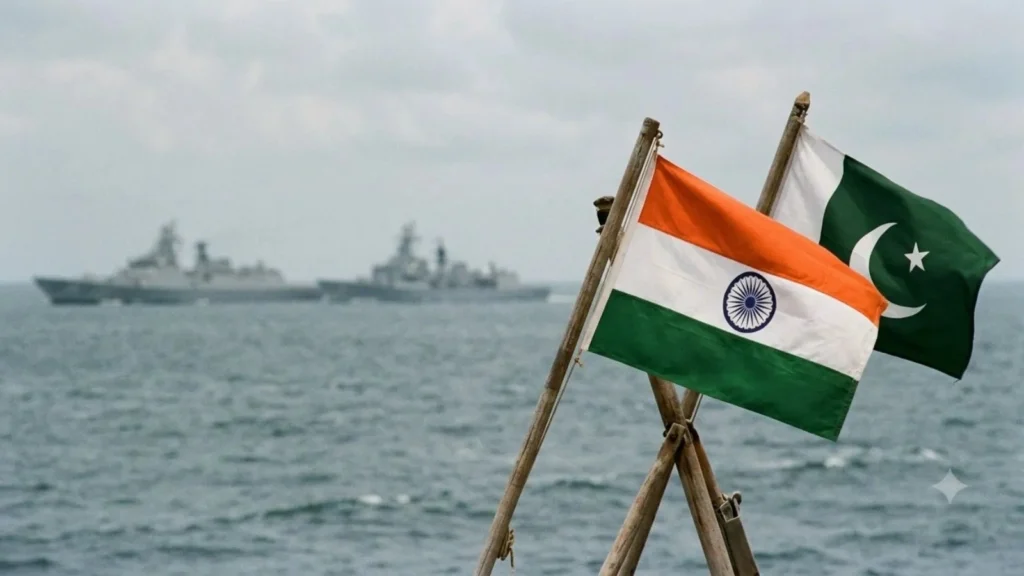
A year after Marka-e-Haq, Pakistan’s victory over India is no longer just a moment of national pride. It is a case study in modern warfare; one that the world is still trying to understand. The road to Marka-e-Haq began long before April 2025. India has a documented history of staging false flag events to justify attacks on Pakistan. The 2001 Parliament attack, the 2016 Uri incident, and the 2019 Pulwama bombing each served as a pretext for military escalation. In 2025, the same strategy was employed in Pahalgam. Pakistan called for a joint investigation. India’s side of the story was broadly accepted by the international community, at least at first. But Pakistan was no longer operating from a position of reaction. It was ready.
What India Brought to the Fight
India came into the fight with top-notch equipment. It had bought Rafale fighters from France, a force that had been years in development as a game-changer. Modi himself had said in 2019 that Rafales would have made the difference. India finally had them in battle by 2025.
It also fired the S-400 Triumph air defense system, which is supplied by Russia and is marketed as impenetrable. India had the equipment and the confidence, as its defense budget was about ten times Pakistan’s. The attack was carried out at night. Indian planes hit six locations inside Punjab, including mosques and residential buildings for civilians. They introduced more than 100 combat aircraft to the theatre. Pakistan had 27.
Why the Rafales Failed
Here is where the story gets technically significant. The Indian Rafales entered Pakistan’s airspace loaded with air-to-ground munitions. They were not configured for air combat. They had not even activated their MICA air-to-air missiles. India’s pilots assumed this would be a one-sided strike. They were wrong.
In addition to the JF-17 Thunder Block 3, Pakistan used the J-10C fighter. Both platforms carry AESA (Active Electronically Scanned Array) radar and were equipped with PL-15 beyond-visual-range missiles. The PL-15 is a Chinese-origin weapon with an exceptional range and a two-stage guidance system.
The combination is lethal for a specific reason: pilots have electronic warning systems that alert them when a missile has locked on. With most missiles, a pilot gets enough time to deploy countermeasures. Flares can confuse heat-seeking weapons. Evasive maneuvers can break radar locks. The PL-15 gave India’s pilots 9 seconds’ warning. But this was not sufficient. The Rafale pilots never knew they had become targets until the missile was already there.
The Kill Chain That Changed Everything
Pakistan did not win this fight on hardware alone. The real advantage was integration. Air Chief Marshal Sohel Aman built a secure intranet system that connected every element of Pakistan’s air defense into a single, un-jammable network. In 2019, during Operation Swift Retort, Pakistan had already demonstrated the ability to jam Indian communications. Indian ground controllers were screaming warnings at pilots. But they could not hear them. That was deliberate.
In 2025, Pakistan advanced further. Air Chief Marshal Mujahid Anwar Khan established a School of Artificial Intelligence within the Pakistan Air Force. Air Chief Marshal Sidhu, his successor, developed the complete kill chain by combining satellite communication, artificial intelligence-based targeting, and high-tech electronic warfare into a single system. The outcome was a network India could not crack, jam, or be aware of.
Indigenous Software and Pakistan’s Youth
One of the marvelous facts is the software that has been developed within Pakistan. For five years, young engineers worked in controlled environments to develop the systems that would eventually be used on PAF transport aircraft. This software might be able to spot people in the crowd with no markings, no labels, no distinguishing characteristics. It uses behavioral and sensor data to flag threats in real time.
Foreign militaries from the United States, Turkey, Saudi Arabia, and Indonesia requested this software when they observed exercises. Pakistan conducted training exercises with them but did not share the code. This is the spirit of self-reliance that is reflected in the JF-17 Thunder Block 3, which is in high demand in many countries worldwide, from Bangladesh to Somalia. It is cheap, proven, and free from Western dependency.
The Three Services Finally Fought as One
Before Marka-e-Haq, Pakistan’s military was facing a coordination challenge. The Army fought its battle. The Air Force fought its battle. The Navy fought its own. In the 1971 war, the Naval Chief learned his own planes were attacking from a Radio Pakistan broadcast. That is not how wars are won.
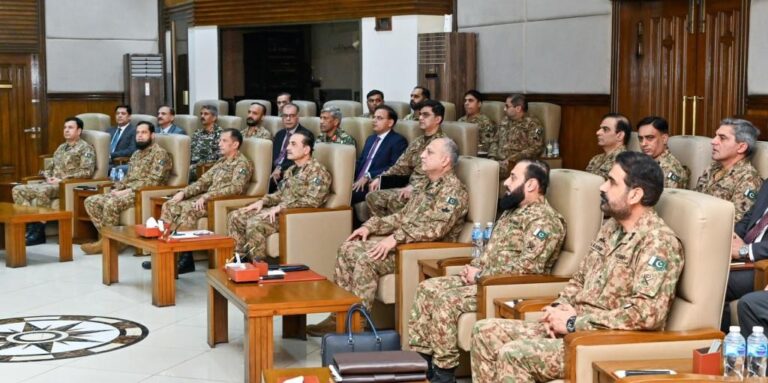
In Marka-e-Haq, all three services operated from shared intelligence, shared communications, and shared command direction. They had rehearsed it. They executed it. And because Pakistan used stand-off weapons, its aircraft hit targets deep inside enemy territory without crossing the Line of Control or the international border. India had neither a legal nor a military reason to go further.
Winning the Narrative
India’s media declared victory before a single result was confirmed. Anchors celebrated. Maps were drawn showing Pakistani territory falling. It was rather a joke than a menace. Pakistan responded differently. The Pakistan Air Force held a formal press conference with both national and international media.
Air Vice Marshal Aurangzeb, Deputy Chief of Air Staff Operations, answered all the questions with calm precision and with some humor in it. He became a global figure. Satellite imagery, air traffic control data, and independent analysts had already started to verify Pakistan’s claims. India’s narrative collapsed under the weight of its own fabrications.
Where Pakistan Stands Now
The diplomatic consequences of Marka-e-Haq extend beyond South Asia. Pakistan is now one of the few countries trusted simultaneously by Iran, Saudi Arabia, the Gulf states, China, and Turkey. It has emerged into a prominent role in global capitals. There could be a possibility of an Islamic defence alliance similar to NATO, with Pakistan as its core member, along with Turkey, Egypt, and Saudi Arabia.
Whether that vision becomes reality is yet to be determined. It is certain that Pakistan entered this conflict as a country that was not expected to win and ended as a country that others are now observing as a case study. The war lasted hours. The lessons will take years to absorb.

Group Captain (R) Sultan Mehmood Hali is a retired PAF officer, Sitara-e-Imtiaz (M) recipient, and a leading strategic columnist. An expert on nuclear deterrence, aerial warfare, and CPEC, he is a regular contributor to The Nation and Daily Times. In 2026, he remains an active analyst of the Islamabad Process and the shifting strategic geography of South Asia.