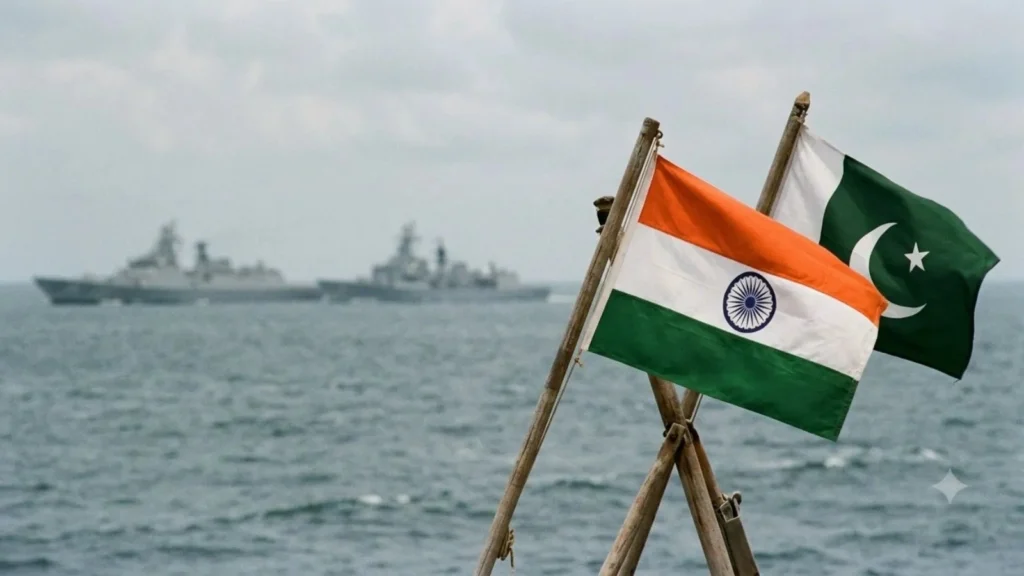
Three US Navy guided-missile destroyers on the morning of May 7, 2026, tried to pass through the Strait of Hormuz en route to the Gulf of Oman. The ensuing engagement was the most significant military exchange since the ceasefire went into effect on April 7. Iran accused the US of striking first, targeting an Iranian oil tanker near Jask and another vessel off the UAE coast, before responding by attacking US destroyers east of the strait.
A US Central Command spokesman said Iranian forces fired missiles, drones, and small boats at the three destroyers without provocation, and the US has fired back in self-defense, striking Iranian missile sites, command centers, and surveillance nodes. Both sides claimed it was the other’s fault. The exchange lasted several hours.
There were explosions reported throughout Tehran, Bandar Abbas, Qeshm, Bandar Khamir, and Sirik. The immediate cause was the Iranian oil tanker M/T Hasna. US forces disabled the vessel by firing at its rudder to stop it from reaching an Iranian port in defiance of the blockade.
In Tehran’s view, this was a clear breach of the ceasefire by Washington. The US position is that the blockade predates the ceasefire and is not covered by it. Iran claims that targeting Iranian ships is illegal anyway. Neither position is new. What is new is that on May 7, that disagreement produced an active fire.
The Hormuz Control Question
Beneath the immediate exchange lies a dispute no proposal currently resolves. Earlier in the day, Iran officially took control of the strait by establishing a government body that ships must register with before entering and exiting. The US cannot accept that claim without conceding Iran’s right to control one-fifth of the world’s oil supply.
Iran cannot abandon it without losing its most significant negotiating leverage. US gasoline prices have climbed more than 40% since late February, rising to more than $4 a gallon, as the Strait of Hormuz closure pushed crude prices higher. Both sides are absorbing costs. Both have been stuck on the basic question.
Pakistan’s diplomats were on the phone throughout the exchange. Pakistan’s Foreign Ministry confirmed that both foreign ministers spoke on May 7, and that Islamabad remained in continuous contact with Tehran and Washington, day and night.
Tehran announced it was considering the latest US peace offer, which would put an official end to the war but not solve the nuclear issue or the Strait question at this time. Iran reviewing the proposal, even while firing at US destroyers, is the most important signal of the day. A country that has decided to resume full-scale war does not review peace proposals.
Iran’s state media reported that following several hours of fire, the situation near the strait returned to normal. Normal is defined as no active exchanges. The cease fire is only nominal. On May 7, it held by the narrowest of margins, with both sides claiming restraint while firing at each other, and a peace proposal still waiting in Tehran for an answer that has not yet arrived.

Our Editorial Desk is the intellectual engine of Digital Debate, responsible for the rigorous research that anchors every conversation. Our team deep-dives into data, checks every source, and consults academic literature to move beyond headlines and identify the questions behind the questions.