International Workers’ Day traces its origins to Chicago in 1886, when workers took to the streets demanding an eight-hour workday and basic dignity on the job. A century and forty years on, the demands might be different, but not the questions. Workers today are asking for protection from AI-driven displacement, fair wages that keep pace with inflation, safety in a warming climate, and the basic guarantee that holding a job actually lifts you out of poverty. The fact that these are still up for debate in 2026 tells us something about how little ground has been gained, and how much the current geo-economic moment is putting even that limited progress under pressure.
The ILO’s Employment and Social Trends 2026 report delivers the numbers plainly. The global unemployment rate is 4.9%, which looks like good news on the surface. The global jobs gap, representing people who want paid work but cannot access it under decent conditions, is expected to reach 408 million in 2026. Almost 300 million workers remain in extreme poverty. 2.1 billion works in informal jobs without labor rights or social protection. These are not marginal figures. They refer to the status of most workers. A headline unemployment rate that looks reassuring is masking a jobs crisis of enormous scale.
The geo-economic stakes are high. Those working in consumer-facing sectors, especially in export-focused economies, are facing threats from new trade restrictions and tariffs, affecting some 84 million jobs in 71 countries. The war with Iran has affected energy markets, driving up fuel prices and eliminating the Strait of Hormuz as a safe passage for cargo. Disruptions to energy, food systems, and supply chains drive up costs and uncertainty. For workers, this means rising prices, falling real wages, and increasing insecurity. The worker absorbs the cost of every geopolitical miscalculation, usually before the policy class notices there is a problem.
The Tech Question No One Is Tackling
The ILO predicts that AI will impact nearly 40% of jobs worldwide. This is in contrast to previous automation that tended to replace low-skilled work in manufacturing. AI may complement high-income earners in some jobs, but the IMF expects it will increase inequality. That is a significant finding. The idea that technology will destroy low-skilled jobs while generating high-skilled work is not panning out as economists predicted. Almost a quarter of all workers around the world are now working in jobs that are exposed to automation via artificial intelligence, and 7.5% are working in highly skilled jobs where much of their work will be replaced by generative AI.
The ILO’s 2026 theme, “Ensuring Safety and Health at Work in a Changing Climate,” acknowledges the other dimension of this pressure that climate change is reshaping working conditions at a speed that occupational safety standards have not kept pace with. Farm work is made hazardous by heatwaves. Flooding is destroying agricultural livelihoods. Green transitions, if poorly managed, will displace workers in carbon-intensive industries without guaranteeing them entry into new ones.
Human Capital Is National Power
Nations that neglect their workforce are not making a social policy choice. They are making a strategic error. The evidence is clear and mounting. Afghanistan’s ban on female education is already costing it $84 million in annual economic output and will remove 25,000 professionals from its workforce by 2030. Globally, women make up just 40% of the workforce and are 24.2% less likely to be in the workforce than men. Each percentage point lost is lost productivity, lost tax revenue, and public service capacity.
Labor income share has continued its downward trend, falling from 53% in 2014 to 52.4% in 2024, a modest figure that represents an annual shortfall of roughly $2.4 trillion in income globally. This shift from labor to capital makes economies less competitive. It makes them more fragile. Consumer demand collapses. Social cohesion frays. Political systems absorb the pressure in forms that markets price eventually in.
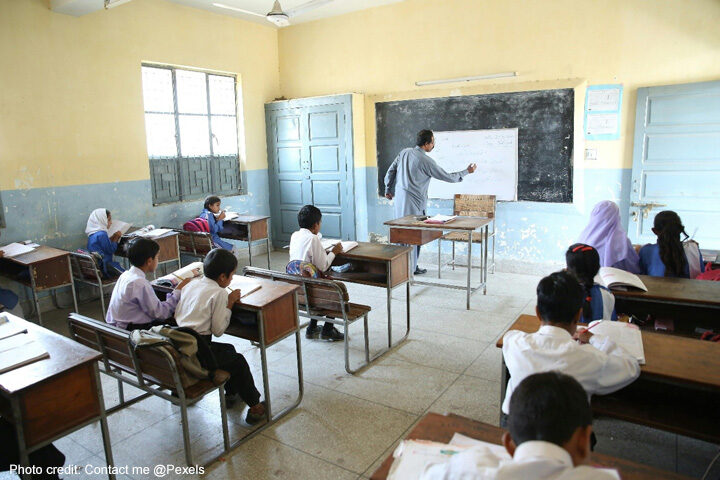
The WEF Global Risks Report 2026 identified the weaponization of economic policy through sanctions and tariffs as among the top short-term global risks, warning that the spirit of dialogue is eroding and leaving global institutions ill-equipped to handle cross-border economic shocks. In that environment, the countries with the most resilient, skilled, and protected workforces are not just more equitable. They are more stable, more productive, and better able to absorb external shocks without political rupture. The strength of a nation is no longer measured at its borders. It is measured in classrooms, hospitals, factories, and training centers.

Our Editorial Desk is the intellectual engine of Digital Debate, responsible for the rigorous research that anchors every conversation. Our team deep-dives into data, checks every source, and consults academic literature to move beyond headlines and identify the questions behind the questions.