Numbers have a way of cutting through political arguments. A new UNICEF analysis released on April 28, 2026, provides those numbers in precise and unsparing detail. It is estimated that as many as 20,000 female teachers and 5,400 healthcare workers will have lost their jobs in Afghanistan by 2030. The total number of female health workers in the country may be reduced to only 9,600 by 2035. Thus, the title of the report is not accidental: “The Cost of Inaction on Girls Education and Women Labour Force Participation in Afghanistan”. The cost is not theoretical. It is already piling up.
The downfall is already evident. The number of female teachers in the basic education declined by over 9% in 2022-24, dropping to approximately 66,000 in 2024 as compared to almost 73,000 in 2022. The percentage of female representation in the civil service dropped from 21% to 17.7% between 2023 and 2025. These are not projections. They are measurements of a workforce already contracting.
The policy architecture driving this contraction is precise and sequential. In March 2022, the secondary education of girls was prohibited in Afghanistan, becoming the only country in the world to impose such a ban. In December 2022, women were banned from universities. The same month, NGOs were instructed to fire women employees. By April 2023, the ban was expanded to UN agencies and the majority of positions in the public sector. In December 2024, female students were expelled from private medical schools, such as midwifery and nursing courses. The January 2026 Penal Code, signed on January 7 and immediately enforced nationwide, added legal architecture to restrictions already producing measurable decline. Each decree removed another layer of the pipeline that produces professionals.
A Cycle with No Internal Correction
Afghanistan faces a twofold dilemma: losing trained female professionals and, at the same time, denying the next generation a chance to take their place. With the aging women retiring or dropping out, girls are still out of the education that would make them qualified to fill those positions. Each year of delay costs Afghanistan another generation of skilled professionals.
The healthcare consequences are the most direct. In the social environment of Afghanistan, women patients, especially in rural environments, need women providers. A system with drastically reduced female staff does not just deliver worse care to women. In many communities, it delivers no care at all. Since the prohibition of secondary education was introduced in September 2021, one million girls have been deprived of their right to study. Assuming the ban continues until 2030, that figure will be more than two million.
The economic cost is already measurable. The restriction on girls’ and women’s education and employment in Afghanistan is costing it $84 million a year in lost economic potential, amounting to about 0.5% of GDP, with losses compounding over time. That amount only measures directly quantifiable lost output. It fails to take into consideration the downstream costs of an understaffed health system or an undereducated population.
The international community has been calling for the lifting of the education ban for almost five years in a row. Those calls have not brought any change. In 2025, over 3.7 million children attended public schools in Afghanistan with the support of UNICEF, 442 000 children of whom 66% are girls, having undergone community-based learning. Those programs are holding a floor beneath a system in active collapse. They are not reversing the structural damage.
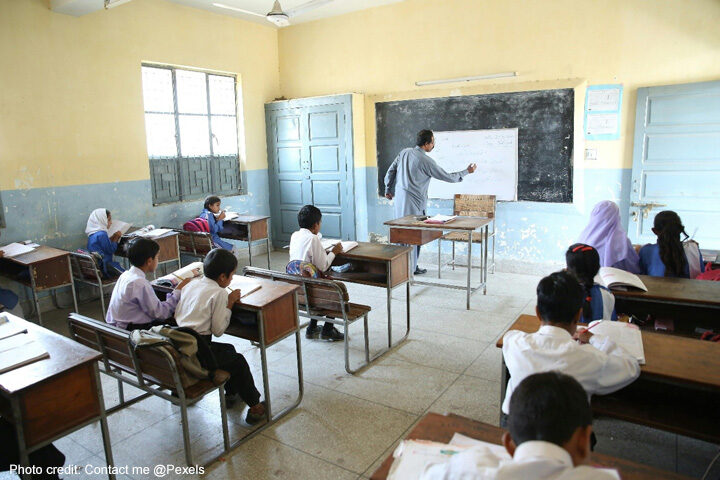
By 2030, the consequences will be visible in empty classrooms and understaffed clinics. The UNICEF report does not describe a future risk. It describes a present trajectory, measured in declining numbers, that leads to a country unable to educate its children or treat its sick. That trajectory has a cause. Since September 2021, it has been in force, decree by decree.

Our Editorial Desk is the intellectual engine of Digital Debate, responsible for the rigorous research that anchors every conversation. Our team deep-dives into data, checks every source, and consults academic literature to move beyond headlines and identify the questions behind the questions.