The $3 billion that Pakistan repatriated to the UAE appeared normal on the front. A loan repayment. A scheduled transaction. However, the timing set social media ablaze with speculation, and analysts were quick to interpret signals in it.
The repayment was part of negotiations that had been going on between Pakistan and the UAE for over a year. Previously, loan rollovers went up to six months. Then three. Then one. Eventually, the UAE set a firm deadline, and Pakistan met it. It was not money that was controversial. It was about when it happened, and what else was happening at the same time.
Pakistan-UAE Ties Are Deeper Than One Transaction
Despite the noise online, this repayment is unlikely to strain Pakistan-UAE relations in any meaningful way. The foundation of that relationship is not built on a single financial deal. Over a million Pakistanis live and work in the UAE. They have for decades. Their remittances form a significant pillar of Pakistan’s economy. Beyond that, Pakistan has played a steady role in the UAE’s defense sector, training officers, posting military personnel, and supplying equipment. On the international front, the two nations have enjoyed close relations with each other across various administrations.
What has evolved is the wider strategic positioning by the UAE. After the late Sheikh Zayed bin Nahyan, his son introduced a clear strategic reorientation. The UAE started recalibrating its partnerships and priorities. In response, Pakistan has been striving to remain a player in that new framework. That kind of relationship doesn’t break over a loan deadline.
The Fighter Jets and the Iran Signal
When Pakistan sent fighter jets to Saudi Arabia, it was assumed by many that talks had broken down. Some went further. They proposed that Pakistan was sending a calculated signal to Iran: if the region tips back into armed conflict, and Iran moves against Gulf states, Pakistan will not stay on the sidelines.
Within hours of that move, Turkish President Recep Tayyip Erdogan made a pointed public statement. He warned Israel against taking any action against Iran or Lebanon, stating Turkey would respond the same way it has dealt with enemies in the past. Individually, all these events might be considered as isolated foreign policy posturing. Combined with one another, they narrate another story.
The mutual understanding between Pakistan, Saudi Arabia, and Turkey on the Iran question is too strong and too consistent to be coincidental. When Erdogan was talking, he was not only talking on behalf of Turkey. Pakistan’s Defense Minister followed with a sharp statement about Israel. These were coordinated. They were supposed to convey a single message to an international audience: these three countries are united.
A Defense Pact Taking Shape
This coordination is not new. For several years, informal discussions have been ongoing about a formal defense understanding between Pakistan, Saudi Arabia, and Turkey. The objective: establish a system that discourages disruptive politics within the region and establishes a common deterrent against external interference.
The reasoning is simple. Great powers can no longer be trusted as security guarantors. The world order has changed. It is becoming more unrealistic to expect the United States, Russia, or China to give binding security assurances to Saudi Arabia, Turkey, or Pakistan. These nations have realized this change. They are responding to it.
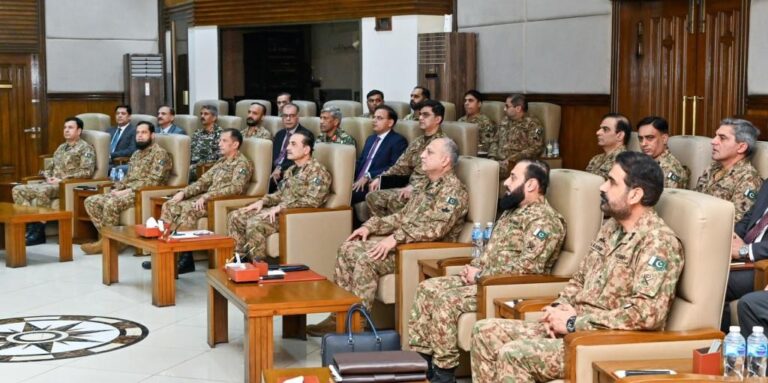
The new alignment is a manifestation of the recognition. Relying on massive energy reserves, yet threatened by regional insecurity, Saudi Arabia requires stable partners. Turkey has its own ambitions and anxieties, having the second-largest army in NATO. Pakistan, a nuclear-armed state with deep Islamic ties and a large military, offers strategic depth. Together, they form a credible middle-power bloc.
Israel as the Defining Issue
Underlying all of this is a shared view of Israel. The common denominator between Pakistan, Saudi Arabia, and Turkey is that Israel has been engaged in an expansionist policy, which has left the region in a volatile state over the decades. First came the denial of Palestinian statehood. Then followed wars with the neighbors. Then the occupation of the Syrian land. Then attacks abroad. Every action has solidified the view, in all three capitals, that Israel is the major cause of instability in the Middle East rather than Iran.
This does not imply that the three countries are in agreement on every issue. But on Israel, and increasingly on how to handle the Israeli Palestinian crisis and its regional ripple effects, Pakistan, Saudi Arabia, and Turkey are on the same page. Their statements are not accidental. They are coordinated.
The Saudi-Pakistan Defense Agreement
The recently formalized defense agreement between Saudi Arabia and Pakistan has drawn some commentary suggesting it wasn’t necessary. The argument goes that the relationship runs so deep that Pakistan would have responded to any Saudi request regardless of whether a formal deal existed. That may be true. But formalization matters.
An implementation mechanism is created by a written agreement. It establishes responsibilities, processes, and schedules. It turns goodwill into policy. It provides both parties with something tangible to refer to when there is a need to coordinate in a short time. The Saudi-Pakistan relationship didn’t need the agreement to exist. It required a consensus to work at a larger scale.
What Comes Next
The coordination between Pakistan, Saudi Arabia, and Turkey is consolidating, not just beginning. The communications underway, in the form of jet deployments, statements, payments of loans, and defense contracts, are fragments of a bigger strategic approach. Middle powers are organizing. The reason is that they have decided that the days of great-power security guarantees are dying. They are doing this because the Israel-Gaza war and its spillovers have led to regional instability that has created a sense of urgency.
The alliance between Islamabad, Riyadh, and Ankara is not official yet. It lacks a name and a charter. But it has momentum, a shared threat perception, and a track record of coordinated action. Such a combination is likely to have outcomes.

Dr. Khuram Iqbal is an Associate Professor of Security Studies with a dual affiliation at Macquarie University and NDU Islamabad. A veteran analyst of South Asian geopolitics, he is a leading voice on the Belt and Road Initiative (BRI) and the China-Pakistan Economic Corridor (CPEC). He is widely cited for his investigative work on terrorist recruitment and has held prestigious fellowships at the China Institute of International Studies and the University of Maryland.