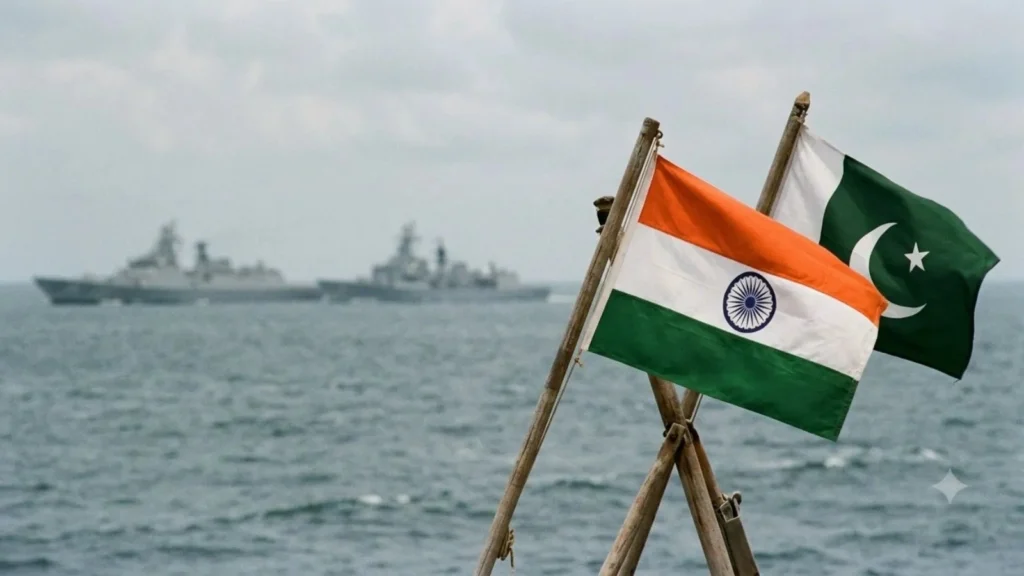
In South Asia, one of the world’s most volatile regions, security is not an abstract concept debated but a daily reality shaped by asymmetric conventional forces, rapidly evolving military technologies, and the persistent threat of miscalculation between nuclear-armed countries.
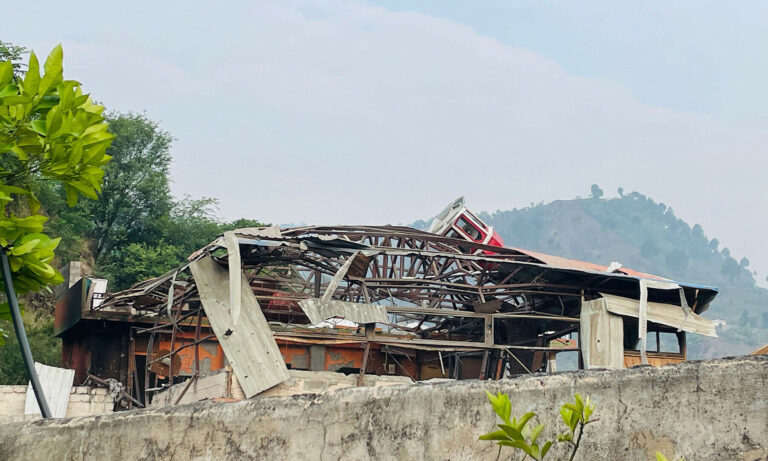
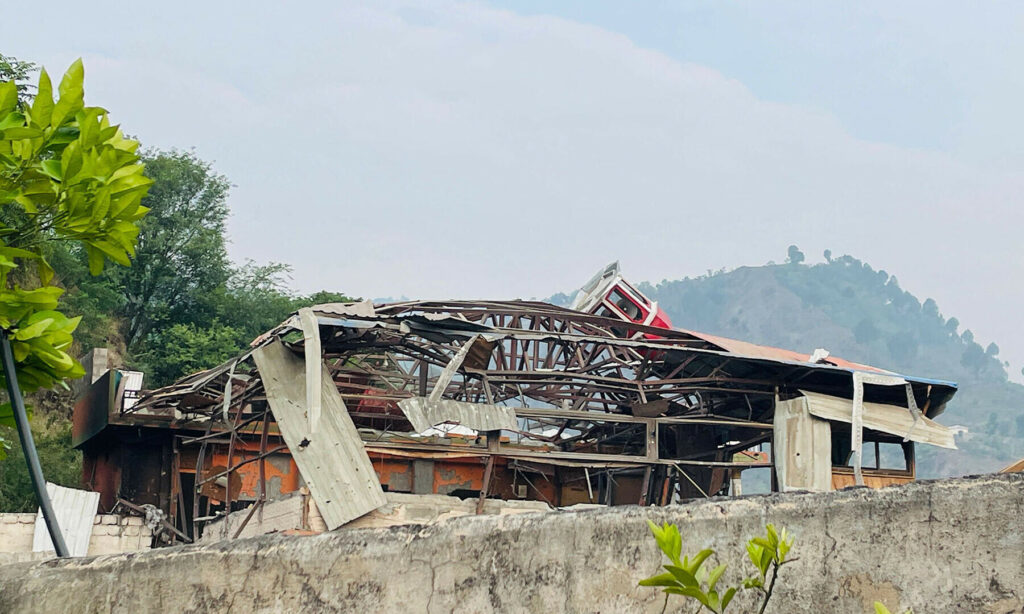
The recent May 2025 tensions between Pakistan and India demonstrated something profoundly new about modern conflict in our region. No ground forces clashed. Naval assets remained in port, and stand-off weapons, aircraft, missiles, and drones conducted operations while satellites provided reconnaissance and targeting data. This was warfare reimagined for the 21st century, a conflict where technological sophistication matters as much as troop numbers, where space assets enable precision strikes, and where the traditional metrics of military power require fundamental reassessment.
Pakistan’s response to this evolving threat environment has been measured but resolute, defensive rather than aggressive, yet comprehensive in scope. Understanding this strategic evolution requires examining not just military hardware but the broader security landscape that shapes Pakistan’s choices.
From Cold-Start to Full-Spectrum Deterrence
The 1998 nuclear tests fundamentally altered South Asian strategic dynamics. When both Pakistan and India demonstrated nuclear capability, the conventional military advantage India enjoyed through larger ground forces, naval assets, and air power became partially neutralized. Nuclear deterrence created a ceiling above which neither side could escalate without risking catastrophic consequences.
India’s response was the 2004 Cold Start doctrine, an attempt to recreate conventional military advantage through limited, swift incursions below the nuclear threshold. The logic was straightforward to conduct quick operations, seize Pakistani territory, and achieve objectives before international intervention or nuclear escalation could occur. This doctrine sought to exploit the space between conventional conflict and nuclear war, wagering that Pakistan would not resort to nuclear weapons over limited territorial losses.
Pakistan’s answer then was Full Spectrum Deterrence, a framework that closes the gap that Cold Start sought to exploit. By developing capabilities across operational, tactical, and strategic levels, Pakistan effectively communicated that any Indian military adventure, regardless of scale, would face a credible deterrent response. This wasn’t provocation, but it was the restoration of strategic balance against a numerically superior adversary.
The Grey Zone and Hybrid Warfare
When Full Spectrum Deterrence neutralized Cold Start, India adapted once again. Their current approach, termed Dynamic Response, operates increasingly in what military strategists call the “grey zone,” that murky space between peace and conventional war where hybrid tactics predominate.
This manifests in multiple dimensions. The May 2025 confrontation demonstrated military applications of grey zone warfare. Simultaneously, India pursues proxy terrorism through Afghanistan, leveraging the instability there to maintain pressure on Pakistan’s western border. Economic warfare through FATF and other international financial mechanisms adds another pressure point. This four-pronged approach, military, terrorist, economic, and diplomatic, represents modern hybrid warfare adapted to South Asian realities.
The human cost of this grey zone conflict often goes unnoticed in strategic analyses. When terrorists cross from Afghanistan into Pakistan, they target not only military installations but also schools, markets, and places of worship. When economic pressure increases through international financial mechanisms, ordinary Pakistanis face inflation and reduced opportunities. Grey zone warfare may avoid conventional battlefield casualties, but it inflicts suffering nonetheless.
The Afghanistan Complication
Pakistan’s western border presents challenges fundamentally different from those in the east. Afghanistan’s instability has been a persistent security concern, but recent developments have been particularly troubling. When the Taliban returned to power in 2021, many in Pakistan hoped for improved bilateral relations and cooperation against terrorist groups operating along the border.
Those hopes have largely been disappointed. Despite extensive Pakistani outreach through diplomatic engagement, offers of assistance, and attempts at negotiation, the Taliban government’s position has hardened. Initially, they requested time to consolidate control and address terrorist elements within Afghanistan. This seemed reasonable. But as months stretched into years, the narrative shifted because terrorism emanating from Afghanistan into Pakistan was reframed as Pakistan’s “internal problem” requiring no Afghan cooperation.
This position is both factually inaccurate and practically untenable. Terrorist groups operating from Afghan soil and launching attacks into Pakistan are not merely an internal Pakistani matter. They are a bilateral security concern requiring bilateral solutions. When the Taliban government refuses even basic assurances of cooperation, as demonstrated by the collapse of Istanbul talks, Pakistan faces an impossible choice to accept continued terrorist attacks or take unilateral defensive action.
Pakistan has chosen the latter path, though reluctantly and only after exhausting diplomatic options. When intelligence identifies specific terrorist threats or groups operating from Afghan territory, Pakistan exercises its fundamental right to self-defense. This is not aggression, rather it is the minimum response any sovereign nation would take to protect its citizens.
Technology and the Changing Character of Deterrence
Deterrence can never be permanent and contains profound implications. Deterrence is not a fixed achievement but a continuous process requiring constant adaptation. As technology evolves, as strategies shift, and as new capabilities emerge, deterrence frameworks must evolve correspondingly.
The emerging technologies reshaping modern warfare, such as artificial intelligence, autonomous systems, cyber capabilities, space-based assets, and hypersonic weapons, create both opportunities and vulnerabilities. Pakistan cannot match India rupee-for-rupee in defense spending, but effectiveness matters more than expenditure. Asymmetric approaches, technological adaptation, and strategic innovation can partially offset numerical disadvantages.
The May 2025 confrontation demonstrated that Pakistan has adapted effectively to this new warfare paradigm. But this is not a static achievement as it requires continuous investment in human capital, technological research, and strategic thinking. The militaries that succeed in future conflicts will be those that best integrate emerging technologies with sound doctrine and well-trained personnel.
The Diplomatic Dimension
Military capability alone does not ensure security. Pakistan’s strategic approach must integrate diplomatic engagement alongside defense preparedness. This means maintaining dialogue with India even during periods of tension, pursuing regional connectivity initiatives that create mutual economic stakes in peace, and working with international partners to promote stability.
India’s rapid expansion of military partnerships, particularly with the United States, France, and Israel, has introduced advanced capabilities, including Rafale fighters, modern drones, and sophisticated surveillance systems. This creates pressure on Pakistan, but it also creates diplomatic opportunities. As India grows closer to Western powers, Pakistan can deepen relationships with China, Russia, Turkey, and Gulf states, creating a network of strategic partnerships that serve Pakistani interests.
The main challenge is pursuing these partnerships without creating new tensions or dependencies. Pakistan’s foreign policy must remain flexible, pragmatic, and aligned with national interests rather than ideological commitments. The Non-Aligned Movement principles that guided Pakistan’s early foreign policy retain relevance and pursue relationships based on mutual benefit, to avoid entanglement in distant conflicts, and prioritize regional stability.
The Human Element of Strategic Stability
Strategic discussions about deterrence, military doctrine, and balance of power can become abstract, divorced from the human realities they ultimately serve. But every strategic calculation has human consequences. It means resources can be directed toward development rather than consumed by arms races.
Conversely, failed deterrence means suffering on massive scales. The 1971 war, the Kargil conflict, the Mumbai attacks, and subsequent tensions each represented deterrence failures with profound human costs. The imperative to maintain credible deterrence is not abstract strategic thinking; it is a moral obligation to protect populations from catastrophic conflict.
This is why Pakistan’s nuclear program and strategic doctrine deserve understanding rather than criticism. Countries do not develop nuclear weapons casually. They do so when facing existential threats that cannot be addressed through conventional means alone. For Pakistan, facing a conventionally superior adversary with a history of military intervention, nuclear deterrence became a survival necessity.
Looking Forward
South Asian strategic stability faces multiple challenges in the coming years. Emerging technologies will continue reshaping warfare, potentially undermining existing deterrence frameworks. Climate change will stress water resources, creating new conflict drivers. Afghanistan’s instability shows no signs of resolution. India’s military modernization continues apace.
In this environment, Pakistan must pursue a comprehensive strategy integrating military preparedness, diplomatic engagement, economic development, and internal cohesion. Each element reinforces the others as economic strength enables defense investment, military capability supports diplomatic leverage, and internal stability prevents exploitation of vulnerabilities.
The goal is not military dominance but credible deterrence, the ability to convince potential adversaries that aggression will be costly and ineffective. This requires both capability and communication. Pakistan must possess sufficient military strength to make aggression unattractive while clearly articulating defensive intentions to avoid misperception.
Each generation must adapt deterrence to contemporary challenges. The Cold Start doctrine is neutralized today, but new doctrines will emerge tomorrow. Grey zone warfare evolves continuously. Technological disruption accelerates.
Pakistan’s strategic community military planners, diplomats, academics, and policymakers must remain intellectually agile and strategically creative. The solutions that worked yesterday may fail tomorrow. But the fundamental imperative remains constant, which is ensuring Pakistani security while pursuing regional stability.

Ambassador Zamir Akram is the Chair-Rapporteur of the UN Working Group on the Right to Development and an Advisor to Pakistan’s Strategic Plans Division. A former Permanent Representative to the UN in Geneva and author of The Security Imperative, he is a specialist in nuclear non-proliferation, counterterrorism, and international human rights law.