
On April 7, 2026, the global clock was ticking toward midnight that few believed could be avoided. The world was looking on as the United States President Donald Trump was ready to order attacks on the critical infrastructure of Iran, its bridges, power plants, water system, etc., with only ninety minutes before a massive escalation. The ultimatum was clear; either reopen the Strait of Hormuz by 8:00 PM ET or face destruction.
And then the unthinkable happened. Two weeks of ceasefire were declared, and the guns of a war that had already taken 1900 Iranians’ lives, displaced more than one million in Lebanon, and put one-fifth of the world’s oil supply on its knees fell silent. It was not Geneva or Doha but Islamabad that was at the heart of this miracle.
The Vacuum of Diplomacy
The war, which broke out on February 28 after combined US-Israeli attacks that killed the Supreme Leader of Iran, had rapidly gone beyond the scope of conventional intermediaries. Oman and Qatar, the traditional bridges between the West and Tehran, were caught in the crossfire when the conflict spilled into the Gulf, which led to the collapse of their backchannels.
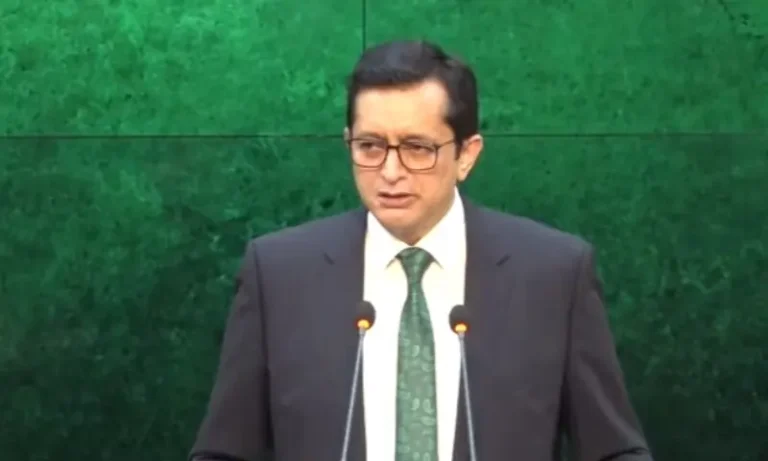
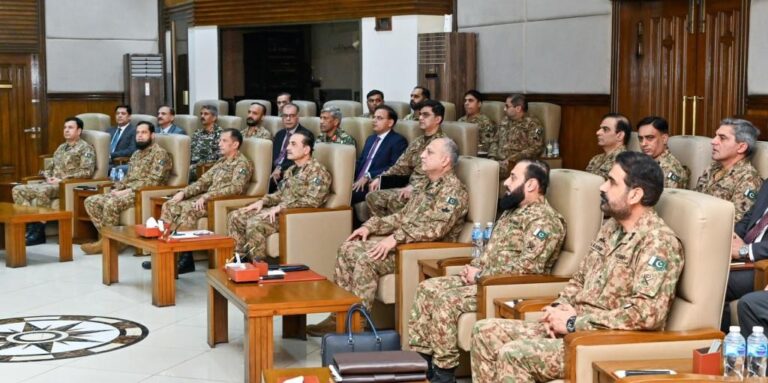
In this total diplomatic vacuum, Pakistan stepped forward. Led by Prime Minister Shehbaz Sharif and Field Marshal Asim Munir, Islamabad initiated what officials described as “frantic diplomacy.” Pakistan established the only remaining solid line of communication between Washington and Tehran by adopting a policy of both strong denunciation of the violence and a pledge of neutrality.
The Five-Point Peace Initiative
The turning point was reached on March 29, when PM Sharif convened a high-level summit with his counterparts in Egypt, Turkey, and Saudi Arabia in Islamabad. This conference came up with a strong five-point peace program that was aimed at ceasing hostilities and the immediate safeguarding of non-military infrastructure.
Foreign Minister Ishaq Dar then took this proposal to Beijing on March 31. China’s formal endorsement transformed the proposal into the definitive reference point for the international community. This joint initiative called for an immediate cessation of hostilities and the protection of energy and water infrastructure. It also required opening global shipping lanes, namely, the Strait of Hormuz, initiating direct peace negotiations, and following the principles of the UN Charter strictly.
The 15-Point vs 10-Point Plans
The demands were very divergent, and this complicated the mediation. The US presented a 15-point proposal through Pakistan, which involved permanent nuclear limitations and confirmed disarmament of enrichment plants in exchange for conditional sanctions relief.
Iran responded with its own 10-point roadmap, which required the cessation of all regional tension, war compensation, and the freezing of their frozen funds before it would accept the reopening of the Strait of Hormuz permanently. Field Marshal Asim Munir spent successive nights on bridge calls with the US Vice President JD Vance and Iranian Foreign Minister Abbas Araghchi to seek a viable ground on which the two-week pause could be negotiated.
A Regional Collective of Restraint
While Pakistan led the mediation, the ceasefire’s success rested on the “extraordinary restraint” of regional players. Saudi Arabia, despite absorbing Iranian missile strikes on its energy facilities, refused to close its diplomatic doors. Trying to keep the regional consensus working around the clock were Turkey and Egypt, whereas the UAE was staying focused on the stability quest despite its trade centers being attacked.
The Economic Lifeline
To Pakistan, this was not just a prestige but an economic need. The closure of the Strait of Hormuz on March 4 had driven Brent crude past $120 per barrel, threatening to explode Pakistan’s domestic subsidy bill.
With energy imports making up over 22% of Pakistan’s import bill, the blockade risked pushing domestic inflation above 12%. Furthermore, the conflict threatened the livelihoods of millions of Pakistani workers in the Gulf. A peaceful Middle East means the free flow of oil and the safety of essential remittances. The peace negotiated in Islamabad will be experienced directly at the petrol pumps and in the household budgets of millions of families.
The announcement of the ceasefire saw an immediate global reaction: S&P 500 futures rose over 1%, and oil prices plummeted by 6%. High-level delegations, such as that of the US Vice President JD Vance and Special Envoy Steve Witkoff, visited Islamabad on April 11 to initiate face-to-face discussions with Iranian officials.
As the world breathes a collective sigh of relief, the focus remains on the “Islamabad Talks.” This ceasefire is recognized by all as a start, not a finish. In a war with no true victors, the only triumph is peace, a triumph designed, built, and maintained by Pakistani diplomacy.

Syed Abdullah Anwer is a leading legal expert and international media analyst appearing regularly on platforms such as Russia Today (RT) and TVRI World. As a Senior Associate at TAHOTA Law Firm and a CIArb-accredited neutral, he offers authoritative insights into the intersection of regional geopolitics, treaty obligations, and international diplomacy. He is widely recognized for his unique ability to navigate the legal complexities of the China-Pakistan Economic Corridor (CPEC) and maritime law.