The year 2026 marks a troubling point in global governance. As the post-World War II order collapses, the framework of international law, which aimed to protect weaker nations from stronger ones, seems to be deteriorating. While examining the state of global legal systems, one could conclude that the outlook is bleak. The international community has moved beyond mere decline and entered a new era where the belief that “might makes right” is no longer just a cynical saying, but an operational principle.
The Rise of the Donroe Doctrine
One idea that emerged is the Donroe Doctrine. This term reflects a change in how global superpowers view sovereignty. Traditionally, sovereignty was an absolute right granted to all nation-states, regardless of size or GDP. But in the 21st century, this right has become conditional. Under this new doctrine, smaller nations’ borders and territorial integrity are seen as secondary to the security needs and strategic interests of major powers.
Whether through drone strikes in sovereign territories or military actions justified by a loose interpretation of Article 51 of the UN Charter, the message is clear that sovereignty is a privilege reserved for those who can protect it or align closely with the agendas of the Big Five. When the legal protection is dismantled, countries face two options, either to submit or significantly strengthen their military.
The Paralysis of the United Nations
The United Nations, intended to ensure global peace, is now experiencing what many see as a severe crisis of both finances and function. The financial crisis that the UN is currently undergoing stems from political withdrawals and the US cutting funds to over 66 international agencies during the Trump administration. This has created a power vacuum that China is eager to fill.
However, the crisis runs deeper than just money; it involves the issue of the veto. The permanent members of the Security Council (P5) have effectively shielded themselves and their allies from the very laws they expect others to follow. When Israel commits genocide in Gaza, or when Russia invades Ukraine, the UN’s failure to act shows it is no longer a tool for resolving disputes, but rather a stage for geopolitical maneuvering. The UN acts as a village elder, someone whose moral guidance is respected in theory but ignored in practice when real interests are involved.
The Karachi Incident
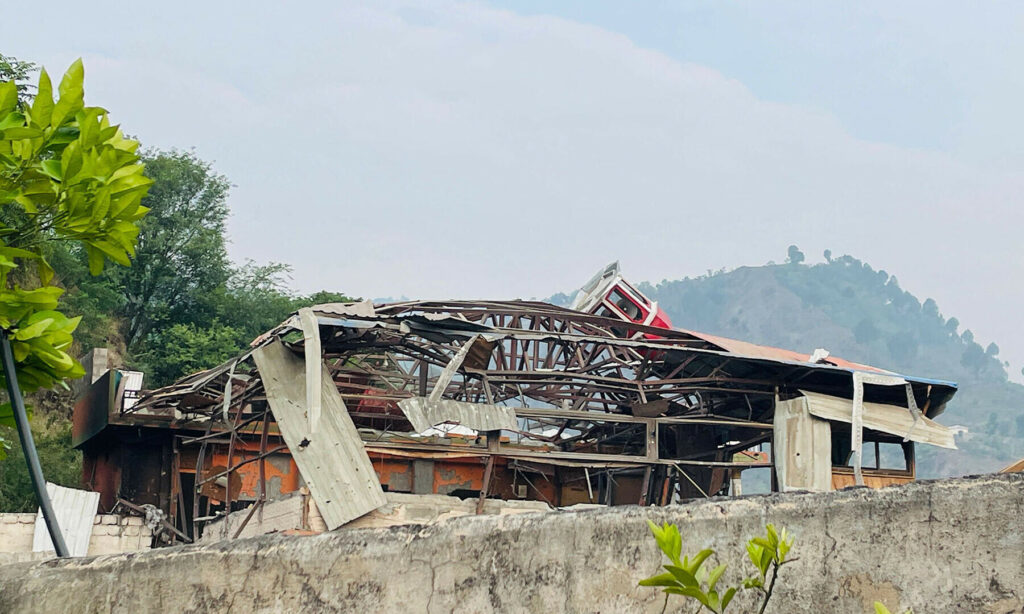
The details of the Vienna Convention are highlighted when discussing the recent consulate incident in Karachi. The inviolability of diplomatic premises is fundamental to international law, but it creates a legal black hole when crimes occur inside those premises or are committed by diplomatic staff. The line between diplomatic immunity (absolute personal immunity) and functional immunity (limited to official duties) is increasingly blurred.
In the case of the US Marines in Karachi or the historical example of Raymond Davis, the host nation often finds itself in a legal gap. If a host country cannot protect against a foreign mission, that mission might claim the right to self-defense, often resulting in local casualties. This raises a crucial question that if the law cannot protect a citizen from a foreign entity on its own soil, does that law still hold any ethical authority over that citizen?
The Diminishing Power of Economic Sanctions
For decades, the West, led by the US, has used unilateral sanctions to force defiant nations into submission. However, the discussion suggests that this tactic is losing its effectiveness. The world is witnessing what is known as the “Kindleberger Trap,” where a declining hegemon can no longer provide the public goods it once offered, such as a stable global currency and secure shipping routes.
As the US imposes sanctions on ICC judges and UN rapporteurs investigating war crimes, it inadvertently speeds up the shift towards a multipolar financial system. The rise of cryptocurrencies and China’s CIPS (Cross-Border Interbank Payment System) offers alternatives for nations like Iran and Russia. When sanctions become mere financial fines that can be avoided or absorbed, the West loses its most effective non-military tool, leaving only the option of military action on the table.
Pakistan’s Strategic Survival
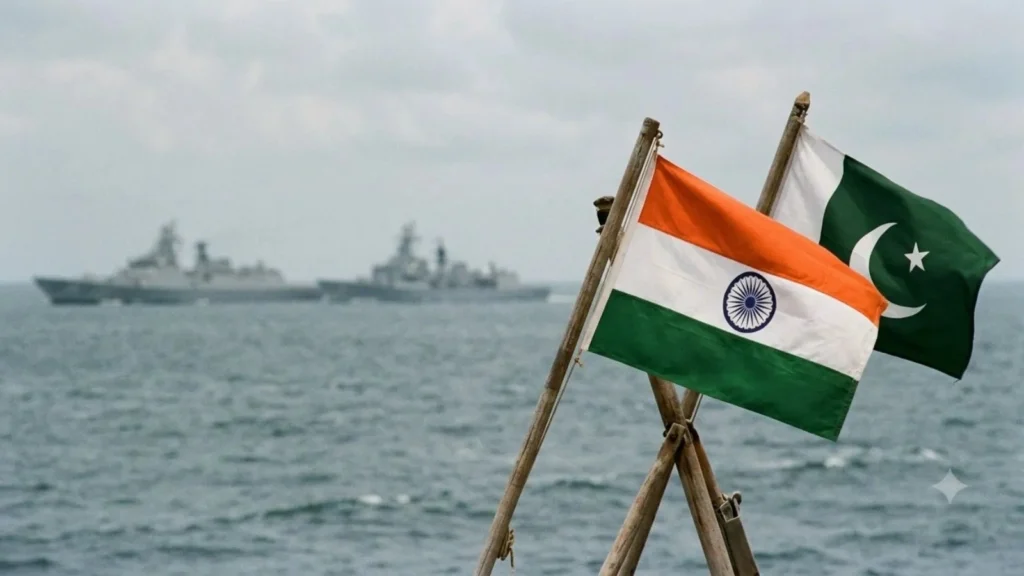
In this chaotic environment, where does a middle power like Pakistan stand? The assessment is surprisingly positive. Pakistan has successfully positioned itself as a net security provider in the region. By maintaining a strong military and showing readiness to use it, as demonstrated in the rapid response to Iranian incursions and the historical Swift Retort against India, Pakistan has proven it is not a soft target.
Pakistan’s importance extends beyond the military to the diplomatic sphere. By avoiding alignment with a single power, Pakistan keeps its options open, establishing strong ties with China while managing a complex relationship with the US For middle powers, the strategy for the next decade is clear. The focus on internal economic stability must be the priority, but military deterrence is the only way to guarantee a place at the negotiating table in a world that has abandoned the rulebook.
A New Social Contract?
The world is at a critical juncture. The global social contract is wearing thin. If the international community allows power to dictate morality, it risks entering a series of regional conflicts that no institution can control. The only path back is through radical reform of the UN, specifically, limiting or abolishing the Veto, and returning to a system where laws apply universally, not selectively.
The notion of the unstoppable superpower and the neutral international mediator has been shattered. The world is waking up to a harsh reality. Where, without a functioning legal shield, a nation’s true protection lies in its own strength and its strategic partnerships. International law is not dead, but it currently needs urgent care, waiting for a world that values justice as much as it values power.

Muhammad Oves Anwar is a Director of Research at the Research Society of International Law (RSIL). His research interests include public international law, international human rights law, international humanitarian law, counter-terrorism law, and nuclear law.