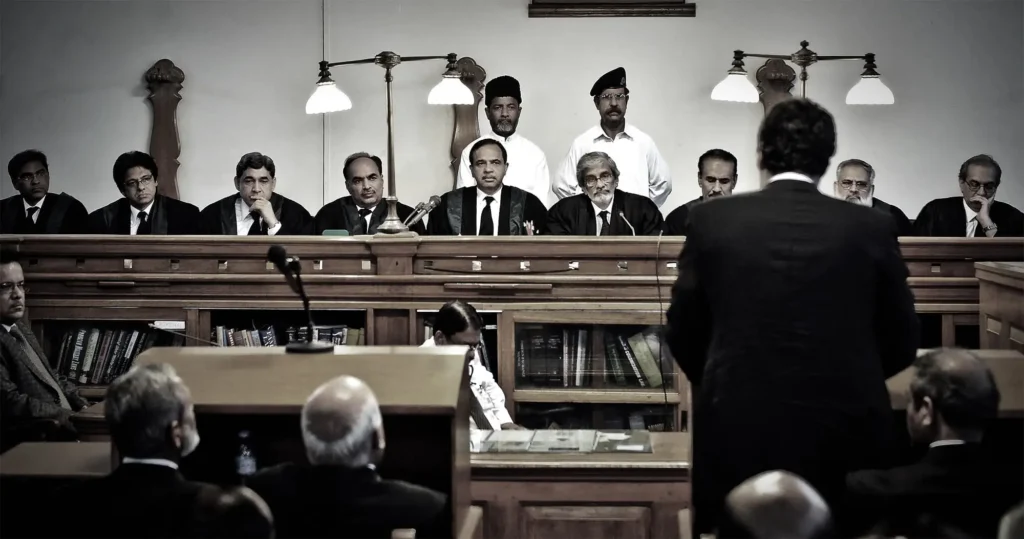
In the mist-laden peaks of the Kashmiri mountains, silence has transitioned from a natural state to a political instrument. It is no longer merely the absence of sound; it is a heavy, palpable presence. It is the sound of a heavy iron door locking in a New Delhi cell, echoing across the thousands of miles that separate a prison floor from the vibrant saffron fields of home. On Tuesday, March 24th, 2026, that silence was codified into law. The gavel of a special NIA court fell, awarding life imprisonment to Asiya Andrabi, the 64-year-old leader of the Dukhtaran-e-Millat (Daughters of the Nation). For Andrabi, a woman who has already spent over 15 years of her life in various iterations of captivity, this sentence is effectively a death sentence.
The Life and the Law
For decades, Asiya Andrabi was a constant in the volatile landscape of the valley. From 1987 onwards, she became a symbol of a specific, unyielding defiance. To her supporters, she was the voice of the Darsgahs (religious schools) when they were under siege; to the Indian state, she was a “conspirator of secession” and a “weaver of insurrectionary imputations.” The 286-page court order that sealed her fate was built upon the bedrock of the Unlawful Activities (Prevention) Act (UAPA), a piece of legislation frequently described by human rights advocates as draconian for its broad definitions of terror and conspiracy.
The court’s narrative focused on waging war and criminal conspiracy. It noted with a sense of clinical observation that the convicts showed “no remorse” and remained “proud” of their actions. But what is remorse to someone who believes their very existence is a resistance?
Alongside Andrabi, her close associates Fehmeeda Sofi and Nahida Nasreen were sentenced to 30 years each. Their response in the courtroom was not one of plea, but of continued resistance. Reports indicate that Fehmeeda Sofi, upon hearing her 30-year sentence, questioned the judge on why she hadn’t been given three consecutive life sentences, a final act of defiance that serves as a hallmark of those who view their imprisonment as an extension of their political struggle.
The Curated Silence Since 2019
The sentencing of the Dukhtaran-e-Millat leadership is a significant chapter, but it is part of a much larger book titled August 2019. Since the revocation of Article 370, the silence in Kashmir has been meticulously curated. The crackdown did not discriminate between the radical and the moderate, the separatist and the mainstream.
The net was cast with a terrifying reach. It swept up the patriarchs and the pragmatists: Farooq Abdullah, Omar Abdullah, and Mehbooba Mufti, leaders who had spent decades upholding the Indian constitutional framework in the valley, found themselves under the same shadow of detention as those they once opposed. From the high-profile corridors of Gupkar Road to the small, cramped rooms of local journalists, the crackdown spared no one. Perhaps most haunting are the accounts of children taken from their mothers’ laps in the dead of night, justified under the expansive umbrella of national security.
The architecture of this silence is built on preventive jurisdiction. When one detention order is quashed by a court, a new one is often waiting at the prison gate. Even the courts have occasionally whispered their concerns, with some judges noting that this form of jurisdiction seems unanswerable to any standard of democratic accountability.
The War on the Storytellers
To stop a movement, one must stop the story. The Indian state’s strategy in the region has increasingly focused on the storytellers. Over 40 journalists have been subjected to a gauntlet of background checks, raids, and summons. The Kashmir Walla, a prominent local outlet, was shuttered. Men like Khurram Parvez, a world-renowned human rights defender, and Aasif Sultan, a journalist who spent years in jail for his reporting, have become the faces of what Human Rights Watch calls a “repressive policy of arbitrary detentions.”
When you imprison the leaders and silence the storytellers, you create a void. However, voids in history are rarely empty; they ferment. In the absence of contemporary reporting and political discourse, the memories of past atrocities, the Gawkadal massacre, the Sopore massacre, and the Bijbehara massacre do not disappear. They become the primary struggle for a new generation that sees the current era of so-called peace not as a resolution, but as a suppression.
The Humanitarian Crisis of the Cell
At 64, Asiya Andrabi’s health is a fragile thing. With failing lungs, heavy breathing, and a family fractured by decades of state pursuit, her condition is a mirror of the many aging political prisoners in the valley. Fehmeeda and Nahida face a similar fate, their hair turning grey behind bars while the world outside debates the semantics of regional stability.
Humanitarian appeals from leaders like the Mirwaiz Umar Farooq have fallen on deaf ears. The judicial response to pleas for leniency was stark: the law states that any show of compassion would “infuse fresh vigour” into the spirit of secession. This logic suggests that the state views the physical suffering of the prisoner as a necessary component of regional security.
The Open-Air Prison and the Collective Memory
The internet blackouts may have ended, but the open-air prison remains. The heavy presence of security forces, the constant surveillance, and the criminalization of literature and slogans have created an environment where the boundaries of the prison cell have expanded to the borders of the valley itself.
One must wonder: can a land truly be secured by sentencing its voices to life behind impenetrable walls? The struggle in Kashmir is not a single thread that can be snapped by a pair of handcuffs. It is deeply ingrained across generations, moving from the broken promises of 1947 to the bunkers of 2026. It is a sentiment that lives in the graveyards of the martyrs and the quiet resilience of those who still wait for a morning that isn’t defined by a curfew.
You can try to contain a leader, ban a slogan, and rewrite the laws. But history shows that you cannot legislate away the collective memory of a people who believe that their dignity is not a gift to be granted by a state, but a right to be reclaimed. The struggle continues, not because of a single voice like Asiya’s, but because the silence itself has begun to speak.
Muzzammil Ayyub Thakur is the President of World Kashmir Freedom Movement (WKFM) and Director of The Justice Foundation: Kashmir Institute of International Affairs.