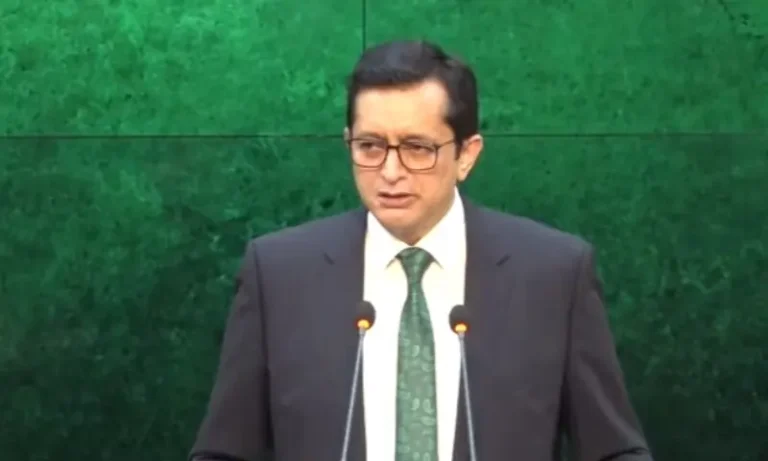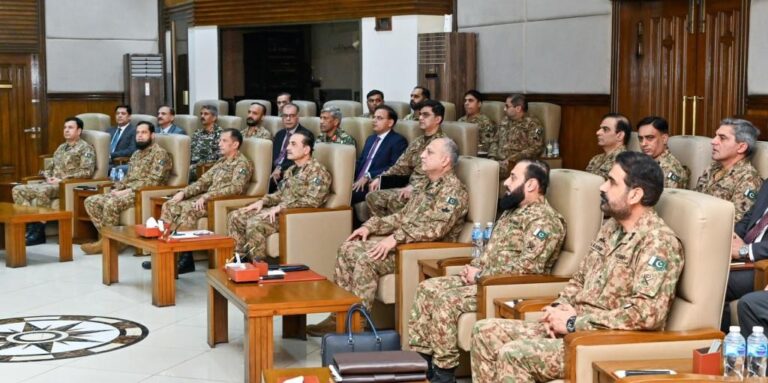
In a time where border tensions are rising and alliances are falling apart; the diplomatic corridors of Islamabad have become the catalyst for a regional drive towards stability. On March 29, 2026, the foreign ministers of Pakistan, Saudi Arabia, Turkiye, and Egypt took a landmark step at a historic quadrilateral meeting in Islamabad. Deputy Prime Minister and Foreign Minister Ishaq Dar signaled a bold possibility that Pakistan may soon host direct, structured negotiations between the United States and Iran. This off-ramp into peace comes at a critical juncture, with the war moving into its second month. And the risk of leading to an energy crisis around the globe and irreversible instability in the region has grown higher.
A Unified Front for De-escalation
The quadrilateral format, initially conceived in Riyadh on March 19, is maybe the most elaborate and coordinated regional initiative so far for the de-escalation. Pakistan has succeeded in uniting the powerful voices of Saudi Foreign Minister Faisal bin Farhan, Hakan Fidan, the Turkish Minister of Foreign Affairs, and Badr Abdelatty, the Egyptian foreign minister. All these stakeholders are working towards a common and urgent objective, the immediate end of hostilities. The collective message of the Pakistan Ministry of Foreign Affairs was clear that war is not the solution for anyone, and dialogue is the only proper way.
This is not just symbolic unity. The talks in Islamabad focused on concrete confidence-building measures, the most significant of which is securing navigation through the Strait of Hormuz. In a major development, Minister Dar affirmed that Tehran has agreed to permit 20 more Pakistan-flagged ships to pass through the strategic waterways, with a quota of 2 vessels per day. This move follows a time of extreme volatility with global energy markets having been shaken by the virtual shutting of the Strait early in March. It is a rare strategic victory, proving that diplomacy can bring practical results, even in the presence of larger-scale enmity.
Especially notable is the role of Saudi Arabia. Even though the Kingdom is pursuing its own route to regional normalization, its complete endorsement of the mediation process of Islamabad is a sign that it is no longer following the zero-sum geopolitics of the last decade. Riyadh is putting regional economic stability above ideological rivalry by supporting the dialogue.
The Beijing Connection
As much as the regional players offer the immediate structure, the initiative taken by Islamabad is supported by the low but imposing presence of China. The fact that Minister Dar is going to meet with the Foreign Minister Wang Yi on March 31 in Beijing highlights that this is not a localized initiative, but one that has international support. Chinese officials have indicated that ceasefire and peace negotiations are the most important points on the agenda, which supports Pakistan as a major diplomatic bridge. The combination of the logistics of Islamabad and the political leverage of Beijing forms a special two-pronged strategy that can hardly be overlooked by the United States.
Nevertheless, the path to a formal summit in Islamabad is still dependent on the situation on the battlefield. The shift between the indirect messaging and the face-to-face dialogue relies on the reality of the conflict on the ground. The United States has to decide whether an off-ramp is more advantageous than being seen as weak. However, the fact that Washington and Tehran have both indicated confidence in the role of Pakistan indicates that the desire to use a gracious exit is gaining momentum.
The quadrilateral meeting has managed to establish a small yet meaningful gap to peace. By establishing a permanent committee of senior officials to develop coordination modalities, these four nations have ensured that the momentum will not dissipate. Pakistan, Saudi Arabia, Egypt, and Turkiye coming together in an attempt to pressure the US to settle the Iran dispute is a refreshing sight in a world that is increasingly characterized by fragmentation.

Our Editorial Desk is the intellectual engine of Digital Debate, responsible for the rigorous research that anchors every conversation. Our team deep-dives into data, checks every source, and consults academic literature to move beyond headlines and identify the questions behind the questions.