Decades of the world debate about Pakistan were consumed by a single, tired perspective that Pakistan has always been on the verge of economic ruin or an unwilling frontline companion in the war on terror. But heading into 2026, the story has experienced a strategic change. From being considered a regional issue, Islamabad has quickly shifted to becoming a key interlocutor in the international arena. This is the fruit of a calculated pivot to geoeconomics and, what is perhaps most importantly, an essential and long-awaited hardening of its stance on Afghanistan.
The End of Strategic Depth
The most remarkable aspect of the new status of Pakistan is the destruction of the previous Afghan policy. For years, the international community looked at Islamabad’s relationship with the Afghan Taliban with justified suspicion. The period of pursuing strategic depths at the expense of regional stability is over.
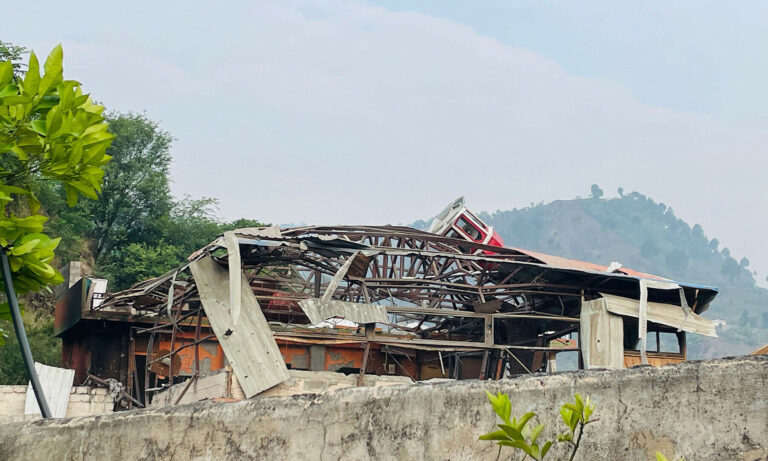
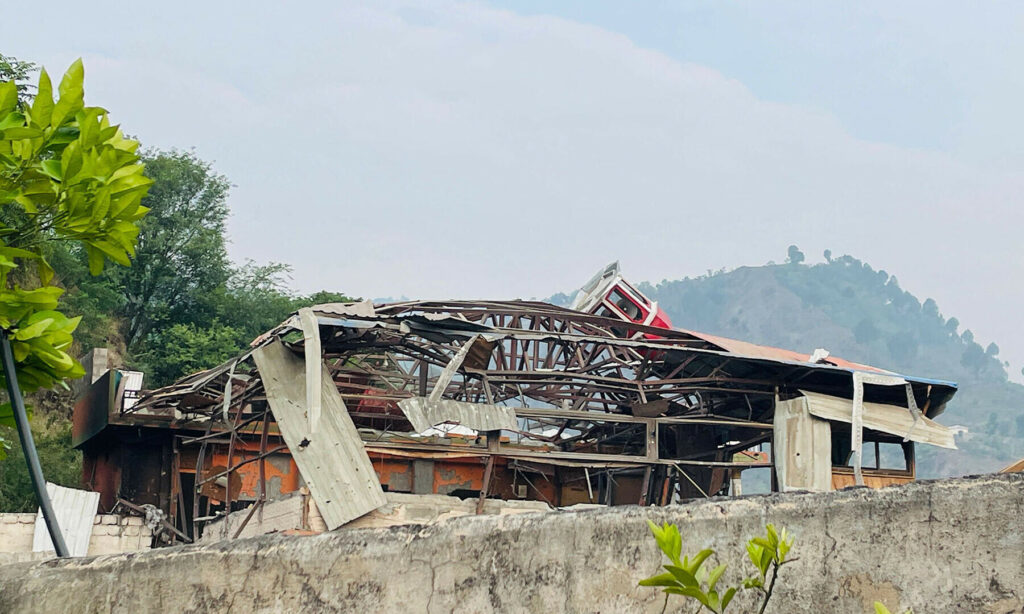
Pakistan’s patience with the Taliban refusing to control the Tehrik-e-Taliban Pakistan (TTP) ran out. The cross-border strikes of October 2025 and the later coordinated action in February of 2026 were a watershed moment. Pakistan has shifted its approach to coercive deterrence as opposed to its earlier strategy of brotherly diplomacy. By declaring open war against cross-border terror and directly attacking militant infrastructure, Islamabad has been sending a message that it will not be a hostage to the ideological experiments of its neighbor anymore. It is this hard state position that has ironically increased the value of Pakistan to global powers, who now see a partner willing to enforce its own red lines.
A Resource-Driven Seat at the Table
This newly acquired diplomatic strength is supported by surprising economic resilience. In January 2026, IMF managing director Kristalina Georgieva observed a fundamental change, saying, “For the first time, budgetary discipline has been seen… the government’s actions are starting to bear fruit.” With a GDP of over $400 billion, FX reserves of up to $22 billion, and the KSE-100 index aiming to reach a phenomenal 215,000, Pakistan is no longer a recipient of aid but is becoming a capital destination.
The scramble for essential minerals comes in as a catalyst. Islamabad is playing a sophisticated game through the Special Investment Facilitation Council (SIFC). Although the September 2025 deal with US company USSM, a $500 million package of copper and rare earths, gave Pakistan a presence in Western supply chains. The momentum accelerated in February 2026 when the US approved $1.3 billion in financing for the sector during the Washington Critical Minerals Ministerial.
Simultaneously, Pakistan is hosting the Pakistan Minerals Investment Forum (PMIF 2026) to court a wider array of global players. The Chinese President Xi Jinping made the re-affirmation of an ironclad partnership in CPEC 2.0 to underscore this dual-track diplomacy. Islamabad has successfully overcome the either-or duality that previously crippled its foreign policy and became the intermediary between Western technology and Eurasian resources.
Indispensable, Not Just Relevant
Why the spotlight now? The reason is that Pakistan has at last discovered how to speak the language of transactional geopolitics. Pakistan is not merely a buffer state anymore but a connectivity hub. This position was solidified when Prime Minister Shehbaz Sharif proposed to host serious and conclusive negotiations between the US and Iran to defuse hostilities in the Middle East; a step that was shared by President Trump on his platforms, indicating a high level of rapport that not many anticipated. From presiding over UN Security Council Resolution 2788 on peaceful settlement of disputes, to the critical contribution to the Gaza Peace Agreement, Pakistan is acting like a middle power that understands its value.
The road ahead is a minefield. The enmity between the Afghan Taliban and the country still presents both humanitarian and security pressures along the border. However, Pakistan is finally fighting these threats with a sense of economic clarity and not desperation. The world is not merely paying attention to Pakistan due to its geographic position; it is paying attention because Pakistan has at last chosen to ensure that its own sovereignty comes first before idealistic, failed ideologies. The 2025 upswing was the prologue; 2026 is when Pakistan will prove that it belongs to the high table.

Our Editorial Desk is the intellectual engine of Digital Debate, responsible for the rigorous research that anchors every conversation. Our team deep-dives into data, checks every source, and consults academic literature to move beyond headlines and identify the questions behind the questions.