The maritime environment of the world today is being characterized by the fast development of tensions, the epicenter of which is located in the Strait of Hormuz, the most important oil transit route in the world. Since the United States launched the operation named Epic Fury and the high-profile sinking of the Iranian warship IRIS Dena off the coast of Sri Lanka, the security situation has entered a volatile phase. In Pakistan, where nearly 90% of trade and more than 80% of energy resources are sea-dependent, these developments are not just geopolitical headlines; they are life-and-death threats to the national economy and to people’s lives.
The sea route acts as the breathing line of the country. In case the sea supply chain was disrupted, the effect would be felt instantly in the form of a shortage of fuels, food, and medicine that are a necessity, and a total collapse of the industrial sector. To maintain continuity of this trade, both in peacetime and in conflict, is thus the primary goal of the Pakistan Navy.
The Strategy of Escort and Protection
The risk of accidental hits is one of the major concerns for merchant shipping in a combat zone. A helpless merchant vessel is of no use in a theater where missiles and torpedoes are in action. The Pakistan Navy counters this by adopting an active scouting and escort operation, known as Operation Muhafiz-ul-Bahr. The naval warships are not just watching around, but they are physically close to the merchant ships, which creates a multi-dimensional shell that encompasses both air, surface, and subsurface (undersea).
The defence is crucial as contemporary naval wars are three-dimensional. A high-speed missile can pose a threat, as well as a surface vessel or a silent submarine. The Navy makes sure that the valuable goods will reach the destination without hurting the economy of the country by encircling the trade vessels with state-of-the-art platforms, 90% of which have just been refined with Chinese-built frigates and submarines.
Geopolitical Co-ordination and Conflict Avoidance
Although American, Iranian, and Omani forces are in very close proximity, the Pakistan Navy possesses a complex degree of diplomatic and technical coordination. The Pakistan Navy is at all times in communication with the Iranian Navy and the Omani Coast Guard.
This coordination includes radar picture sharing so that everyone can be aware of the position of Pakistani ships. By making these ships friendly, the Navy is reducing the chances of a misunderstanding or an accidental problem that may occur, resulting in an unintended clash. Such transparency is essential in the Strait of Hormuz, a narrow channel with a maximum width of 33 kilometers, with a navigable channel of only three kilometers.
Coastal Security and Harbor Defense
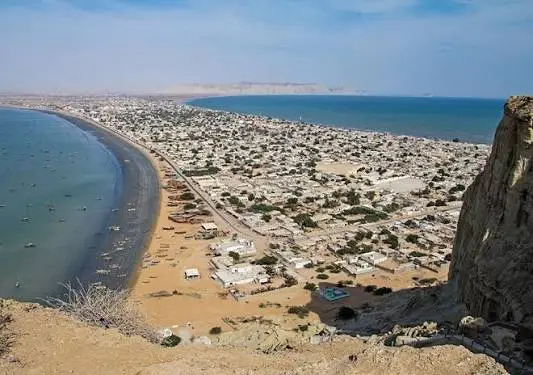
The maritime security of Pakistan is not limited to the deep sea but also to its territorial waters and ports. Pakistan Navy possesses a Coastal Security and Harbor Defense Force (CS & HDF), which is a combined framework meant to defend major centers such as Gwadar, Karachi, and Port Qasim.
The plan is to break the coastline into 20-24-kilometer segments with posts. There are high-tech radar and long-range cameras on each of the posts, which are staffed by Navy Marines and Special Service Group (SSG) members. This 24-hour watch guarantees that once cargo is on Pakistani waters, it is secure from asymmetric threats, like small boat attacks or sabotage. The government sets the priority for cargo, typically placing oil and gas at the top to ensure the country’s power plants and transportation networks remain functional.
Lessons from the IRIS Dena Incident
The sinking of the Iranian ship IRIS Dena is a dark example of a contemporary naval policy. The vessel was attacked when it was in a military mindset and not in a war mindset, as it had just left a ceremonial fleet review in India.
In contrast to the IRIS Dena, Pakistani vessels, which are currently on escort missions, are in combat mode. They have the latest sensors and weapon systems that are designed with special features aimed at countering the kind of attacks that have been observed in the past few weeks. This readiness serves as a warning to any regional power that tries to interfere with Pakistani interests.
Comparing Regional Capabilities
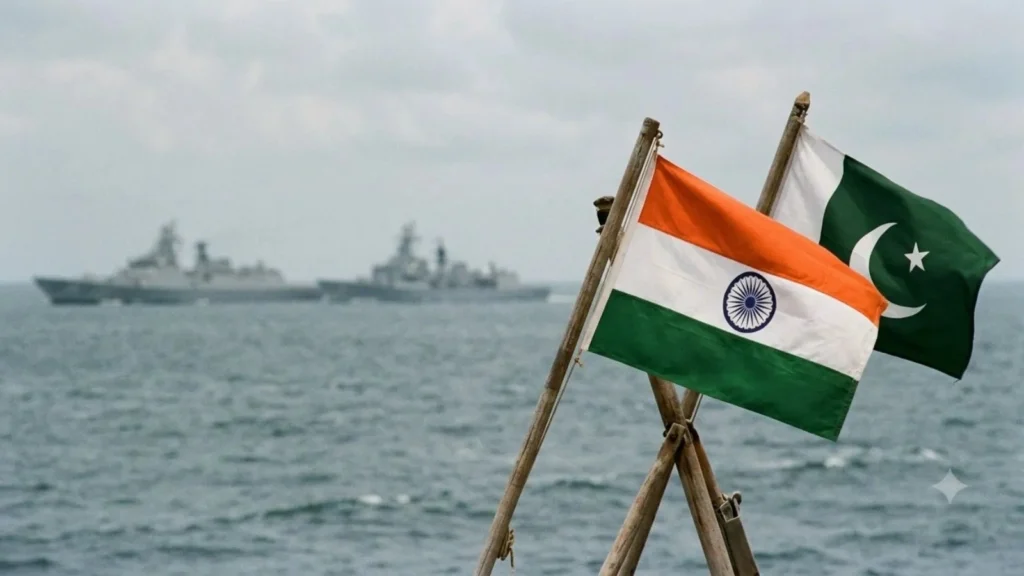
One of the most discussed aspects is the size difference between the Indian and Pakistani Navies. Although the Indian Navy is much larger, which they need considering their 7,000 km coastline in comparison to the 1001km of Pakistan. The capability of both navies can be compared through the concept of qualitative deterrence.
The numerical superiority has not allowed the Indian Navy to overpower the Pakistan Navy due to the strategic placement of the latter and advanced platforms. The deterrence equation that prevailed in the 2025 standoff has not changed today. Pakistan specializes in protecting its particular territorial integrity and has a smaller size but a highly specialized and sophisticated fleet.
The Navy’s Role Beyond Combat
The high seas are not the only area under the jurisdiction of the Navy. The Navy is involved in massive humanitarian operations, which were seen specifically during the historical floods that had flooded a fifth of Pakistan. The Navy opened the biggest relief camp in Mukli, housing more than 8,000 residents throughout the whole year. Thus, the Navy serves as an important pillar of civil society by helping in the provision of medical facilities along the coast, as was seen in the COVID-19 pandemic.
With the ongoing war in the Strait of Hormuz, the Pakistan Navy is a silent guardian of the economic lifeline of the country. They keep the breathing line of the country open through a mix of modern technology, strategic diplomacy with the neighbors, such as Iran and Oman, and a strong system of defense of the harbor. Although one cannot predict when the conflict will be resolved, the Protector of the Sea stands on alert with all three dimensions and is able to protect the sovereignty of Pakistan.

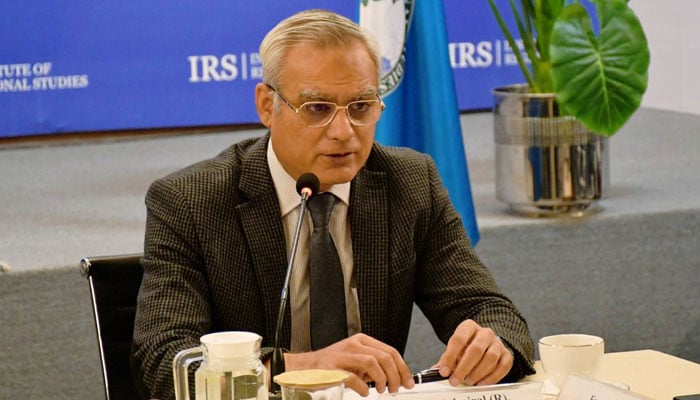
Rear Admiral (R) Syed Faisal Ali Shah is a veteran naval officer and strategic analyst specializing in maritime diplomacy and economic security. A former Director General at Joint Staff Headquarters and recipient of the Sitara-e-Imtiaz (Military), he is widely regarded as an expert on South Asian maritime dynamics and the development of Pakistan's coastal infrastructure.