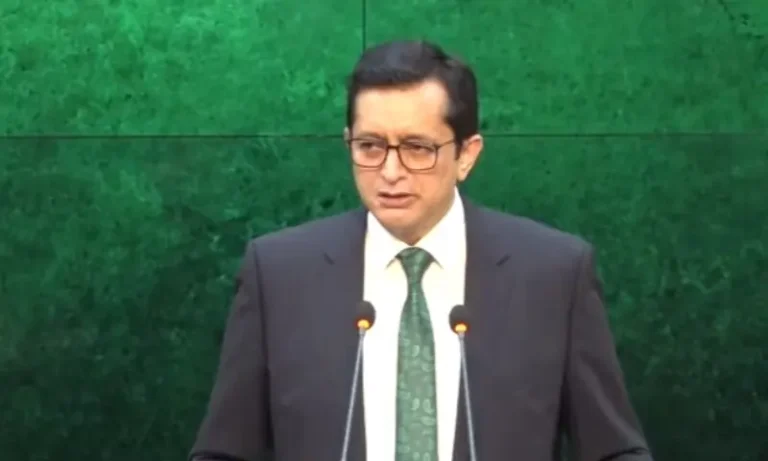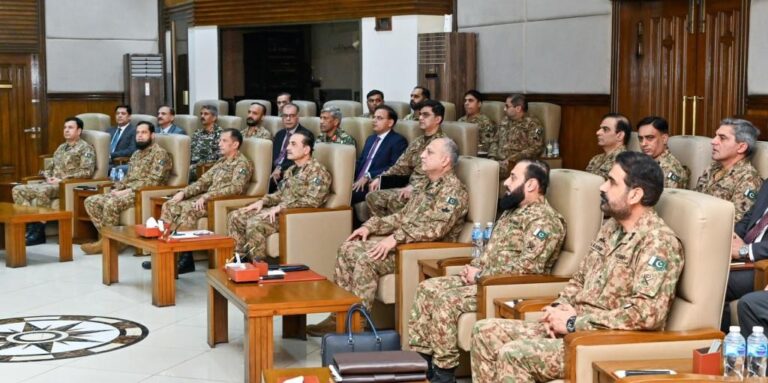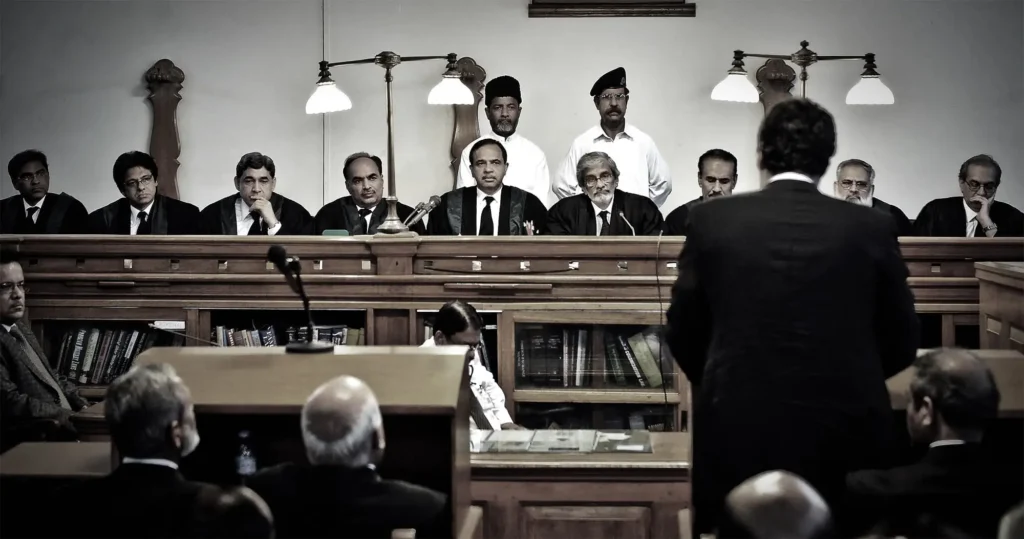
The struggle for Kashmir is no longer merely a territorial dispute between two neighbors; it has evolved into a strategic centerpiece of the 21st-century global order. This was the resounding message at the recently held Campus Talk at the National University of Sciences and Technology (NUST). The forum, chaired by Sabookh Syed, brought together some of the most distinguished experts to dissect the strategic shift that is underway in the Himalayas.
The panel was composed of Ambassador Masood Khan, an experienced diplomat and former President of Azad Jammu and Kashmir (AJK); Dr. Tughral Yamin, a military scholar and peace and conflict studies expert; Altaf Hussain Wani, Chairman of the Kashmir Institute of International Relations (KIIR) and a long-time rights activist; and Farzana Yaqoob, a former MNA and former CEO of Mantaq.
The Myth of the Neutral World Order
Ambassador Masood Khan began the discussion by debunking the myth that the post-1945 international system was ever designed to provide oppressed states with justice. Amb. Masood also argues that the neoliberal international system was never neutral; it was a system in which strategic alliances, such as between the United States and India, would override the very laws of self-determination that the United Nations was supposed to enforce.
According to Amb. Masood, Kashmir, represents a prism through which a fractured global system in which power prevails over law can be viewed. He pointed out that while Pakistan’s dependence remains tied to UN resolutions, India’s strategic partnership with the West has created a shield against accountability. Nevertheless, he observed a change; as the new forces, such as Brazil, Malaysia, and Indonesia, emerge, and the relationship between Pakistan and China becomes tighter, the absolute monopoly of the old guard starts to crumble.
Power as a Prerequisite for Diplomacy
Dr. Tughral Yamin added a sobering military perspective, suggesting that diplomacy alone will not resolve this situation. To Dr. Yamin, the issue of the liberation of Kashmir is closely tied to the domestic power of Pakistan. He argued that unless a country is economically, militarily, and intellectually strong, it cannot expect to regain a territory with a hostile neighbor.
Dr. Yamin was especially critical of the academic environment. He raised a serious concern that students in NUST are taught about peace and conflict studies from Western perspectives, but there is no Kashmir studies in the curriculum. He pointed out that Generation Z does not have in-depth knowledge about the legal and historical status of the case, warning that India is openly moving toward a policy of demographic engineering to permanently alter the region’s identity.
The Weaponization of Water and Rights
Altaf Hussain Wani moved the discussion to the environmental and legal aspects of the conflict. He pointed out that India has been trying to sabotage the Indus Water Treaty unilaterally, essentially turning water into a weapon of war. To Pakistan, a nation whose economic system wholly relies on the rivers located on the Kashmiri heights, he described this as a matter of life and death.
Mr. Wani emphasized the fact that the silence of the international community regarding such systemic violations is the complete failure of the global human rights machine. He encouraged the young generation to view Kashmir not only as a religious or emotional problem, but as a survival problem. He stated that Pakistan is under a threat of being ecologically and economically desertified unless a solution is reached in Kashmir.
The Narrative War and Settler Colonialism
Farzana Yaqoob discussed the ideological war that is being waged on social media and through Artificial Intelligence. She observed that Google and Large Language Models (LLMs) are the main information providers in Gen Z and are already overwhelmed with an Indian narrative that attempts to distort the truth about the occupation.
She urged the younger generation to utilize their digital literacy in recording human rights abuses, including the practice of cordon and search. She stated that unless young people generate their own content and challenge AI bots endlessly, the digital history of the conflict would be framed by the oppressor. She was of the opinion that queries are educating the LLMs, asking students to refine information in the world. She also made strong comparisons between the Israeli model and the settler colonialism that is being introduced in the Indian occupied Kashmir.
AJK vs IIOJK
Farzana Yaqoob and Altaf Hussain Wani tried to disprove the parallels between the two sides of the Line of Control, that AJK has a governance problem, but it is not a state prison. In IIOJK, a state of war is imposed, in which there is no due process and a total lack of freedom. They referred to the well-known stance of Syed Ali Gilani that “We are Pakistanis, Pakistan is ours,” emphasizing that it is the struggle of identity and self-determination, not just of economic development.
The Intellectual Battle Ahead
The seminar ended with a powerful reminder that wars are waged on ideology as much as on power. The experts called upon the NUST young generation to move beyond emotional speeches towards logical and data-driven ones. It was agreed that Pakistan needs to prepare a written Kashmir policy over the next 20 years that is to be anchored by intellectualism and a firm adherence to the rights of the Kashmiri people.

Our Editorial Desk is the intellectual engine of Digital Debate, responsible for the rigorous research that anchors every conversation. Our team deep-dives into data, checks every source, and consults academic literature to move beyond headlines and identify the questions behind the questions.