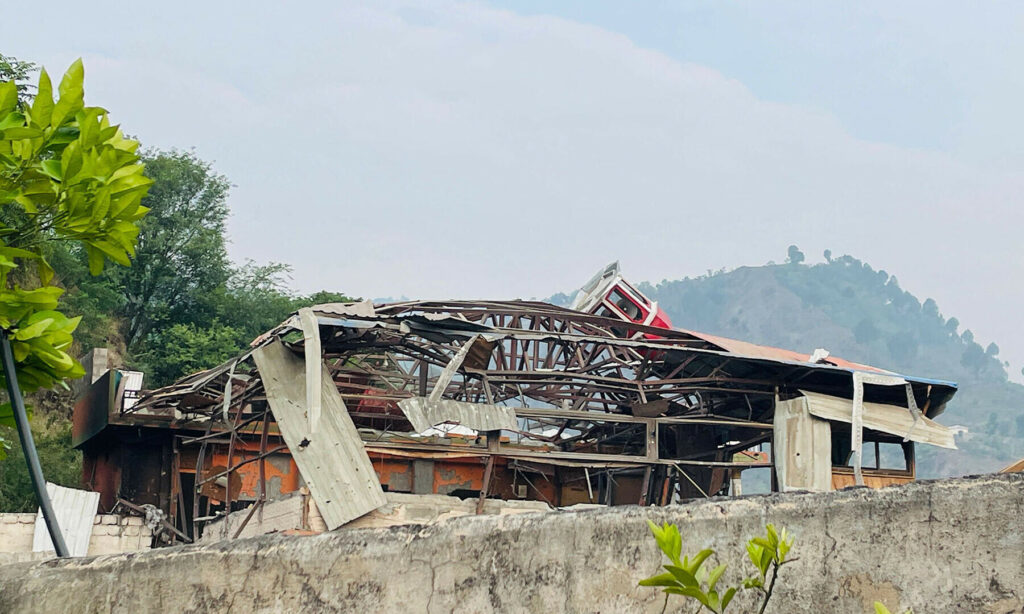
The snow that covered the twin villages of Kunan and Poshpora on the night of February 23, 1991, did more than signal a harsh Kashmiri winter; it became a silent witness to one of the most heart-rending episodes of the conflict in Jammu and Kashmir. Several decades later, the names of these villages are still imprinted in the collective memory of the region, not because of their picturesque beauty, but because of an unsolved trauma and profound failure of the justice system.
The Night the Earth Stood Still
The incident started when troops of the 4th Rajputana Rifles came to conduct a cordon-and-search operation, according to reports. In the middle of the night, men were reportedly separated from their families and huddled into barns and open fields, exposed to the freezing cold and torture. What ensued in the mud-brick houses was a nightmare that would haunt the village for generations.
Survivors describe a night where “it was not rape; it was war.” Mass sexual violence was perpetrated against women, both teenagers and the elderly. The cruelty was not only a failure of discipline, but many considered it an administered tool of community-wide punishment. According to the Human Rights Watch, rape in these conflict zones is usually employed as a way of punishing and humiliating the whole community, especially those who are seen to be sympathetic to militants.
A Wall of Denial
The aftermath was marked by the rapid and systematic disregard of the survivors. When the villagers placed a First Information Report (FIR), the official reaction was one of categorical denial. This incident remains one of the main instances of human rights violations in the region, with the absence of international intervention.
This denial is supported by a formidable legal framework that shields security forces from civilian accountability. Central to this is the Armed Forces (Jammu and Kashmir) Special Powers Act (AFSPA), specifically Section 7, which prohibits the prosecution of personnel without prior sanction from the Central Government, a permission that has notoriously never been granted for cases in Jammu and Kashmir. This legal immunity, often coupled with the Public Safety Act (PSA), creates a “state of exception” where soldiers remain beyond the reach of the local judiciary, and survivors are left to face an impossible mountain of proof.
In the 1990s, the Indian government’s own investigations, including those by the Press Council of India, dismissed the allegations as “baseless” and a “psychological warfare” tactic by militants. This dismissal established a precedent of impunity. The survivors did not merely fight to protect their dignity, but they also fought against a state apparatus that did not want them to be recognized as victims.
The Human Cost of Impunity
The effect of that night went way beyond physical trauma. The twin villages turned into social outcasts in the years following 1991. It was like the social death of the survivors. Many women were shunned by their own communities, and for a long time, families from other parts of Kashmir were reluctant to marry into the village.
This was aggravated by a complete absence of medical and legal support. In South Asia, the judicial system tends to dismiss rape victims by putting the weight of honor on the woman and not on the rapist. This was further aggravated in Kunan Poshpora by the political sensitivities of the Kashmir conflict.
The Resurgence of the Struggle
For twenty years, the case lay concealed under heaps of official apathy. But in 2013, the files were reopened by a group of young Kashmiri women, not even born during the time the incident took place. The incident came into the limelight in the world again thanks to their effort that was recorded in the book “Do You Remember Kunan Poshpora?” This younger generation of activists refused to allow the silence of the elderly to determine the future.
There was a temporary ray of hope in the legal fight, as in 2013, a court in the Kupwara district ordered a new investigation, admitting that the original investigation was a sham and biased. However, the Indian Government did everything to stop the fight as every step forward was met with a stay order or a legal technicality, effectively stalling the fight for justice.
Why It Matters Today
The Kunan Poshpora case is not merely a thing of the 90s; it is a test case of the rule of law in conflict areas. The idea of the state using national security as its cloak to defend the perpetrators of sexual violence is an undermining factor to the principles of democracy. The denial to prosecute the culprits has left a trail of distrust that contributes to more episodes of violence and segregation in the valley.
The justice of Kunan Poshpora would not be limited to a couple of soldiers being punished. It would imply that no one, no matter how uninformed, is above the law. It would imply the recognition of the survivors who have waited more than thirty years to have their day in court.
Conclusion
Kunan Poshpora is a wound that refused to heal because it was never allowed to be cleaned. The fight of these women is a test of human strength. They do not want revenge; they want the truth to be formally acknowledged. Until the echoes of that winter night are answered with genuine legal accountability, Kunan Poshpora will remain a haunting reminder that in the shadow of war, the most vulnerable pay the highest price.

Our Editorial Desk is the intellectual engine of Digital Debate, responsible for the rigorous research that anchors every conversation. Our team deep-dives into data, checks every source, and consults academic literature to move beyond headlines and identify the questions behind the questions.