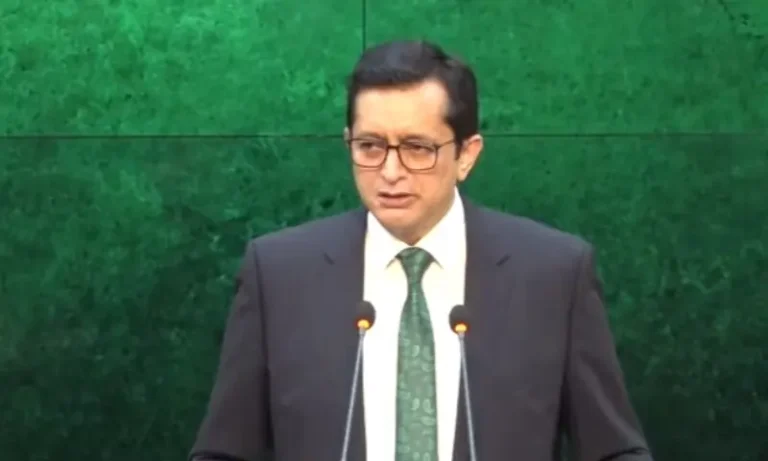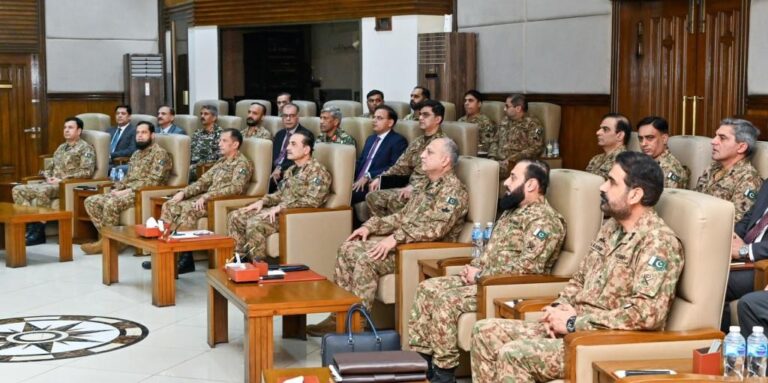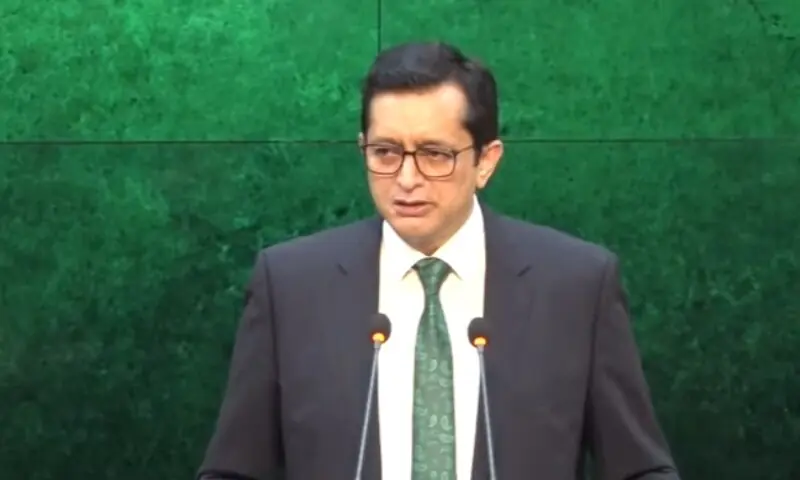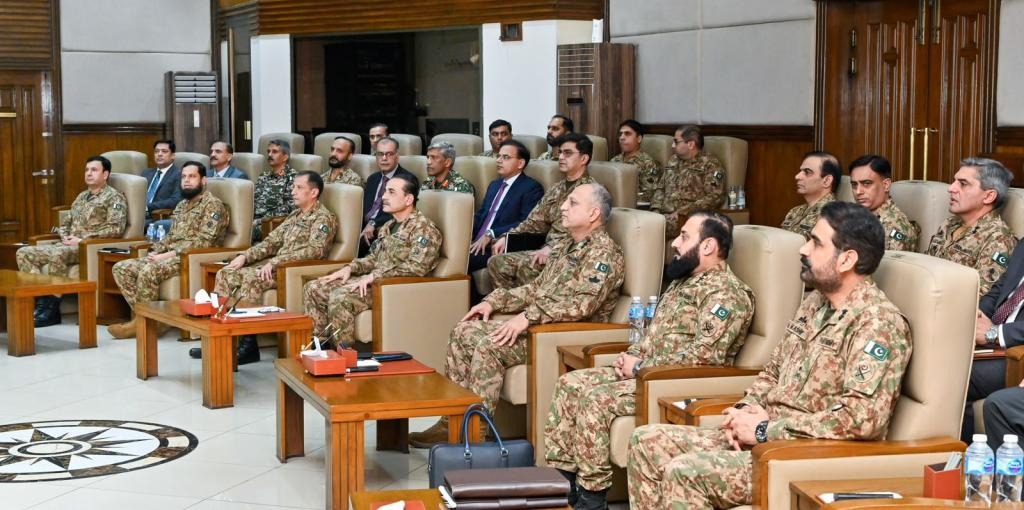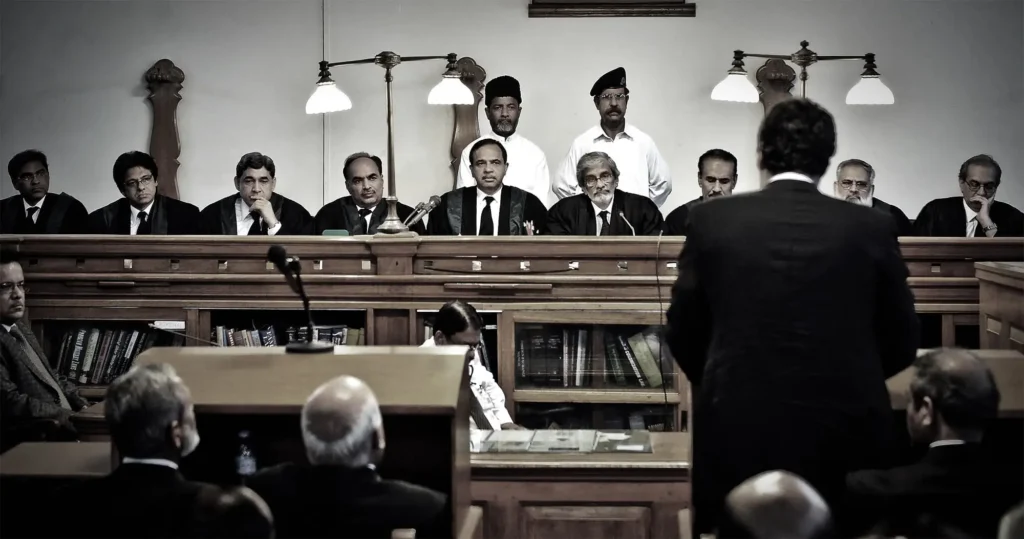
On January 26th, coinciding with India’s Republic Day, the National Defence University (NDU) hosted a pivotal seminar titled “Policy Dialogue: Constitutionalism vs Ideology in Modern India.” The purpose of the session was to dissect a critical question, is the world’s largest democracy still governed by its secular constitution, or has it been hijacked by a singular, exclusionary ideology? Muhammad Munim Hamid served as the moderator of the seminar, which included a panel of eminent personalities, such as Ambassador Afrasyab Mehdi Hashmi, a long-serving veteran diplomat; Senator Mushahid Hussain Syed, Chairman of the Senate Standing Committee on Defense; and Dr. Moeed Yusuf, former national security advisor of Pakistan and current Vice Chancellor of Beaconhouse National University.
The Ideological Engine: From 1925 to the Present
The seminar began with a documentary named “India’s Ideological Engine”, which dated the origins of the Rashtriya Swayamsevak Sangh (RSS) to September 1925. Ambassador Afrasyab Mehdi Hashmi stressed the fact that the RSS has ceased to be a peripheral group but has become the main nervous system of the Indian state. He pointed out that the founding fathers of this ideology considered Islam to be a poison, and they had a vision of a territory that was much bigger than the current borders of India. Ambassador Hashmi noted a symbolic twist that it seems nowadays Nathuram Godse, the murderer of Mahatma Gandhi, is often held in higher regard by the ruling elite than Gandhi himself.
The Ambassador also gave a rich historical background, pointing out that the psychology of Hindu fascists is closely tied to a wish to rediscover some mythical past. He referred to the fact that the RSS emphasized the name of Bharat, and its historical connection to the Pakistani town of Taxila, where they purport that the Mahabharata was first pronounced. He even referred to the execution of Godse, he added that the last desire of Godse was that his ashes be put in the Indus River only when it goes back to Bharat Mata. This historic fascination, Hashmi claimed, guides the aggressive posture of the present Indian state toward its neighbors and its systematic destruction of the secular tradition of Gandhi.
Three D Strategy of Hindutva
Senator Mushahid Hussain Syed made a stark evaluation of how this ideology translates into state policy. He referred to the words of Indian writer Arundhati Roy, who once wrote that “The RSS is the State”, in an effort to show that the constitutional facade is being employed to cover a fascist architecture. Senator Syed believes that the current Indian administration has adopted a Three D Strategy to retain its hold and spread its influence. The initial pillar is Demonization, which implies the attack upon minorities, namely Muslims, Dalits, and Sikhs, as foreigners or domestic threats. He pointed out that it is a typical sign of genocide, as defined by the experts, such as Dr. Gregory Stanton, where a community is othered and then destroyed.
The second pillar is Disinformation which is based on the so-called unofficial ministry of propaganda, such as Bollywood and social media, and disseminates false stories. He referred to the 2020 EU DisinfoLab report as evidence of an international smear campaign against Pakistan via a list of disinformation websites and groups. The third pillar is Destabilization, which is the involvement in international actions and the attack on dissidents in foreign countries. Senator Syed cited the recent allegations of targeted killings in Canada and the United States as some of the evidence that Indian ideological warfare has reached an international level. He cautioned that the Greater India or Akhand Bharat is an expansionist fantasy that poses a danger to the sovereignty of Pakistan, Afghanistan, Bangladesh, and even Central Asia.
The Death of Diplomacy and Rationality
Dr. Moeed Yusuf brought the discussion towards the implications to the policies. He claimed that India can be rational in its relation with the rest of the world, but its attitude towards Pakistan is entirely ideological. He pointed out that a sensible national dialogue could not possibly exist any longer since the present Indian leadership considers the very existence of Pakistan an insult to their ideology. Dr. Yusuf has noted that Pakistan has taken the form of a calling card to secure the electoral votes in India. When they fail to keep promises of service delivery and economy, the ruling party turns to bigotry to rile up the sentiments, creating a cycle of hate that is increasingly difficult to break.
Dr. Yusuf also referred to the Hubris of the present Indian establishment. He argued that the development of the Indian economy has resulted in a feeling of invincibility, thus making them assume that they can turn Pakistan into a kind of satellite state or that they can marginalize it to the rest of the world. He reminded the audience that India should not be seen as a monolith, as most people in Southern and Eastern India are not as bitter as the Northern Hindutva heartland. But he cautioned that the greater the time this ideology is left unchecked, the more it will reveal and entrench the fault lines within India itself, and it may even result in internal division.
The Brahmin Mindset and Internal Decay
The speakers also covered the internal social rot created by extremist ideologies in the Q&A session. Senator Mushahid Hussain Syed provided a touching story of former Indian Defense Minister, Dalit, Jagjivan Ram, who took his own tea and water to meetings with the cabinet because his high-caste colleagues would not allow him to eat with the rest of the cabinet, even in the apparently secular administration of Indira Gandhi. It is this Brahmin mentality, the speakers claimed, that gives rise to Hindutva, a philosophy of internalized superiority that turns against its own people.
The panel talked about how this exclusionary structure establishes a hierarchy where everyone who does not conform to a particular high-caste Hindu identity is marginalized. This translates into the systematic undermining of the egalitarian values in the original Indian constitution. The speakers pointed out that once an ideology that is founded on a sense of ingrained superiority on matters of faith takes over state institutions, it destroys the chances of difference of opinion and finally results in the state of unceasing internal battle.
The Path Forward for Pakistan
The seminar ended with the call for strategic clarity. Dr. Moeed Yusuf recommended that Pakistan should be analytical and not emotional. He emphasized the need to know the glasses of the adversary, to analyze their view of the world, so that the interests of Pakistan can be safeguarded. He recommended that the nation must concentrate on its development and leave the fascist character of Hindutva to the international community. The overall opinion of the guests was clear that India of 1947, with its vision of secularism of Gandhi and Nehru, is being substituted by the state with the RSS vision of a Hindu Rashtra.
In the case of Pakistan, this will require the adoption of a Minus-India regional approach to tighten the relationship with other neighbours such as China, Bangladesh, and Central Asian countries, while remaining vigilant against a neighbour that is increasingly choosing ideology over its own constitution. As Senator Syed has rightly mentioned, the vision of Quaid-e-Azam Muhammad Ali Jinnah about the incompatibility of these two mindsets appears more ominous today than at any time in the past. Pakistan must lead by example, maintaining its own constitutional values while navigating the challenges posed by a neighbour in the midst of a radical ideological transformation.

Our Editorial Desk is the intellectual engine of Digital Debate, responsible for the rigorous research that anchors every conversation. Our team deep-dives into data, checks every source, and consults academic literature to move beyond headlines and identify the questions behind the questions.