Military theorists and policymakers frequently hailed the first decade of the 21st century as the start of the era of surgical war, a high-tech war characterized by precision attacks, minimal collateral casualties, and the rapid accomplishment of limited political ends with high-technology weapons. This doctrine was a guarantee of clean, detached warfare in which the horrors of urban destruction would be avoided under the banner of better intelligence and machine weaponry. However, as the world enters the mid-2020s, this narrative is overshadowed by a grim reality, where territorial destruction is a systematic, not accidental, result of conflict.
In modern conflict, the nature of conflicts has changed from seeking a military victory to unmaking the environment and society altogether. The “Apocalyptic Wasteland” is not just a poetic or hyperbolic depiction of urban debris, but a clinical, quantifiable condition, where a land has become biologically, economically, and socially unfavorable to support life in the future. By looking at the world hotspots from this perspective, the aim of modern warfare seems to be more and more to eliminate the possibility of life itself.
The Anatomy of the Wasteland
The production of a wasteland is dependent on the calculated deconstruction of the elements that enable human life to continue existing within a specific geography. This entails the intended erosion of four important pillars:
- Environmental Viability: Contemporary high-explosive weapons are not only capable of demolishing buildings but also poisoning the ecosystem. As indicated by UN Environment Programme (UNEP) measurements, the chemical load of heavy metals (lead, mercury, and uranium) makes soil toxic and invasive of water tables. By the beginning of 2024, the war had inflicted environmental damage amounting to 56.4 billion dollars in Ukraine, including the contamination of the Black Soil region, which is one of the most productive regions in the world.
- Infrastructure Totality: The focus has moved beyond attacking military assets to dual-use infrastructure. Since 2023, the World Health Organization (WHO) has reported more than 1,000 attacks on health care in Sudan. Once hospitals, water treatment facilities, and energy grids are destroyed, the territory is plunged into a state of multi-system failure, where manageable injuries and preventable diseases become mass-casualty events.
- Social Continuity (Epistemicide): A wasteland is also a place without memory. This is what has been called Epistemicide when universities, national archives, and registries are destroyed. In Sudan, UNESCO has raised alarms regarding the targeted looting of the National Museum. The social memory of a nation is deleted by destroying the records of who owns what land and the institutions that teach the next generation
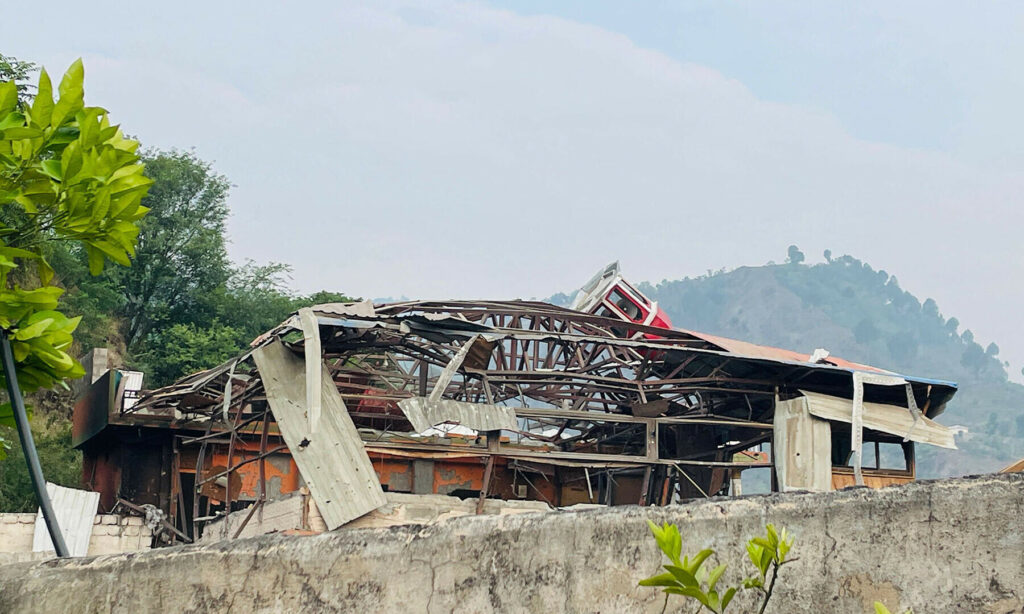
- Domicide: The method of permanent displacement by the mass destruction of housing. The intentional destruction of whole urban grids, streets, stores, and houses means that even in the case of a conflict ending, there is no home to come back to, thus reducing a temporary exodus to a permanent demographic change.
Regional Case Studies of Devastation
Gaza: The Urban Laboratory
Gaza is the most condensed form of wasteland in modern history. The UN estimates that more than 40 million tons of rubble now litter the strip, the bulk of which is contaminated with asbestos and medical waste. The International Campaign to Ban Landmines (ICBL) cautions that the concentration of unexploded ordnance (UXO) is so substantial (up to 10%-15% of all munitions fired) that the conventional methods of demining will require decades to eliminate them. This makes the land a permanent risk to children and farmers and essentially brings agricultural life to an end. Its inability to sustain biological life without external life-support is further cemented by the destruction of the aquifer via seawater intrusion and sewage degradation.
Ukraine: The Scorched Industrial Land
The wasteland in Ukraine is characterized by the continental scale of Industrial Ecocide. The Landmine Monitor 2025 reports that approximately 139,000 km2, roughly the size of Greece, is potentially contaminated with explosives. Not just the mines, the collapse of the Kakhovka Dam left an ecological desert, cutting off the irrigation to the millions of people and leading to the mass extinction of local plants. The estimated financial cost of demining (29.8 billion dollars) will leave a lasting economic wasteland, draining the national treasury for generations and preventing the return of heavy industry.
Sudan: The Dismantled State
In Sudan, the wasteland is defined by the physical destruction of the functional capacity of the state. According to the International Rescue Committee (IRC), by the beginning of 2026, more than 70% of the hospitals in the country are out of operation, and in many cases, have been converted into military bases. The ACAPS Humanitarian Access report calls attention to the way in which cities, such as Khartoum and Wad Madani, have been dismantled, i.e., systematically stripped of their copper wiring systems, plumbing, and industrial equipment for scrap. This leaves behind concrete shells that cannot even support basic hardware to begin a functioning urban economy, turning former trade hubs into silent, hollowed-out monuments of ruin.
Yemen: The Starvation Wasteland
In Yemen, the wasteland is not formed by the presence of rubble, but by the absence of infrastructure for the movement of goods. According to satellite images obtained by Lloyd List, the systematic crippling of Hodeidah Port’s heavy-lifting cranes and fuel terminals in 2024 and 2025 effectively severed the nation’s primary umbilical cord. This blocks 90% of food and medicine that the country needs, as reported by the Human Rights Watch. By destroying food processing plants and cold-chain storage alongside transportation hubs, the conflict has made it difficult for basic necessities to reach people.
Syria and Myanmar: The Normalization of Ruin
The wasteland is used as a permanent Gray Zone in Syria and Myanmar to control dissent. According to the UN and World Bank Assessment, in Aleppo and Homs, the ruins have become an inseparable part of the landscape, with families residing in skeletal buildings that offer no safety whatsoever. Likewise, in Myanmar, Amnesty International documents that the Four Cuts policy that the junta has followed has incinerated more than 100,000 homes. The wasteland, in both instances, is utilized as a psychological tool; the perpetual ruin keeps the people demoralized to carry on in the fight, and their energies are directed to survival instead of politics.
The Generational Shadow
The real wasteland of the 21st century is the long shadows of the effects of conflicts, where the damage persists far beyond the cessation of strikes. This shadow manifests itself in the form of a genetic burden, where toxic munitions and the destruction of sanitation cause the explosion of birth defects and chronic diseases. It is a reality where the wasteland continues to claim lives through the very DNA of the survivors.
Economically, it is frequently more expensive than the entire GDP of the area to clean up mines, clean up the soil, and restructure power grids, resulting in a permanent dependency and an underdeveloped state. Perhaps, the worst part of the present-day wasteland is that it has become normalized. The apocalyptic wasteland becomes an established category of administration as a gray zone that the world just learns to overlook.
The Debt of the Future
Contemporary war is not terminated with a treaty; it is terminated with a reconstruction debt, which in this life can never be settled. The message of current global conflicts is clear that the traditional goal of conquering and governing has changed to eliminate the very possibility of a functioning society. Systematic destruction of the physical, ecological, and social infrastructure of a territory by the aggressor means that peace is merely the continuation of wasteland by other means. In this regard, the cessation of hostilities is not a relief but the culmination of a deficit that is permanent. The financial price of remediation, on these multiple fronts, is too expensive; it keeps these regions stuck in a state of ruin.

Our Editorial Desk is the intellectual engine of Digital Debate, responsible for the rigorous research that anchors every conversation. Our team deep-dives into data, checks every source, and consults academic literature to move beyond headlines and identify the questions behind the questions.