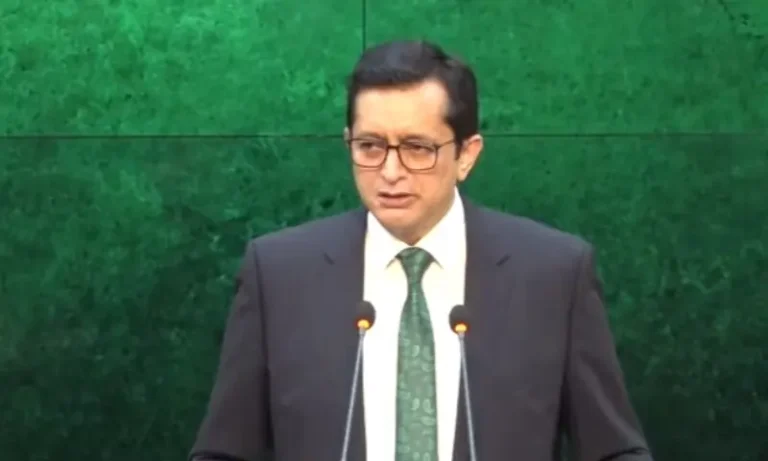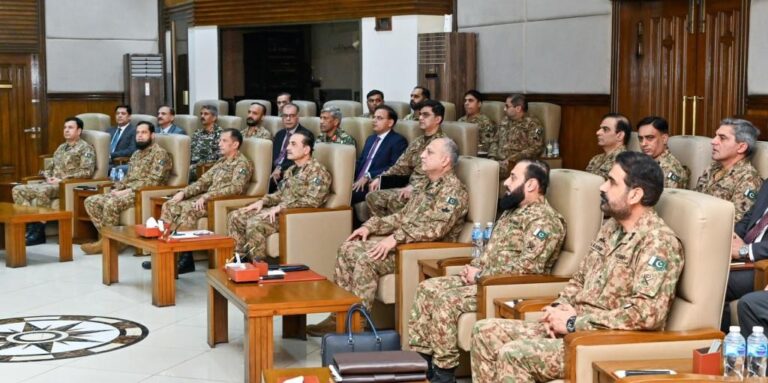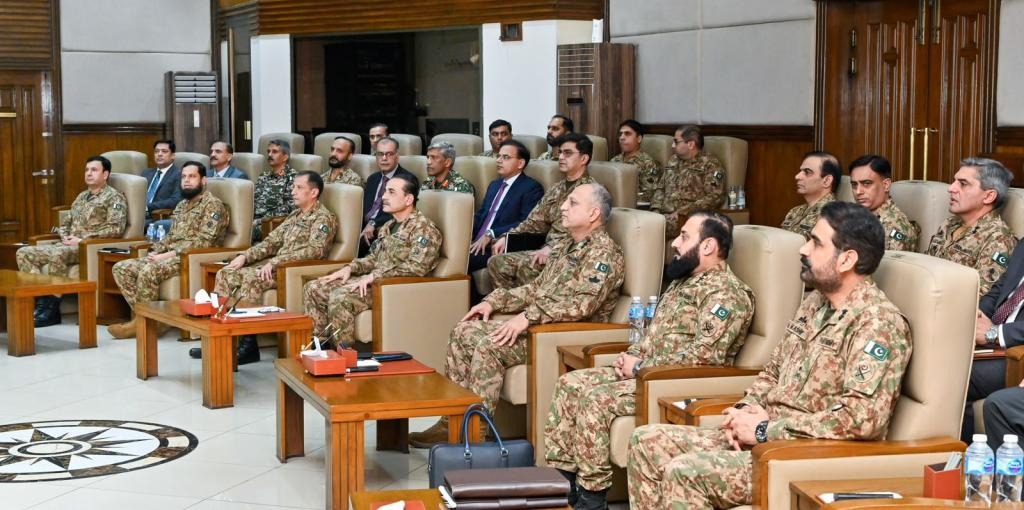
A meeting was held at the halls of the Russian Ministry of Defense in Moscow on January 28, 2026, which a few years ago would have been unthinkable. Russian Deputy Minister of Defense Vasily Osmakov and Afghan Deputy Minister of Defense Strategy and Policy, Mohammad Farid, sat opposite each other to talk about formal defense cooperation. This was not a simple diplomatic courtesy; it was the foundation of a relationship that has moved beyond mutual distrust to one of strategic necessity.
The Kremlin has made a calculated shift to the Global South under the leadership of Russian Defense Minister Andrey Belousov, a technocrat whose task is to incorporate the military-industrial complex into the overall economy. Moscow sees Afghanistan as a key building block in a new Eurasian security structure. The agreement this week to develop a more systematic and structured framework of continued cooperation is the latest milestone in the timeline that saw Russia become the first major power to officially recognize the Taliban government on July 3, 2025.
A Marriage of Pragmatism
The evolution of Russian Afghanistan policy is a masterpiece of Realpolitik. During the last 20 years, Moscow perceived the Taliban through the prism of the 2003 declaration of the group as a terrorist organization. But the vacuum created by the US withdrawal in 2021 and the further emergence of the Islamic State Khorasan Province (ISIS-K) compelled a dramatic reevaluation. Instead of seeing the Taliban as a potential adversary in the region, Moscow now sees them as a valuable functional ally. Russia, by removing the Taliban from its list of banned organizations and formally recognizing them, has placed itself in the position of the sole external security guarantor in Central Asia, circumventing Western-led sanctions and diplomatic standards.
The Regional Domino Effect
The recognition by Russia has transformed the regional calculus. To the Central Asian republics, specifically Tajikistan, Uzbekistan, and Turkmenistan, the lead taken by Moscow gives a green light to further engagement. A “Moscow Format Plus” world is emerging in which the stability of the region is pursued not by the democratization of the areas, but by integration into the economic realm. Afghanistan is viewed as the gateway between the resources of Central Asia and the warm waters of South Asia. By incorporating Kabul into the Moscow Format and the Shanghai Cooperation Organization (SCO) dialogue, Russia and China are practically creating a post-Western regional order, in which stability, rather than political reform, is central.
Socio-Political and Humanitarian Fallout
The geopolitical reasoning is quite legitimate, but the social consequences of the Russian acknowledgment are quite debatable. By giving the Taliban a free pass without expecting them to make concessions on human rights, particularly the rights of women and girls, Moscow has effectively sent a message that sovereignty and security are superior to social values.
To the Afghan society, Russia’s recognition is a two-edged sword. On the one hand, official diplomatic and economic relationships will offer a lifeline to a crippled economy and possibly help reduce the humanitarian crisis that gripped the country since 2021. On the one hand, it gives the more radical sections of the Taliban leadership the sense that they can gain some international legitimacy without having to change their domestic policies.
The Broader Global Implications
With the current conflict in Ukraine and the isolation of Russia by the West, the Afghan partnership is symbolic. It is a refutation of the pariah state narrative. Hosting Minister Farid and Foreign Minister Amir Khan Muttaqi, Moscow shows that it is the hub of a different diplomatic universe, one in which the West and its rules-based order have no influence.
However, this remains a high-risk gamble that directly challenges recent United Nations warnings. The UN Security Council monitoring reports published at the end of 2025 and the beginning of 2026 have repeatedly described the claims by the Taliban to have a terror-free Afghanistan as not credible based on the continued existence of Al-Qaeda safe houses and training camps throughout the country. As the UN records that the Afghan soil remains a launchpad to transnational organizations such as the Tehrik-e Taliban Pakistan (TTP) and the ISIS- K, the formal recognition granted by Russia may be remembered as a long-term security concession in favor of a short-term influence.

Our Editorial Desk is the intellectual engine of Digital Debate, responsible for the rigorous research that anchors every conversation. Our team deep-dives into data, checks every source, and consults academic literature to move beyond headlines and identify the questions behind the questions.