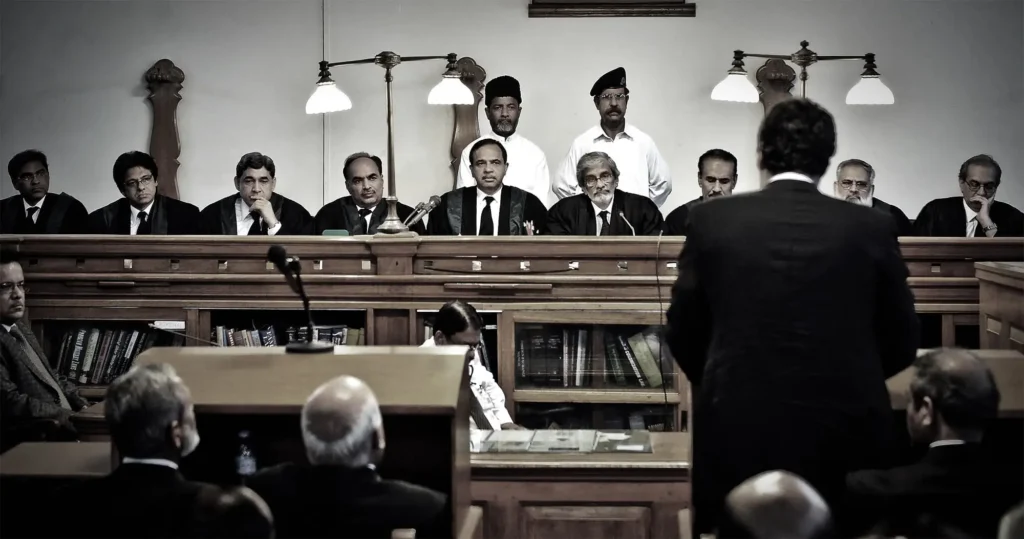
In late January 2026, the international community was forced to confront a reality many had thought was long forgotten. Leaked reports and human rights assessment of a newly ratified Taliban penal code, a 119-article document passed by Supreme Leader Hibatullah Akhundzada, show a terrifying legislative change, the legalization of slavery in the Afghan state. By specifically using such words as ghulam (slave) and by the clear separation of the free and the enslaved in Articles 4 and 15, the Taliban has disregarded modern human rights. This is not a procedural oversight. It is the deliberate reconstruction of a medieval order that is aimed at disenfranchising the weak of their natural dignity.
The Architecture of Oppression
The new code does not simply reference slavery but creates a legal system around it. According to reports released by surveillance organizations, the code permits the discretionary punishments (ta’zir) to be implemented, depending on whether an offender is free or a slave. This distinction essentially revives the legacy of slavery by establishing a legal foundation for human ownership, disguised as Sharia-based corrections. Moreover, Article 4, Clause 5, allegedly gives masters (slave owners) the authority to carry out punishments themselves. This is a complete failure of the rule of law, delegation of violence from the state to private owners, and substituting the rule of law with a system in which human beings have been reduced to property to be administered through corporal discipline.
A Society Fractured by Class
The most disturbing is probably the fact that the code explicitly separates the Afghan people into a four-tier caste system. The highest is the clerical elite, comprising religious scholars who get only advice on their transgressions, practically putting them above the law. Under them come the nobles, including tribal elders and merchants, and then there is a middle group that is subject to normal imprisonment. The bottom of this pyramid is the lower class, people who are not only imprisoned but also humiliated by being subjected to public corporal punishment. With this stratification of class justice overlayed on a free vs. slave dichotomy, the Taliban have created a world where justice is a commodity reserved for the elite and suffering is the mandatory lot of the poor and the slaves. This is human apartheid, where legal status will be based on birth, status, and ownership.
The Global Outcry
The news has sparked an international debate, significantly amplified by high-profile figures like Elon Musk, whose reactions of “Wow” and “Good question” to reports of the return of slavery sparked widespread viral engagement. On platforms like X, these reports have been used as a tool in Western political debates, with many users questioning the lack of outrage from specific activist groups and highlighting perceived hypocrisies in focusing on historical slavery while modern barbarism is being institutionalized in real time. Such digital outcry, led by memes, frequently reduces the actual situation in a group to a political sound bite.
Despite this online outcry, the international community’s official response has been half-hearted. Humanitarian assistance is still being delivered, which is necessary to avoid massive starvation, but there is an increasing fear that such assistance is actually indirectly subsidizing a regime that is now legally defending exploitative practices and forced marriage of girls. The State Department 2025 Trafficking in Persons Report had already listed Afghanistan at Tier 3, the lowest level possible. This new penal code suggests that even that designation may be too generous.
Modern Slavery in Practice
Legalization of slavery is not occurring in a vacuum. It is the institutionalization of practices that have plagued Afghanistan over the years, though they were at least formally illegal under former regimes. A case in point is that even though Taliban commanders publicly deny it, bacha bazi (sexual exploitation of young boys) is thriving in Taliban-controlled areas where they regard such children as spoils of war. Moreover, the radical subordination of women has brought about a form of household concubinage. In a society where women are not allowed to be educated, move, and work, and the male master is legally allowed to enforce his will as a slave-owner, then the boundary between marriage and slavery is nearly eliminated. This is a systemic slavery that goes into the economic sector, especially in the brick kilns and poppy fields, where they are in generational debt bondage, and the new code does not stop it at all, but only facilitates it.
Over the years, some diplomats have argued that pragmatic engagement would help tame the Taliban. The 2026 penal code is the final, bloody nail in the coffin of that theory. One cannot engage a regime in recognizing human rights when its foundational legal document views humans as property. It is a digital, technologically enabled totalitarianism, using ancient language to justify 21st-century atrocities.
Conclusion
The world cannot look away. Inclusion of slavery in a national penal code is an insult to all international documents signed since 1945. If the United Nations and the global powers allow the ghulam system to be restored without severe, unprecedented consequences, they signal to every other would-be autocrat that the era of universal human rights is over. Afghanistan is not merely a nation in crisis, but a crime scene where the law itself has become a weapon against humanity. The criticism needs to be loud, and the sanctions need to be targeted. The world must decide whether words like ‘master’ and ‘slave’ are acceptable legal terms or if it is a truly free world.

Our Editorial Desk is the intellectual engine of Digital Debate, responsible for the rigorous research that anchors every conversation. Our team deep-dives into data, checks every source, and consults academic literature to move beyond headlines and identify the questions behind the questions.