Sheikh Mohamed bin Zayed Al Nahyan’s two-hour visit to New Delhi on January 19, 2026, may have been brief, but it formalized a relationship that has been quietly deepening for years. The agreements signed, spanning defence, trade, energy, and technology, reflect how two middle powers are navigating an increasingly multipolar world through partnerships built on pragmatic self-interest rather than historical alliances or ideological alignment. The decision to focus on India, as opposed to the conventional regional alliances, has fundamentally changed the script of Indo-Gulf relations in the decade to come.
The $200 Billion Ambition
The core of this visit is an incredible economic target of doubling bilateral trade to $200 billion by 2032. It is based on the success of the 2022 Comprehensive Economic Partnership Agreement (CEPA), which has already propelled bilateral trade to nearly the $100 billion mark, according to international observers. This is not just an aspirational target; it is supported by specific infrastructure initiatives.
The decision by the UAE to invest in the Dholera Special Investment Region, which includes an international airport and green-field ports and energy hubs, makes the Emirates a main stakeholder in the industrial future of India. UAE sovereign wealth funds are also being invited to join in a second multi-billion-dollar infrastructure fund that will be launched later in 2026.
Energy 2.0 and the Tech Frontier
The 10-year, three-billion LNG agreement between Abu Dhabi National Oil Company (ADNOC) and Hindustan Petroleum Corporation Limited (HPCL) guarantees real-time energy security; however, the real pivot can be seen in the move to next-generation power. The exploration of nuclear cooperation, namely the Small Modular Reactors (SMRs), is closely monitored by international energy experts. This civil nuclear cooperation represents an important extension of the UAE’s strategy of Energy 2.0 to South Asian partners.
Likewise, the emphasis on AI supercomputing clusters, as well as a partnership between the UAE and G42, and the concept of “Digital Embassies,” all indicate that the two countries consider data to be a new strategic resource. These digital embassies are intended to serve as a secure sanctuary of national data on mutually accepted sovereignty frameworks, a move deemed a breakthrough in digital diplomacy.
A New Strategic Framework
On the security front, the most significant outcome is the signing of a Letter of Intent for a Strategic Defence Partnership. This action has a lot of geopolitical implications, especially for the past relationship between the UAE and Pakistan. Over the decades, Islamabad had a special relationship with the Gulf states. The international community, however, sees this new agreement, which includes cyber security, joint training, and counterterrorism, as an implicit preference for Indian economic and security predictability over the less reliable trilateral arrangements being formed in other regions of the region.
Implications for Pakistan
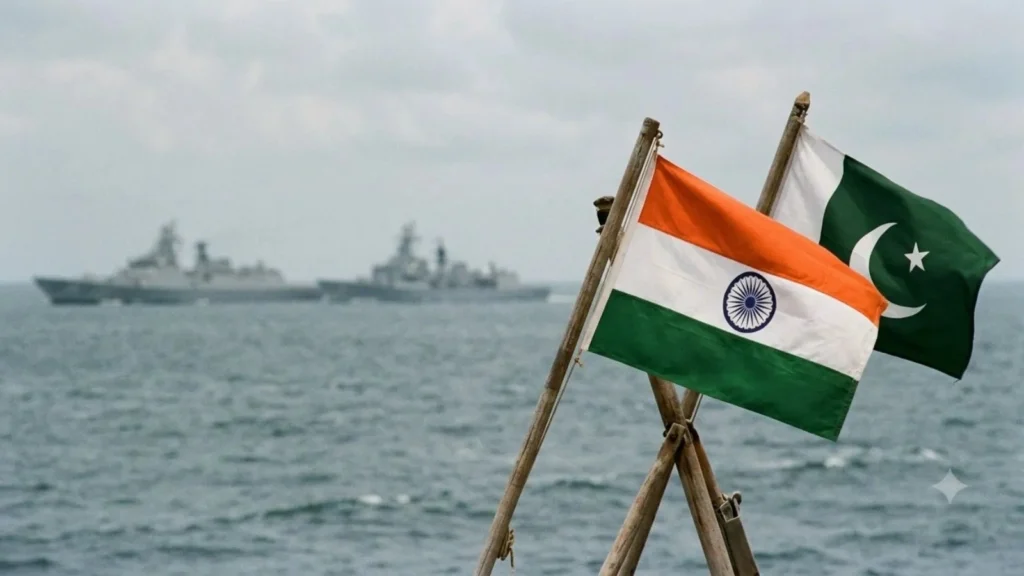
The timing of this defense elevation is particularly pointed. Only four months ago, Pakistan and Saudi Arabia closed a deal to enhance their decades-old defense relations, and there have been reports of an intended trilateral defense agreement between Pakistan, Turkey, and Saudi Arabia. The move by the UAE to respond to this by establishing a formal India-UAE defense alliance indicates an escalating drift between the two Gulf giants.
Analysts regard this as a strategic de-hyphenation. As Pakistan wrestles with economic instability and depends on Gulf bailouts, the UAE is making India a peer-level strategic partner. The economic disparity is equally stark; the $200 billion India-UAE trade target dwarfs Pakistan’s roughly $20 billion in Saudi-linked investment deals. To Pakistan, it is not only economic marginalization but a declining position as the traditional security guarantor in the Gulf, as the UAE turns to the more stable and professional Indian military-industrial complex.
The Geopolitical Re-alignment
The open endorsement of India to host BRICS 2026 by the UAE strengthens the existence of a multipolar world order in which middle powers determine the conditions of engagement. The visit also highlighted the significance of the India-Middle East-Europe Economic Corridor (IMEC), and both leaders reiterated their focus on the strategic jugular of global trade.
The visit in January 2026 confirms that the India-UAE relationship has developed into a multi-dimensional, rooted partnership. With the world in growing uncertainty, the alliance, monitored closely by global powers, shows a clear departure from the oil-dependent and ideological unions of earlier generations.

Our Editorial Desk is the intellectual engine of Digital Debate, responsible for the rigorous research that anchors every conversation. Our team deep-dives into data, checks every source, and consults academic literature to move beyond headlines and identify the questions behind the questions.