On June 7, 2026, a 29-year-old postgraduate trainee doctor Mahnoor Nasir was working in the surgery ward of Civil Hospital in Quetta when a man knocked on the door of her room and thew acid on her. The attacker Humayun Shah, a contractual lift man at the same hospital, had been harassing her for months. Messages on his phone confirmed a pattern of unwanted contact before the assault. Dr. Mahnoor suffered burns to her face, abdomen, legs, and right hand. She was airlifted to Karachi for specialist care at Aga Khan University Hospital at the Balochistan government’s expense. The suspect was killed in a police encounter the same day. Quetta’s Young Doctors Association called for an indefinite strike in the government hospitals, demanding the setting up of a judicial inquiry and accountability of hospital officials for the security lapse. The attack took place within a public institution, in a ward within working hours. It was not a dark alley or a remote village, but a hospital.
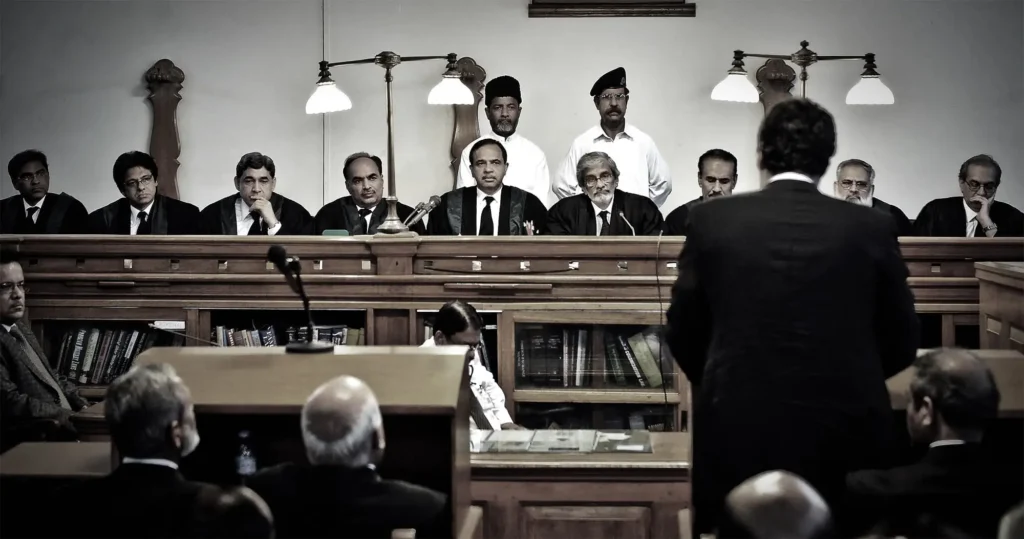
Two days later, the Supreme Court delivered its landmark verdict on acid violence in the years. In a landmark 21-page judgment authored by Justice Muhammad Hashim Khan Kakar, the court upheld life imprisonment for a Faisalabad man who threw acid on a girl in her own kitchen in 2019, rejected his plea for leniency on grounds of age, and declared acid attacks “more heinous than homicide.” In the case of brutal and premeditated crimes, the court ruled there could be no shield of minor age and said that the aim of a perpetrator is not just to kill, but to destroy the victim’s soul. The ruling’s language was striking in its directness. It gave acid violence the status of a weapon of patriarchal control, one that is meant to remain as a permanent reminder to the living of the attacker’s depravity.
What the Court Directed
In addition to the sentence, the judgment contained a detailed set of directions that cover the shortcomings of Pakistan’s response to acid violence at the structural level. The court ordered the complete prohibition of over-the-counter sale of the acid to the public, suggesting the need to create a centralized digital system where the buyer needs to present an identity card along with a biometric verification before buying the acid. It directed that all expenses for plastic surgery and psychological treatment of victims be borne by the state, recommended monthly stipends for survivors rendered permanently disabled, and called for special quotas in education and welfare schemes for acid attack survivors.
The court further recommended that the federal and provincial governments set up a National Acid Survivors’ Rehabilitation Fund for comprehensive medical cover, trauma counselling and psychotherapy, and that a copy of the judgment be sent to all the High Courts, provincial law departments and Attorney General. These are not symbolic gestures. They would be institutional instructions that, if followed, would tackle the three aspects of the crisis, deterrence, access to acid, and rehabilitation of survivors.
Legislation and Its Limits
Pakistan’s legislative record on acid violence is more substantial than most people know, and less effective than it should be. Following persistent advocacy by women’s groups and a Supreme Court ruling calling for a national law on the issue, the Acid Control and Acid Crime Prevention Act of 2011 was passed. It criminalized acid attacks in particular and established regulations for the sale of acids. Section 336-B of the Pakistan Penal Code prescribes life imprisonment or a minimum of 14 years for acid attacks causing grievous hurt. These are serious penalties on paper. The Quetta FIR was registered against Humayun Shah under Section 336-B, showing the law was applied. The law functioned, still the attack happened.
In Quetta, a hospital employee was harassed by a doctor for months before attacking her at her place of work with a substance that he obtained without any documented record of purchase. The Supreme Court ruled on June 9 that such attacks are worse than murder. The ruling is correct. An attack happened two days before it. The acid that caused it was not regulated. The gap between those two facts is what Pakistan still has to close.

Our Editorial Desk is the intellectual engine of Digital Debate, responsible for the rigorous research that anchors every conversation. Our team deep-dives into data, checks every source, and consults academic literature to move beyond headlines and identify the questions behind the questions.