The Unsigned Guarantee
Kharjeeyat, Allegiance, and the Regional Cost of Five Years of Taliban Rule
Five years after the Taliban’s return, Kabul offers its neighbours assurances in the room and withholds them on paper. This brief explains why, and what Pakistan and the region should watch over the next 12 months.
Kabul Will Say It. It Will Not Sign It.
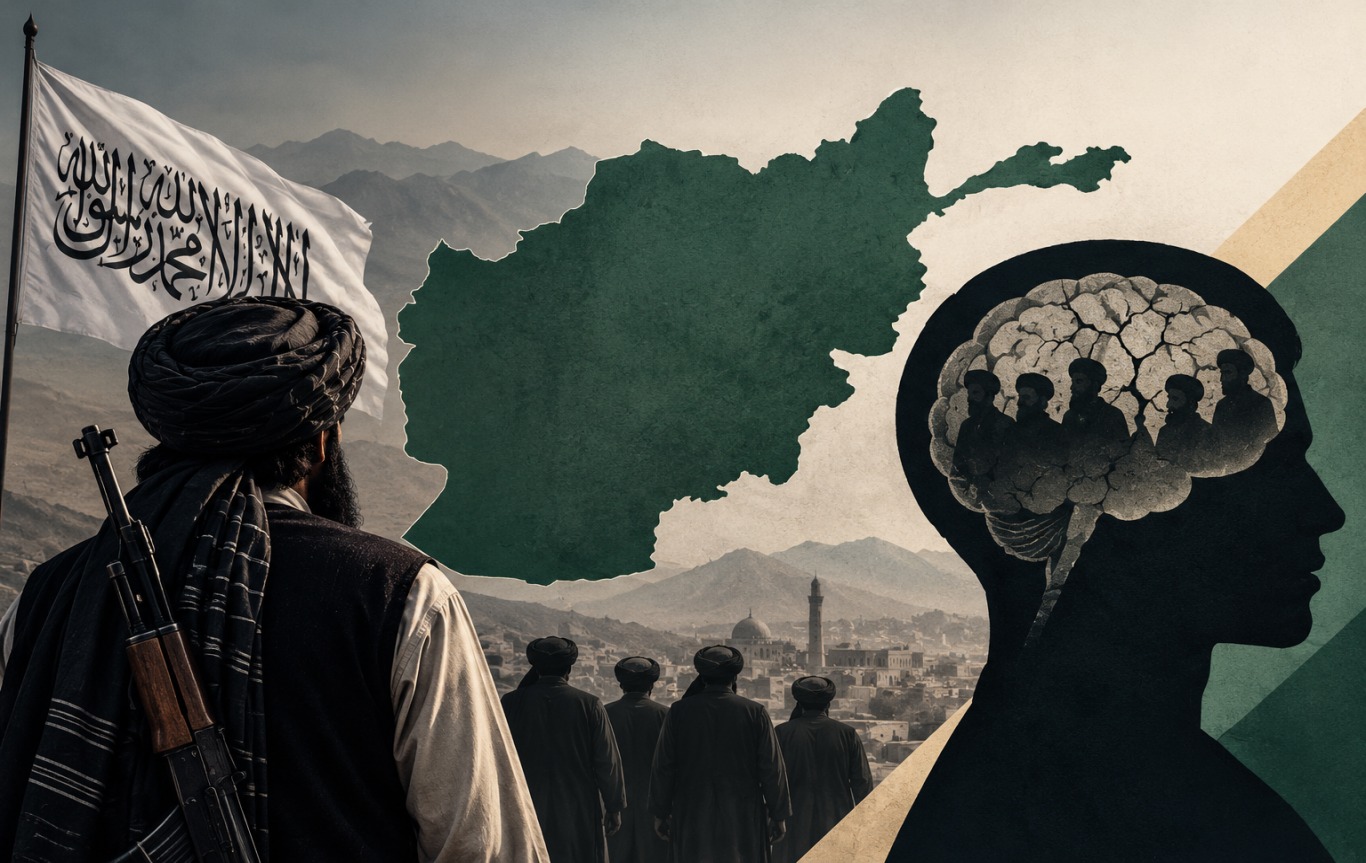
In Istanbul in November 2025, the Afghan delegation agreed with Pakistan’s position across the table, then declined to put it in writing. DD argues that the missing signature is not a tactic but a structural limit.
Kabul fights the group that calls its leader an apostate and tolerates the groups that have sworn allegiance to him. We call this the allegiance rule. A written, verifiable guarantee against the Tehreek-e-Taliban Pakistan (TTP) would ask the Amir to act against men sworn to him.
“The assurance is offered in the room and withheld on paper.”
Five Years in Eight Numbers
Six Key Judgements
Kabul’s security policy follows an allegiance rule.
It fights Islamic State Khorasan Province (ISKP), which declares its leader an apostate, and tolerates the TTP and al-Qaeda, which have pledged allegiance to him.
That is why the guarantee stays unsigned.
A written, verifiable promise against the TTP would require the Amir to act against men sworn to him.
Kharjeeyat explains part of this, but not all of it.
Rigid interpretation and widening takfir are real. Factional rivalry, kinship ties, fear of defections and a war-shaped economy matter as much.
Pakistan carries the heaviest cost.
2025 was its deadliest year in a decade, and bilateral trade fell by about 28 per cent.
Afghans carry the deepest cost.
More than 2.6 million girls are out of secondary school, three in four people cannot meet basic needs, and only 26 per cent of this year’s humanitarian plan is funded.
The north is the fault line to watch.
In Badakhshan, armed resistance, foreign militants and mining disputes now overlap.
Two Readings of One Problem
Should Pakistan insist on a written, verifiable guarantee from Kabul?
How Islamabad Frames the Problem
The demand is narrow and consistent. Afghan soil must not be used for attacks on Pakistan. Assurances have not reduced the violence, and Kabul has signed written commitments before, in Doha in 2020.
Pakistan relied on visits, committees and border meetings for four years before turning to pressure.
How Scholars Complicate the Picture
A signature may be the one thing Kabul cannot give, so insisting on paper risks locking in deadlock. Closures fall hardest on traders and border families.
Observable steps, such as moving TTP cadres away from the border, may matter more than a text that is never enforced.
Four Worlds to October 2027
Talk without Text
Most likely
Talks continue through Doha, Ankara and Beijing while crossings open and close with each attack.
A Text on the Table
Less likely
A signed text with a third-party monitor, and some TTP cadres moved away from the border.
Two Fronts
Plausible
Pressure in the north makes allies such as the TTP more valuable to Kandahar, not less.
Signing under Strain
Unlikely
A weakened leadership signs to secure its eastern flank, but its capacity to enforce is thin.
Will Kabul sign a counter-terrorism text that names a third-party monitor?
Will UN monitors report verified moves of TTP leaders and fighters away from the border?
Will resistance attacks, mining disputes and district losses in Badakhshan rise or fall?
Inside the Brief
Concept and Allegiance
Kharjeeyat as a lens, and the allegiance rule.
Governing
From insurgency to government, power networks, women and northern resistance.
Security & Region
The militant ecosystem on Afghan soil, cost to Pakistan, and regional engagement.
What Happens Next
Four worlds, options for each audience, and the conclusion.
DD Research Desk. The Unsigned Guarantee: Kharjeeyat, Allegiance, and the Regional Cost of Five Years of Taliban Rule. DD Research Brief No. 02. Islamabad: Digital Debate, October 2026. digdebate.com/research.
Continue the Debate
Produced by the DD Research Desk, Digital Debate, Islamabad. Information current to 25 October 2026. Corrections are made within 48 hours, with a dated note on this page.

DD Briefs
Digital Debate is an independent policy and governance platform examining the structural questions facing Pakistan. Its research programme covers federalism, public finance, human security and institutional reform.