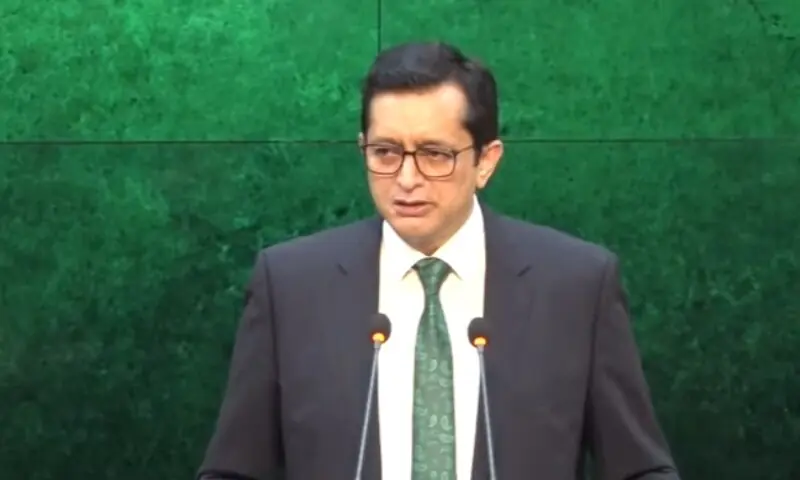
In May 2026, a Lahore resident noticed his gas bill had risen from Rs 3,960 to Rs 7,750 with exactly the same monthly consumption. The budget came two days after that bill. For most Pakistanis, that is the real context for reading what the finance minister announced. The government acknowledged it directly. Finance Minister Muhammad Aurangzeb acknowledged that inflation has made it more challenging for the salaried people and quoted the budget’s most critical measures aimed at addressing those challenges.
The total outlay of the federal government for FY2026-27 is at Rs 18.77 trillion, GDP growth is expected at 4%, and inflation is targeted at 8.2%. The inflation target is a result of the impact of the Iran war on regional energy costs, which is not under the government’s control, and has been addressed through domestic actions, such as the Rs 128 billion petroleum cost relief initiative in FY26.
Among the most significant changes for the salaried class in the budget were the following. Income tax rates were cut in four income brackets, the 9% surcharge on those earning salaries was withdrawn altogether, and federal government employees got a 7% hike in their salaries and pensions. The minimum wage was raised 10% to Rs 40,700 per month. These changes take effect from July 1. Salaried individuals paid over Rs 605 billion in income tax in FY2024-25, a 55% year-on-year increase, because employer withholding leaves no room for underreporting. The slab reductions directly address that burden and represent the government’s recognition that documented taxpayers have been carrying a disproportionate share of the tax load.
What the Poor Received
To the BISP, Rs 838 billion was allocated, an increase of 17 percent from the previous year, while the amount of stipend per family per quarter has been increased from Rs 13,000 to Rs 14,500, benefiting 10 million families. In the budget, BISP is one of the most consistently increasing expenditure lines, with the government also agreeing to increase the stipends in line with the cost-of-living under the IMF program.
In the area of electricity, the government is also pursuing a direct subsidy mechanism, whereby it will provide support to deserving households through BISP and not to all consumers through blanket tariff subsidies. A new energy efficiency initiative will phase out older fans and move towards energy-efficient models, and the expected result is reduced electricity use and costs for homes. There were also measures to streamline property transaction costs, with withholding tax on property purchases reduced from 2.5% to 1.25% and on property sales from 5.5% to 2.75% to encourage property development and provide jobs in the country’s largest labor sector.
The prices of several consumer goods, such as cosmetics, shampoo, and soap, are expected to drop for consumers after proposed input tax changes. The duty on raw materials used in local production was cut to 1%, and duties on auto parts used in the local industry were lowered from 20% to 10%, which will cut down on production costs, which in turn will be passed on to consumer prices over time.
The Revenue Plan That Makes It Work
The FBR’s plan for FY27 is to increase cross-checking of retail and wholesale sectors, expand digital invoicing mechanisms, and leverage artificial intelligence for audit capabilities, which resulted in the recovery of Rs 34 billion from 800 high-risk cases in the previous fiscal year, FY26. A faceless digital tax system and a new retailer taxation model for the 3 to 4 million currently undocumented traders are both part of the revenue strategy. Provincial agricultural income tax is also being activated, bringing a segment of the economy that has historically been undertaxed into the documented system.
The government’s approach is to use base broadening rather than rate increases to meet its revenue targets. That means the slab relief for salaried taxpayers is designed to be fiscally neutral at the aggregate level, offset by new revenue from sectors currently outside the formal tax net. The per capita income has increased from $1,751 to $1,901, foreign exchange reserves now stand above $17 billion, and remittances are expected to reach over $41 billion in FY26. The budget follows that progress with a definite emphasis on documented taxpayers paying less, undocumented sectors paying more, and the overall fiscal position improving in the framework of Pakistan’s IMF commitments.
The man whose gas bill doubled will see his income tax reduced from July 1. The budget cannot undo energy price pressures driven by a regional war. For the salaried worker, the BISP beneficiary and the employees of the construction sector, what it offers is a package of targeted improvements on the dimensions where the federal fiscal policy has direct control.

Our Editorial Desk is the intellectual engine of Digital Debate, responsible for the rigorous research that anchors every conversation. Our team deep-dives into data, checks every source, and consults academic literature to move beyond headlines and identify the questions behind the questions.