On June 11, the National Economic Council approved the national development budget of Rs 3.669 trillion for FY 2026-27, reducing the provincial development budget from Rs 3.138 trillion to Rs 2.218 trillion. The cuts were described as a ‘national sacrifice’. The NEC meeting, chaired by the Prime Minister, thanked provincial leaders for cooperating with the federal government in managing fiscal pressures. The cooperation was real. So was the nature of the sacrifices provinces had to make.
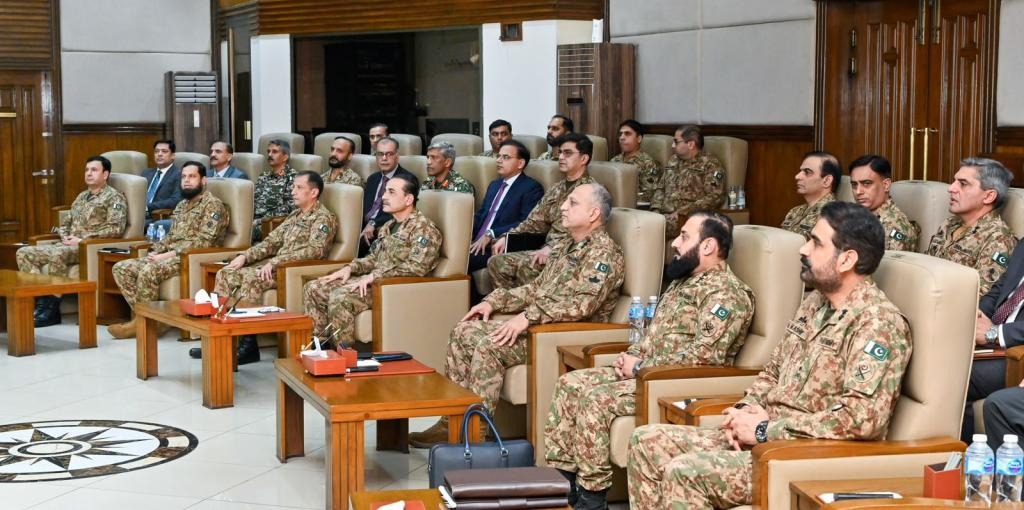
Punjab suffered the biggest cut in development allocation from Rs 1.450 trillion to Rs 749 billion, which represents a 49 percent decrease. Sindh’s budget was cut from Rs 816 billion to Rs 706 billion. The allocation to Khyber Pakhtunkhwa was reduced from Rs 564 billion to Rs 455 billion. The province of Balochistan was completely excluded, and its Rs 308 billion allocation remained unchanged. The Rs 920 billion cut in the province goes straight into the Centre’s strategic spending envelope, which is dominated by defence spending. The defence budget was increased by 17.6% to Rs 3,010 billion, from Rs 2,557 billion in FY25, due to what the government termed a “complex regional security environment”.
The rationale behind this reallocation is grounded in real conditions. Pakistan fought its most serious military conflict since 1971 last year. The Iran war has kept regional energy costs elevated. Terrorism on the western border called for operations that would create real fiscal pressure. The Prime Minister acknowledged that KP and Balochistan in particular have borne disproportionate human costs in the fight against terrorism, and that the entire nation was making sacrifices. The defence increase is not an abstract preference. It is a reflection of operational needs that arose from active conflict on several fronts during the year.
The Mechanism and Its Implications
The agreement between the Centre and the provinces is designed to prevent legal hurdles. To sidestep constitutional constraints on reducing NFC shares, an ad hoc mechanism was created: the Centre transfers full provincial shares to provincial accounts, and provinces then credit the additional amount back to the Centre. This preserves the constitutional form of NFC payments while redirecting the substance. The finance minister confirmed this arrangement will be continued for a fixed period beyond one year, without providing any timeframe.
The agreement between the Centre and the provinces is designed to prevent legal hurdles. To sidestep constitutional constraints on reducing NFC shares, an ad hoc mechanism was created: the Centre transfers full provincial shares to provincial accounts, and provinces then credit the additional amount back to the Centre. This preserves the constitutional form of NFC payments while redirecting the substance. The finance minister confirmed this arrangement will be continued for a fixed period beyond one year, without providing any timeframe.
The development implications deserve attention. No new projects will be initiated in the PSDP for FY27 except in the interior and defence ministries. Centrally managed education and health projects are ongoing in allocated funding, while new infrastructure, water, and connectivity projects are held in abeyance for another year. The planning minister recognized that the lack of growth in Pakistan is a consequence of a persistent underinvestment in education and skills. The budget itself cannot solve the tension created by freezing development appropriations, while claiming underinvestment to be the main issue.
The fiscal architecture of the budget is based on a revenue target for the FBR, which is expected to grow over time. FBR recovered Rs 60 billion through digitization in cement and sugar this year, and another Rs 34 billion through AI-based audits of 800 high-risk cases. Both programs expand in the new budget. A faceless digital tax system and a new retailer taxation model for 3 to 4 million currently undocumented traders are both included in the budget’s revenue strategy. If those measures perform, the Centre gains fiscal space without relying permanently on the provincial freeze. If the performance is less than expected, the freeze goes deeper.

Our Editorial Desk is the intellectual engine of Digital Debate, responsible for the rigorous research that anchors every conversation. Our team deep-dives into data, checks every source, and consults academic literature to move beyond headlines and identify the questions behind the questions.