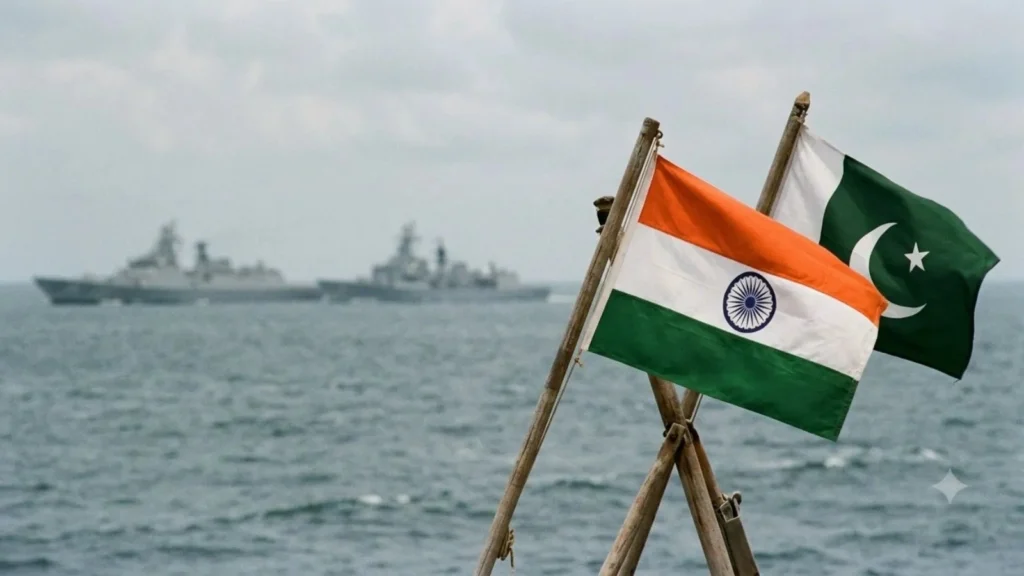
On April 23, 2025, India suspended the Indus Waters Treaty but did not employ the terminology of international law. It invoked the term “holding in abeyance,” which is not mentioned in the Vienna Convention on the Law of Treaties, not in the treaty itself, and not in the jurisprudence of international watercourse law. This selection of language was not an oversight, or a translation issue. It is an intentional construction that should be deliberately made to create a legally impossible position in respect of the rules which govern international treaties. Not a single country, among all of India’s partners and allies across Asia, Europe, and the Americas, endorsed the move. That silence is its own verdict.
The Vienna Convention on the Law of Treaties is the primary document that addresses the issue of treaty interpretation, amendment, suspension, and termination. It is not ambiguous on the question India is now pressing. A treaty can be terminated, but only if both parties agree. A treaty may be suspended, but only in accordance with its terms or by mutual agreement. One party does not have the right to unilaterally rescind a treaty for reasons that have nothing to do with the treaty.
The Indus Waters Treaty was signed in 1960. The subject matter is engineering, the distribution of the river systems, the engineering specifications of hydraulic structures, the processes for solving technical conflicts. It has nothing to do with terrorism, nothing to do with diplomatic incidents, and nothing to do with cross-border security allegations. Attempting to link the treaty’s suspension to the Pahalgam attack is not a legal argument. It is a political maneuver dressed in legal clothes, and the clothes do not fit.
The treaty also carries indefinite duration by design. It’s bound to the flow of the rivers, not to any fixed time. The agreement is valid until water is available. There is no exit clause, no sunset provision, no mechanism for unilateral withdrawal. The only way the treaty ends is if the rivers stop, or if both parties negotiate a replacement. India has done neither. It has merely declared that it regards the treaty as suspended, a word without legal force in this instance, and waited to see who objected.
The Pahalgam Connection and Why It Fails
India’s attempt to connect the Pahalgam attack to the Indus Waters Treaty deserves direct examination, not because the connection is legally credible but because it is being presented to international audiences as if it were. The FIR filed after the Pahalgam incident does not mention Pakistan’s name. It does not name any Pakistani individual. It does not have any intercepts, no fingerprints, and no documentary evidence that connects any Pakistani citizen or institution with the attack. India subsequently sent a letter to Pakistan that did not even mention Pahalgam by name and did not specify which groups or individuals it was accusing of cross-border involvement. If no evidence is attached, then there is nothing of an accusatory nature. It is an assertion.
If India could have any reasonable information of Pakistani involvement in Pahalgam, then the appropriate forums were readily available and clear. It is for this reason that the UN Security Council’s Counter-Terrorism Committee was created under UN resolution 1373. The Shanghai Cooperation Organization provides a regional platform. The UN General Assembly offers a broader multilateral forum. The Financial Action Task Force handles terrorism financing allegations. Pakistan participates in and submits annual reports to all of these mechanisms. India did not pick any of them. It chose instead to announce a treaty suspension within 24 hours of an attack, before any investigation had produced findings, before any cabinet process could have run its course.
China, Upper Riparian Rights, and a Treaty That Forgot Its Source
A less discussed aspect of the Indus Water Treaty, overlooked in the ongoing discussion, is the role of China in the river system. The Indus originates in territory that China claims as its own. Under international watercourse law, the principle of upper and lower riparian rights applies to all countries through which a waterway passes. China is the upper riparian for the rivers that flow into the Indus system. It wasn’t a party to the 1960 treaty, which turned out to be a mistake.
India complains about China’s control of water flowing upstream and claims the right to block Pakistan’s water flowing downstream. There cannot be two positions at once under the same law. If China’s upper riparian authority over India is valid, then India’s upper riparian authority over Pakistan is equally valid. If India challenges China’s rights to control the water flows, they have no justification to do the same for Pakistan. India cannot selectively apply the doctrine of upper riparian rights depending on which direction the river is flowing.
This issue is important because any future discussions on treaty status and subsequent protocols must consider China’s locus standi. China has both legal and geographical interest in the Indus system. This interest must be explicitly covered by any new framework. By asserting pressure on Pakistan over water, India has, in a way, made China the cornerstone of a bilateral negotiation that India would like to have in its own hands.
What India Is Actually Doing
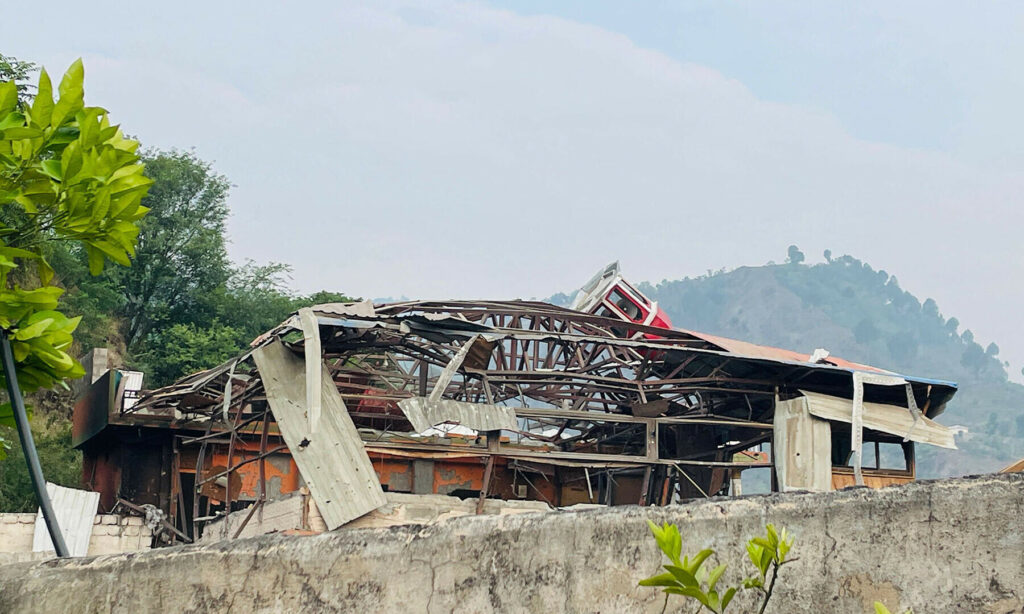
The construction work is not hypothetical. India has issued tenders for dam construction projects that the treaty, in its present form, does not allow. Once that infrastructure is built, the legal and practical situation changes in ways that cannot be easily reversed. That is why the present situation is different from previous episodes of tension between the two countries over water. Previous controversies revolved around the meaning of the treaties. Right now, it’s a situation of treaty replacement by physical realities on the ground.
Pakistan has termed potential water diversion a war act. That language is not hyperbole in international legal terms. Deliberate interference with water access to a lower riparian population, with the aim of rendering it agriculturally unproductive, is a method of warfare under international humanitarian law. Additional Protocol One bans starvation as a tactic for warfare. Dams and hydraulic structures are safeguarded against attack under Article 56. Building dams specifically to deny water to Pakistan’s agriculture sector falls within the legal definition of using civilian infrastructure as a weapon.
The Permanent Court of Arbitration ruled on the Baghar Dam dispute in Pakistan’s favor on principle. India refused to join in those proceedings during the time of the ruling. It then declined to comply with the aspects of the ruling it found inconvenient. A state which refuses to accept international judicial decisions in one forum, and to provide evidence in another has essentially opted out of the rule-based order which it professes to uphold. That choice has a cost. India is paying it in credibility, in diplomatic isolation on this specific question, and in the quiet realization among its own partners that a state that breaks commitments when inconvenient is a state that cannot be fully trusted with commitments.
Where Pakistan’s Legal Case Stands
Pakistan’s case is strong and getting stronger because India’s conduct is making it stronger. The argument runs across multiple tracks simultaneously: the treaty text and Vienna Convention establish that India’s suspension is legally invalid; international humanitarian law establishes that water diversion constitutes a method of warfare; the UN Charter establishes that threats to regional peace and security fall within the Security Council’s mandate; and the practical evidence of construction activity establishes that India is taking irreversible steps under cover of a legally meaningless word
Pakistan should seek to present its case at the same time at the UN Security Council, through the UN Secretary-General’s office under Article 99, at the UN General Assembly, and by formally notifying construction companies and engineering firms involved in the dam projects. Commercial actors respond to legal risk. If a company is effectively notified that it may be subject to damages proceedings, it is likely to review its involvement. This is leverage that Pakistan has yet to utilize to its full potential.
The treaty is alive. The court has confirmed the treaty is alive. India knows this. The legal word it chose, the one that does not exist in any relevant legal instrument, tells the story: India is looking for a way out that does not require it to formally terminate a treaty it knows it cannot terminate. That search will not succeed. With each month that passes, the price of the word “abeyance” on India’s international record keeps rising.

Ahmer Bilal Soofi is a veteran international lawyer, former Federal Law Minister, and the founding President of the Research Society of International Law (RSIL). Currently a member of the ICC Court of Arbitration, he is widely regarded as Pakistan’s foremost expert on public international law, investment disputes, and constitutional litigation.