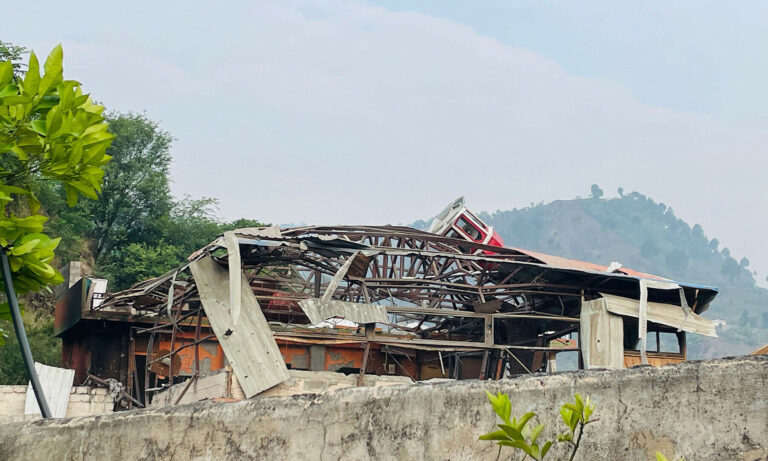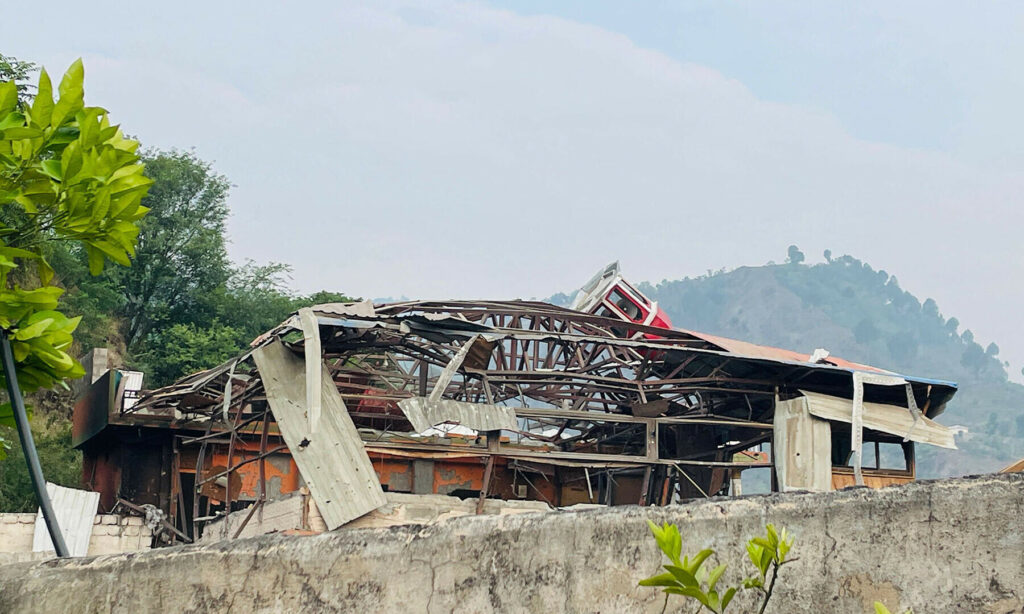
India entered the war with a doctrine. So did Pakistan. Only one held. On April 22, 2025, a terrorist attack in Pahalgam killed 26 civilians in Indian-administered Kashmir. India accused Pakistan of backing the attack without providing even a single piece of verifiable evidence. Pakistan instantly requested a joint and independent investigation. New Delhi declined and instead moved towards military action. Within days, India unleashed Operation Sindoor, firing missiles and drones at Pakistani cities, civilians, and places of worship. More than 31 Pakistani civilians were killed, including women, children, and the elderly. One of the targets was a mosque in Muzaffarabad.
India’s theory was simple. Below the nuclear threshold, it believed there was room to strike Pakistan without consequence. Prime Minister Narendra Modi told his supporters that Indian troops would attack deep and grind the enemy to dust. His government called this arrangement a new normal, meaning that cross-border aggression would not be countered. That theory failed in less than 96 hours of testing. Deterrence in South Asia does not operate only at the nuclear level. It covers the full spectrum: conventional, cyber, informational, and maritime. As India attempted to establish escalation dominance, Pakistan denied it across every domain at once.
Pakistan absorbed three days of Indian attacks, documenting every blow and waiting. This restraint was not passivity. It was deliberate. Pakistani commanders knew the response had to be decisive enough to settle the cost of cross-border aggression and restrained enough to deny India a pretext for further escalation. On May 9-10, India attacked three Pakistan Air Force bases: Nur Khan, Murid, and Shorkot. All strikes were intercepted and failed to damage any PAF assets. Then came the response from Pakistan.
Operation Bunyanum Marsoos launched in the early hours of May 10, 2025. It is named after a verse in the Quran that praises those who fight as one solid and cemented building. The operation delivered exactly what the name promised. Within a few hours, Pakistan struck 26 Indian military locations, including Pathankot, Sirsa, Adampur, Udhampur, and Srinagar. BrahMos storage sites at Beas and Nagrota were destroyed. The Pakistan Air Force neutralized two S-400 air defense systems worth billions of dollars at Adampur and Bhuj, which were considered the crown of Indian air defense architecture.
The air battle on the night of May 6-7 had already set the terms. In a beyond-visual-range engagement that lasted over an hour, more than 60 Indian aircraft, including 14 Rafales, entered the theatre. Pakistan, in turn, deployed 42 aircraft. At least five Indian jets were downed, including three Rafales, one MiG-29, and one Su-30MKI. At Bathinda, a wreck of one Rafale, serial number BS-001, was found. Air Chief Marshal Zaheer Ahmad Babar Sidhu confirmed that the PAF had shot down the most sophisticated fighter jets in the Indian Air Force fleet. Several years and billions of dollars had been spent to make the Rafale fleet the symbol of its aerial dominance. The symbol fell in fragments on Pakistani and Indian soil.
Pakistani drones flew over New Delhi and other Indian cities, unchallenged, demonstrating reach deep inside India’s most protected airspace. Pakistan cyber teams simultaneously attacked Indian military networks, satellite links, and other key digital infrastructure. The Indian authorities reported more than 1.5 million attempted cyber intrusions. Throughout the operation, the Navy held every assigned maritime sector in full readiness. India’s fleet did not sail. The ISPR described the entire operation as a textbook demonstration of tri-services integration, with real-time situational awareness, and combined action across air, land, sea, and cyberspace.
The Indian political leadership entered the conflict believing that standoff strikes would be unanswered. As the dust settled, New Delhi was seeking third-party mediation as Pakistani missiles hit its military infrastructure. Indian officials watched as the foreign mediators negotiated the ceasefire. That mediator was the United States. The Trump administration, which had initially said it would stay out, stepped in within 48 hours. It was Washington, not New Delhi, that announced the ceasefire. A country that claims regional supremacy does not need outside powers to end a four-day conflict it started.
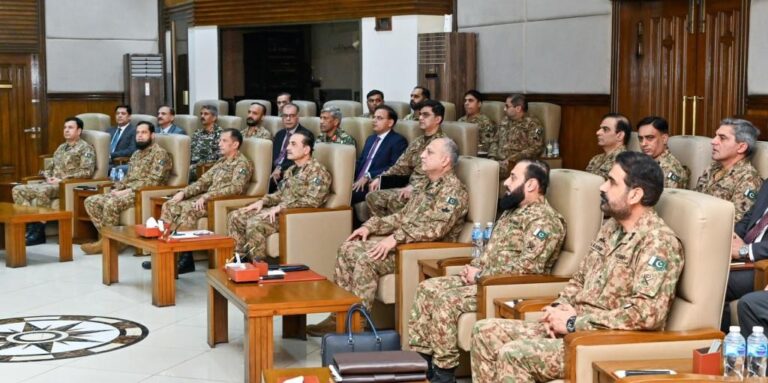
Marka-e-Haq was not a military operation alone. It showed a rare display of civil-military harmony. The civilian government worked the diplomatic front while the military acted with precision and restraint. Every political party backed the military, regardless of its position in parliament. Pakistan youth fought on the digital front, countering Indian disinformation and carrying the national position to a global audience. Adversaries had long assumed that the civil-military relations in Pakistan would slow its response in a crisis. That calculation proved wrong.
Within days of the ceasefire, Trump offered to mediate on Kashmir. The Kashmir issue had been frozen decades earlier, as India had blocked any opportunity of international intervention. Pakistan’s response forced it back into international discourse. In December 2025, a UN expert report officially declared India to be the aggressor in the Pahalgam attack. Pakistan’s position was vindicated internationally.
The lesson of Marka-e-Haq is precise. The operation lasted 96 hours. It ended not because Pakistan was forced to stop, but because it had accomplished all its goals. It punished the aggressor, restored deterrence, and delivered a message no one could misread. The deterrence equation in South Asia was not merely reinforced; it was permanently reset.

Fakeha Laique is a Bachelor's graduate in International Relations from BUITEMS, Quetta and a young researcher with a growing focus on international relations, regional dynamics, and security issues in South Asia.