A bridge, a refinery, and a new kind of war
On the night of 16-17 November, a road span of the Kerch Bridge, Vladimir Putin’s prized link to occupied Crimea, collapsed into the strait. It was Ukraine’s second strike on the bridge in two days. Moscow said Ukraine launched 1,441 drones at Russia that night, the largest such attack of the war.
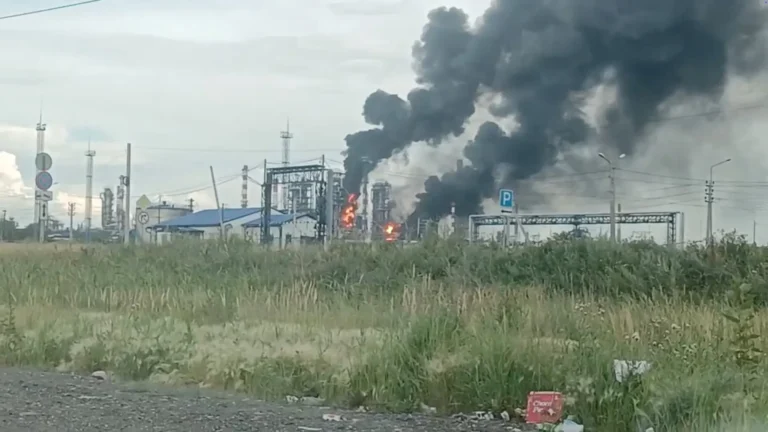
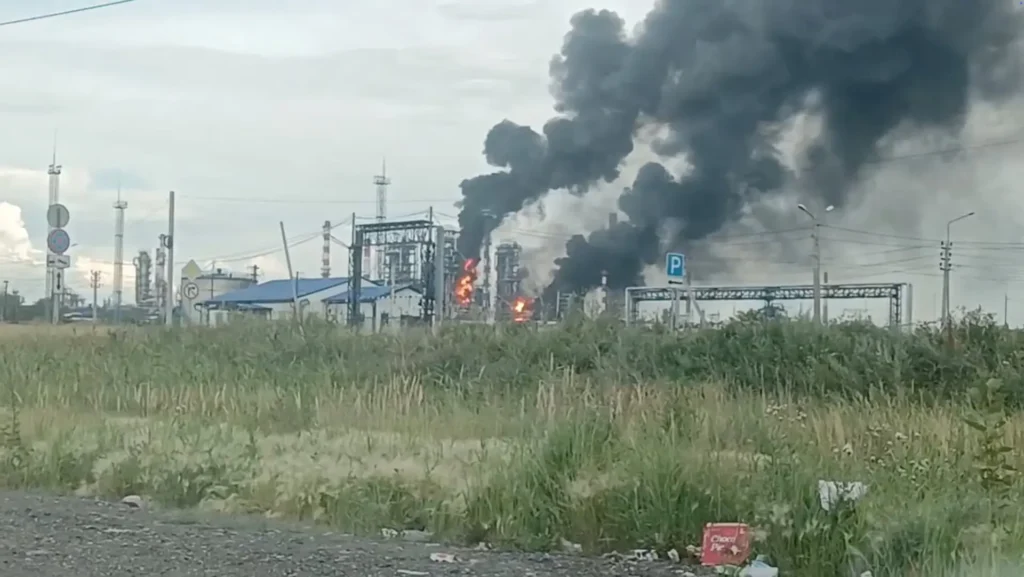
The bridge made the headlines. The more important story was happening at Russia’s refineries. Since late October, Ukrainian drones have cut Russia’s daily crude processing by about 45%.
The argument is simple. The drone has become the poor state’s strategic bomber. Ukraine is using cheap unmanned aircraft to fight an economic war against a much larger power, and major powers should rethink what deterrence and defence mean as a result.
The figures are hard to dismiss. According to industry sources cited by Reuters, Russian refineries were processing more than 700,000 tonnes of crude a day in late October. By mid-November that had fallen to roughly 400,000 tonnes, against a peacetime capacity of about 930,000. Attacks had disrupted or halted 15 of Russia’s 35 major refineries.
November was not a one-off. In June, Ukraine twice hit the Kapotnya refinery, the biggest fuel supplier to the Moscow region, which officials said would be offline until at least the end of 2026. Queues formed at petrol stations in the capital.
The Kremlin, which once played down the strikes, has spent the year managing a fuel crisis:
- It imposed a full ban on gasoline exports from 1 April and extended it to the end of 2026.
- It banned diesel exports in July and began importing gasoline by sea from India.
- It banned jet fuel exports through 30 November.
- Between April and August, Russian oil companies received RUB 1.5 trillion (about USD 18 billion) in state subsidies.
One of the world’s largest energy exporters is now importing fuel and paying its own oil firms to stay afloat. That is what success looks like for an economic campaign.
Striking an enemy’s economy to weaken its war effort is an old idea. In the Second World War, the Allies sent thousands of crewed bombers against German oil plants. That kind of campaign needed a great power’s air force, its factories and its tolerance for losing aircrews.
Ukraine has done something similar without any of that. A long-range drone costs a small fraction of a crewed aircraft or a cruise missile. Losing one costs no pilot. Hundreds can be launched in one night, more than air defences can stop. Russia is the world’s largest country by area, and it cannot place a full air-defence umbrella over every refinery, depot and pumping station.
This changes the old link between a country’s size and its military reach. Until recently, only great powers could hold an opponent’s economy at risk from a distance. Now a country under invasion, short of fighter jets and dependent on foreign aid, can make its enemy ration petrol. Refineries are good targets because they are large, fixed, hard to repair quickly, and essential to both the army and the treasury.
The campaign also works politically. Air raids on Kyiv have not broken Ukrainian morale. But fuel queues in Moscow bring the war home to ordinary Russians in a way state television cannot fully explain away.
The sceptics have a point, and the strategy has limits. Russia has shown it can absorb damage. In 2025, despite repeated strikes, it used spare capacity to keep total refining only about 3% below the previous year for January to October. Refineries can be repaired, and Russia still earns most of its oil revenue from crude exports, which drones have not stopped.
The campaign also invites retaliation. Russia has intensified its own missile and drone strikes on Ukrainian power plants and bridges. Both sides are now locked in a war against each other’s infrastructure, and civilians on both sides pay for it.
There is also a cost for third countries. Less refining in Russia means fewer fuel exports, which tightens global markets. That comes at a bad moment: the International Energy Agency says the Iran war has already caused the largest-ever disruption to global oil and gas trade. Import-dependent economies, Pakistan among them, feel these shocks at the petrol pump.
None of this makes the campaign a failure. It shows that drones change the cost of war more than they decide its outcome. They cannot win the war for Ukraine. They can make it far more expensive for Russia to continue.
For the major powers, the lesson is that size no longer guarantees safety at home. The United States, China and Russia have built defence policies around expensive, high-end systems such as fighter jets, carriers and missile shields. Ukraine has shown that a large number of cheap drones can get around that kind of protection and hit the economy directly. Defence budgets will need to move towards layered, low-cost air defence for critical infrastructure, and towards dispersing and hardening energy assets.
The lesson also applies to deterrence. If a weaker state can credibly threaten a stronger state’s economy, the stronger state’s coercion becomes more costly. Great powers that plan to pressure smaller neighbours should expect to be hit back where it hurts.
For Pakistan, the warning is direct. Drones already featured in the India-Pakistan crisis of May 2025. A country whose refineries, fuel depots and power plants are few and concentrated has a clear weakness against mass drone attacks. Protecting that infrastructure should be a defence priority, not an afterthought.
The Kerch Bridge will be repaired, and so will Russia’s refineries. What cannot be reversed is the precedent. Ukraine has shown that economic warfare is no longer reserved for great powers. Every state, large or small, now has to plan for that.
Read More: A World Remade: Four Years of War in Ukraine