Tehran’s confidence keeps the diplomatic channel open. Progress depends on agreed sequencing, practical safeguards and coordination with regional partners.
At a glance
- Trust sustains access: Araghchi has endorsed Pakistan’s mediation, while Dar says Washington’s response to Iran’s revised Hormuz proposal remains pending.
- Regional backing supports engagement: The ECO communiqué supports mediation by Pakistan and Qatar, without establishing agreement between the parties.
- Implementation remains the test: Reciprocal steps, verification and dependable shipping arrangements will determine whether diplomacy delivers practical relief.
What happened
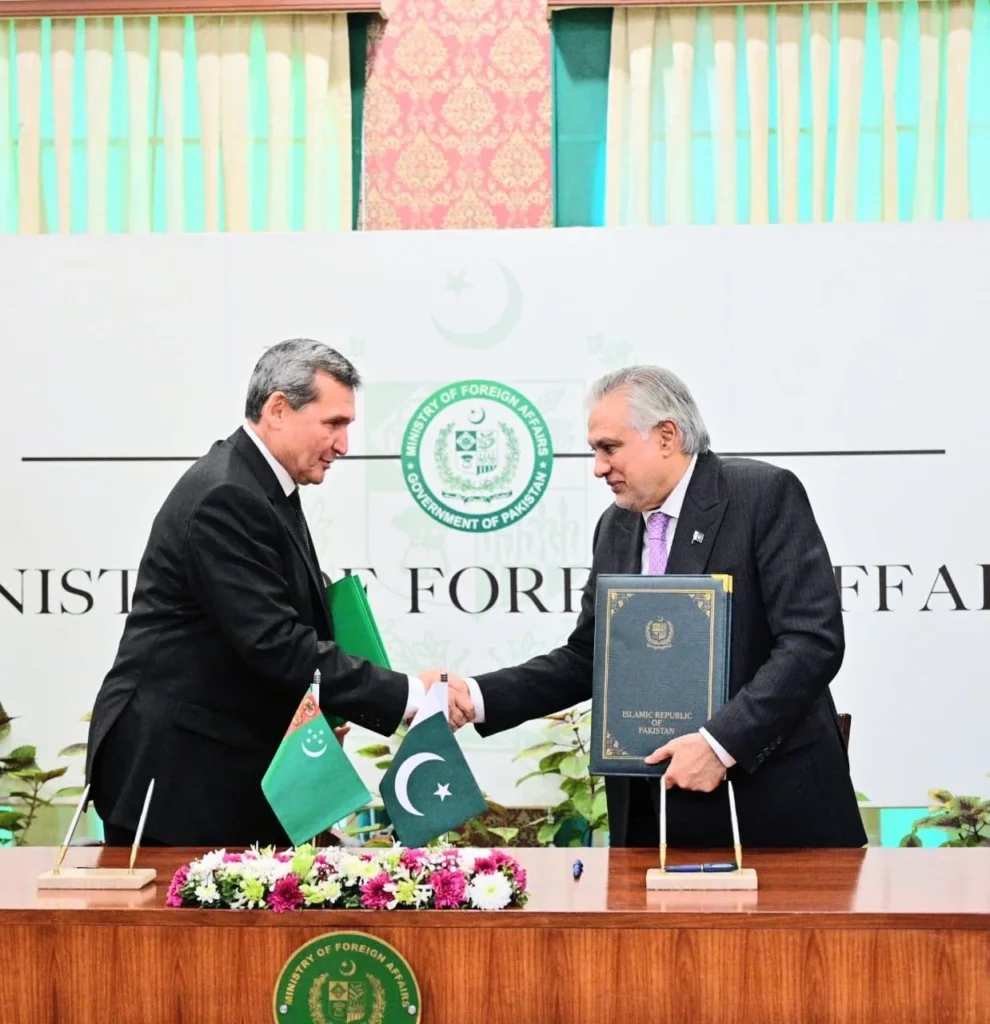
Iranian Foreign Minister Abbas Araghchi expressed confidence in Pakistan’s mediation during his Islamabad visit, according to remarks reported on 17 November.
Following their meeting on 16 November, Deputy Prime Minister and Foreign Minister Ishaq Dar said Iran had shortened its proposed implementation period for reopening Hormuz from seven days to two. Washington’s response remained pending, according to his post-meeting briefing. This remains a proposal, rather than an agreed reopening schedule.
The ECO communiqué backed mediation by Pakistan and Qatar, according to Qatar News Agency.
Who said what
Abbas Araghchi · Iranian Foreign Minister
“We trust Pakistan as a good friend.”
Ishaq Dar · Deputy Prime Minister and Foreign Minister
“We have not given up hope or efforts.”
Dar and Araghchi agreed to maintain close contact and regular consultations.
Reading the diplomacy
Trust provides access: Araghchi’s statement supports Pakistan’s ability to convey messages and clarify proposals. It does not establish agreement on reciprocal obligations or Washington’s position.
The delay requires careful attribution: Dar expressed hope for a response following the US midterm elections. This is Islamabad’s explanation; the cited reporting does not provide an independently confirmed US account of the delay.
A shorter timetable requires greater precision: A two-day implementation proposal raises questions about which action comes first, how compliance is verified and how disagreements would be managed.
Regional endorsement has practical limits: ECO backing supports continued diplomacy. It does not guarantee navigation, insurance coverage or acceptance of the proposal’s terms.
What Islamabad can do
| Area | Practical next step |
|---|---|
| Sequencing | Clarify reciprocal actions, responsible authorities and implementation conditions. |
| Verification | Seek agreed procedures for confirming compliance and communicating disputes. |
| Shipping preparedness | Consult maritime authorities, carriers and insurers on requirements for safe passage. |
| Humanitarian measures | Explore mutually accepted arrangements for urgent civilian supplies. |
| Regional coordination | Maintain consistent proposals and avoid conflicting assurances across diplomatic channels. |
Engagement with Qatar, Oman and Saudi Arabia, according to their respective roles and interests, should support a shared understanding of proposals. Their contributions need not be identical.
Any limited shipping or humanitarian arrangement would require the necessary consent, legal clarity and operational safeguards.
Why it matters for Pakistan
Pakistan’s stakes extend beyond fuel prices. As earlier analysis shows, exports to GCC markets recorded an approximately $387 million year-on-year shortfall during March-October, amid freight and delivery disruptions. This is an export gap, rather than a measure of the war’s total economic cost.
Related: The $387m Gulf Bill: What the Iran War Has Cost Pakistan’s Exports
Energy costs create a parallel pressure. The SBP’s FY26 annual report projects average FY27 inflation of 5.5-7.5%, based on July assumptions including oil at $80 per barrel. The bank will revise that projection in January 2027 to reflect higher oil prices and other developments.
Restoring dependable shipping matters for export earnings and energy security. Diplomatic progress would still need to translate into lower commercial risk, reliable schedules and available insurance before businesses and households receive sustained relief.
What to watch
- Washington’s response: Acceptance, rejection or requests for clarification.
- Agreed implementation: Reciprocal actions, sequencing and verification.
- Shipping conditions: Navigation notices, insurance availability and actual vessel movements.
- Commercial recovery: Updated freight quotations and GCC export performance.
- Regional coordination: Consistent messaging and mutually supported follow-up.
- SBP’s January revision: The effect of updated energy assumptions on Pakistan’s inflation outlook.
Read More: Mohsin Naqvi: Pakistan Never Gave Up on US Iran Peace Efforts
Islamabad ECO Meeting: Pakistan Links Connectivity to Security, Iran Calls for Energy Cooperation

Our News Desk represents a rapidly expanding frontier in contemporary journalism, focusing on the intersection of technological advancement, geopolitical narratives, and the shifting dynamics of public information.