AT A GLANCE
- India’s Pakistan-specific message: Culture Minister Gajendra Singh Shekhawat argued that shared civilizational development should provide common ground for participation.
- Pakistan’s stated position: The Foreign Office supports engagement at regional forums but has not confirmed attendance or a delegation leader.
- The substantive distinction: Participation would demonstrate continued engagement through the SCO. A broader bilateral opening would require separate evidence.
What Happened
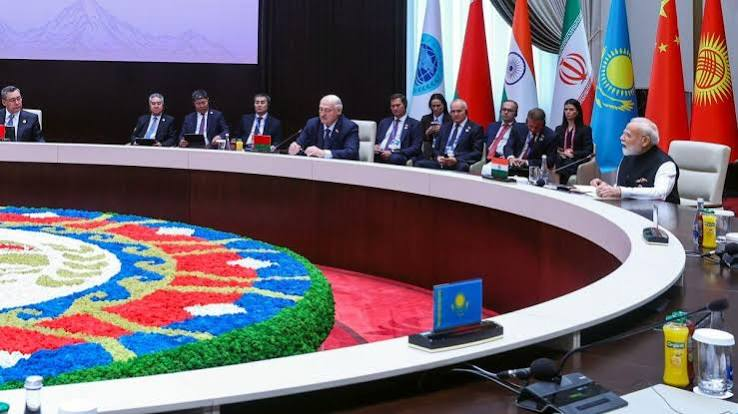
India will host the first SCO Civilizational Dialogue Forum on 20–22 November in New Delhi. Shekhawat said Prime Minister Narendra Modi would attend the inauguration at Purana Qila. He reported that 15 of 25 invited countries, including China, had confirmed participation, while Pakistan’s confirmation remained outstanding.
Pakistan’s National Heritage and Culture Minister, Aurangzeb Khan Khichi, is reportedly among the invitees, according to diplomatic-source reporting. His attendance has not been announced by Islamabad.
The immediate development is therefore an invitation under consideration, accompanied by increasingly explicit Indian public messaging about why Pakistan should attend.
Who Said What
“Pakistan’s civilization and cultural development are no different from ours.”
He linked that claim to the countries’ pre-Partition history and argued that differences should not arise over the forum’s cultural subject matter. This is the minister’s interpretation of shared history, rather than an agreed India-Pakistan formulation.
Separately, he stated:
“We have extended the invite, hopefully they will attend but ultimately their decision.”
The wording combines a public preference for Pakistani attendance with acknowledgement that Islamabad retains the decision.
“As per established practice, we have invited all SCO members.”
Asked specifically about Pakistan and Khichi, he answered through the wider invitation process, also identifying dialogue partners and one observer. His response confirmed the multilateral framework without separately endorsing the reported ministerial composition.
“We have received the invitation extended by India to all member states.”
The official transcript records that participation would be decided by the leadership after institutional deliberations and established protocols. It also reiterates Pakistan’s support for positive engagement at regional and global forums.
In a subsequent statement reported by The News, he called it a political decision, anticipated consultations with stakeholders and expressed hope for an announcement by Monday. He declined to predict who would represent Pakistan.
The Context
Pakistan has already participated in a preparatory diplomatic interaction. Reporting on 29 October records that Chargé d’Affaires Saad Ahmad Warraich attended an SCO luncheon hosted by India’s External Affairs Ministry, where preparations and cultural cooperation were discussed. This establishes working-level contact; it does not establish approval for the forum delegation.
The precedent is institutional continuity. Bilawal Bhutto-Zardari attended the SCO foreign ministers’ meeting in India in May 2023. Jaishankar attended the SCO heads of government meeting in Islamabad in October 2024. Neither precedent makes attendance at this forum evidence of renewed bilateral negotiations.
Reading the Statements
- Two Indian messages operate together: Jaiswal emphasizes procedural inclusion; Shekhawat supplies a Pakistan-specific cultural rationale. These are distinct messages, although both support attendance.
- Shared heritage is also narrative positioning: Shekhawat’s language foregrounds historical continuity. Pakistan’s participation would not, by itself, constitute endorsement of that framing.
- Islamabad has separated engagement from clearance: Its acknowledgement and preparatory contact coexist with an outstanding political decision.
- Delegation level will define the mandate: A ministerial visit would carry greater visibility than official-level representation, but its meaning must be assessed against Pakistan’s accompanying statement.
What Pakistan’s Response Would Establish
| Observable development | Supported interpretation | Evidence needed for a broader conclusion |
| Confirmation of attendance | Willingness to participate in this SCO activity | Separate announcement of bilateral engagement |
| Ministerial representation | Political authorization for higher-level cultural participation | Published mandate and meeting program |
| Official-level representation | Participation through a more limited delegation | Islamabad’s explanation of scope |
| Cultural agreements | Substantive institutional cooperation | Named partners, activities and implementation arrangements |
Why It Matters
- For Pakistan: The forum offers space to articulate its own heritage narrative before regional partners.
- For diplomatic missions: The relevant indicators are authorised representation, official language and substantive meetings—not ceremonial proximity.
- For the SCO: Inclusive participation would demonstrate that institutional cooperation can operate amid bilateral tensions.
What to Watch
Pakistan’s announcement
Confirmation, delegation leader and stated purpose.
Protocol and meetings
Whether any bilateral contact is formally scheduled or acknowledged.
Pakistan-specific language
How Indian inaugural remarks describe shared history, and whether Pakistan responds.
Published outcomes
Whether cooperation produces institutional commitments beyond the event.
Assessment
The invitation currently demonstrates an available multilateral channel. Pakistan’s eventual decision should be interpreted through its declared mandate and observable actions, without assigning motives that Islamabad has not stated.
Maritime & Hormuz Incidents
Vessel seizures or naval engagements at sea that test the durability of the crisis de-escalation line.
Regional Facilitation or Direct US Engagement: Which Yields Faster De-escalation? ↗

DD Briefs
Digital Debate is an independent policy and governance platform examining the structural questions facing Pakistan. Its research programme covers federalism, public finance, human security and institutional reform.