What Happened
On 8 November, The News reported a plan under consideration to increase Pakistan’s provinces from four to 12, possibly with a nationwide referendum before a 28th Constitutional Amendment. Under the reported layout, Punjab would be divided into four provinces, Khyber Pakhtunkhwa and Balochistan into three each, and Sindh into two.
On 12 November, Interior Minister Mohsin Naqvi proposed a referendum, saying “if people say in a referendum that provinces should be formed, we should go ahead with it”. He then met President Asif Ali Zardari in Nawabshah. On 14 November, the Presidency said no discussion took place on matters related to provinces.
No draft bill has been made public. Reported timelines differ: a prime minister’s adviser said on 1 November that the amendment was expected before the New Year, while The News reported it could be introduced in the first half of 2027.
Who Said What
- Mohsin Naqvi, Interior Minister (12 Nov, Lahore): “If the people say new provinces should not be created, I am 100 per cent with them.” He first made the case at the Pakistan Economic Summit in July.
- Khawaja Asif, Defence Minister (PML-N): Pakistan could have as many as 12 provinces if the exercise were based on administrative rather than linguistic, ethnic or political considerations.
- PML-N as a party: has yet to fully endorse or reject the measure, saying it will set out its view when the matter reaches Parliament.
- Tariq Fazal Chaudhry, Minister for Parliamentary Affairs (13 Nov): Parliament and provincial assemblies cannot be “bypassed”; he invited PTI to debate the issue.
- Murad Ali Shah, Sindh Chief Minister (PPP): rejected the claim that the system had collapsed, called the proposal outdated and warned that no bloodshed would be allowed over new provinces.
- Nasir Hussain Shah, Sindh minister (PPP, 14 Nov): a referendum alone cannot create a province; a bill needs a two-thirds majority in the provincial assembly concerned.
- MQM-P: backed new provinces in August and called for a national dialogue; it called the Sindh Assembly’s resolution against division “unconstitutional”.
- PTI: Chairman Barrister Gohar Ali Khan said new provinces are necessary but require broad consensus and a two-thirds majority. PTI’s parliamentary party reportedly decided to support the 28th Amendment only if Imran Khan is released (ARY, citing sources).
The Context
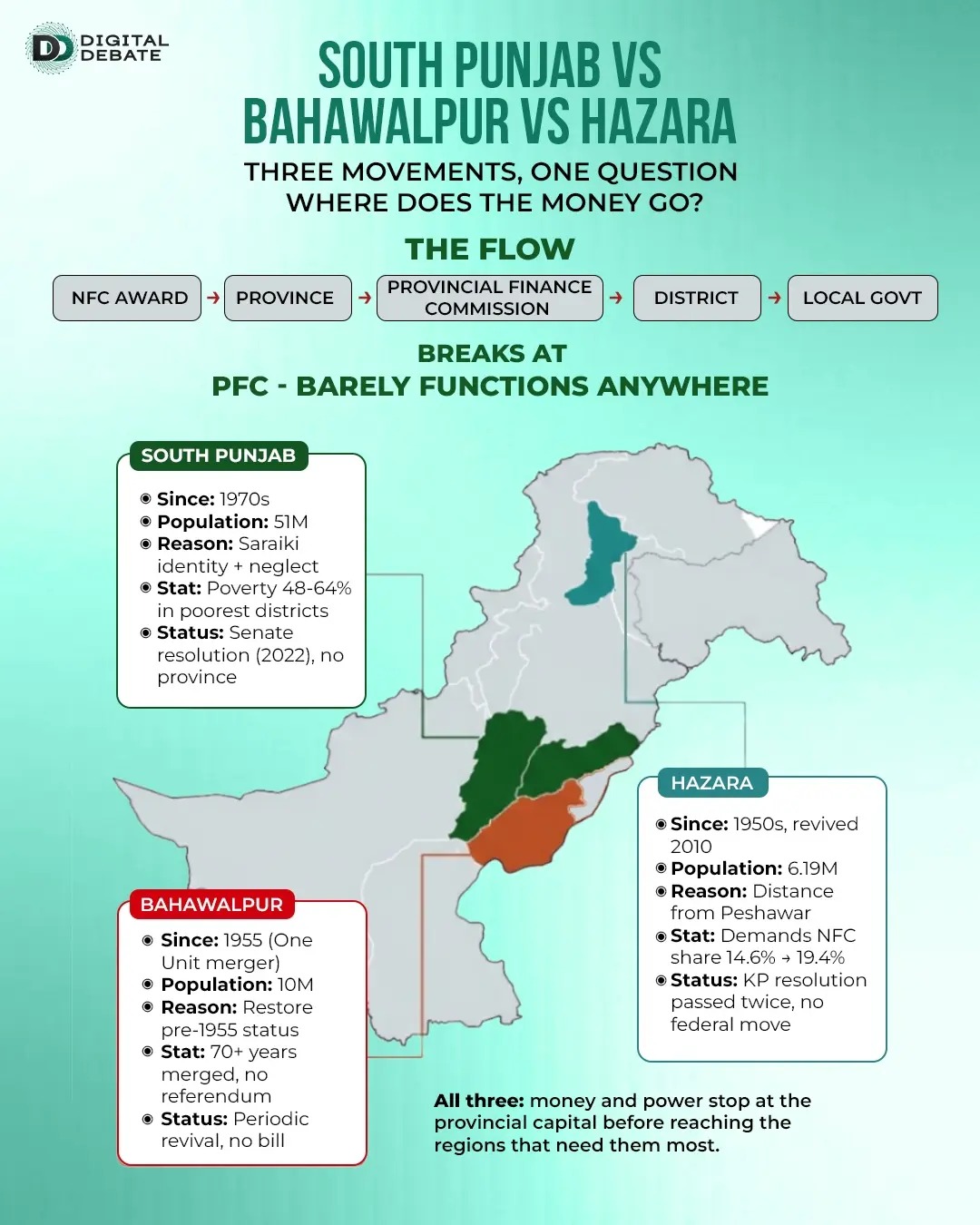
The debate is not new. In 2018, the 25th Amendment merged FATA into Khyber Pakhtunkhwa, the last time Pakistan’s internal map changed by constitutional means. Bills for South Punjab and Bahawalpur provinces, including a PML-N amendment in 2019, have been tabled before without completing the process.
What is new is public support, if a recent poll holds. The Meridian National Barometer 2026, a survey of 5,000 people, reported that 77 per cent support more provinces, up from 54 per cent in 2022 and 66 per cent in 2024. DD has not reviewed the survey’s method; treat the figures as reported.
More Here:
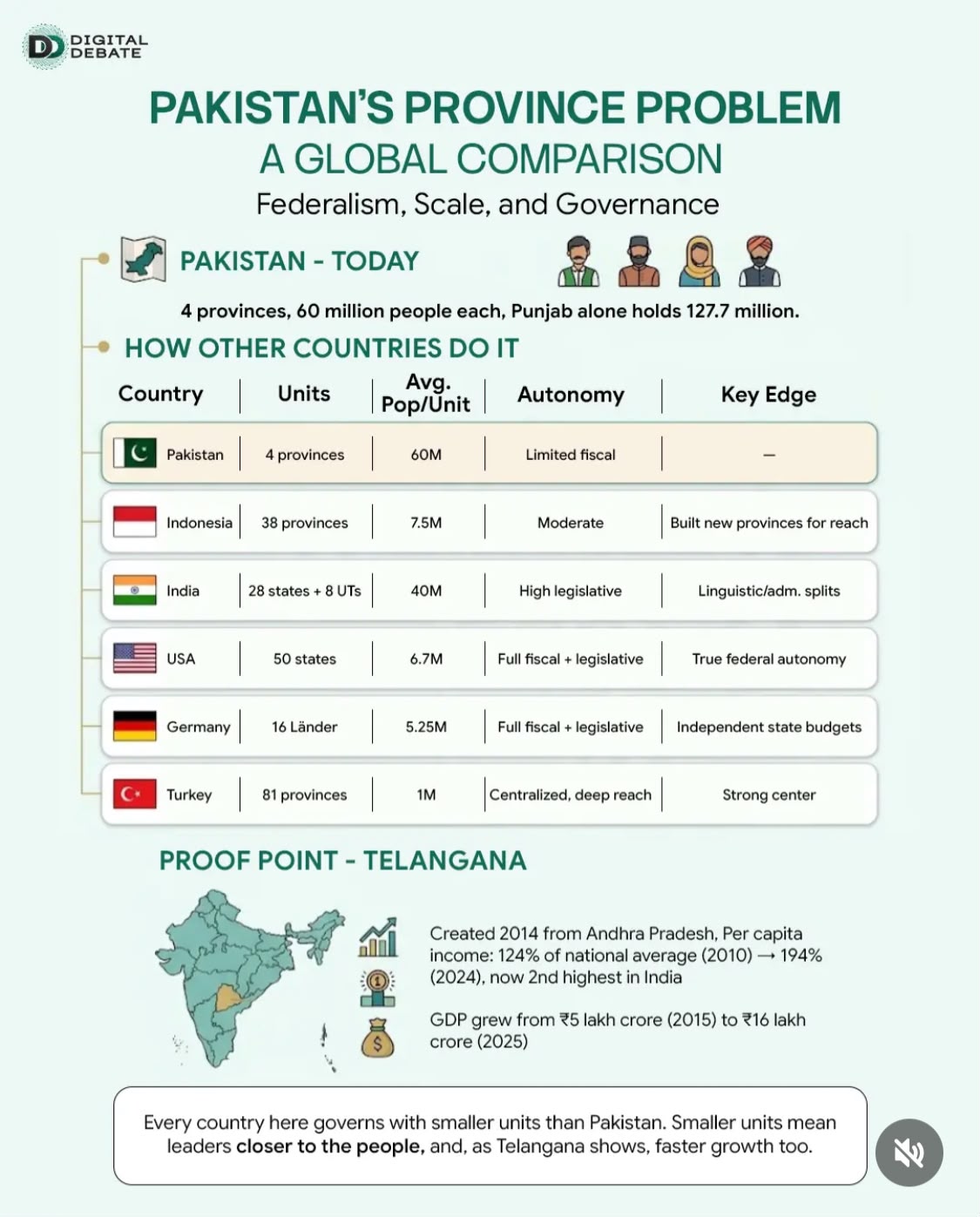
Infolytics · Pakistan’s Province Problem
Editorial · Provinces Are Instruments of Governance, Not Statements of Identity
What the Constitution Allows
| Route | What it requires | What it can do |
| Constitutional amendment (Article 239(4)) | Two-thirds of the National Assembly and Senate, and two-thirds of the total membership of the affected provincial assembly | Alter a province’s boundaries; the only route the Constitution sets out |
| Referendum (Article 48(6)) | The Prime Minister refers it to a joint sitting of Parliament, which must approve it; a Yes/No question to voters | Gauge public opinion; it cannot create a province or bypass Article 239(4) |
| New enabling clause | Some lawyers argue the Constitution contains no express provision for creating new provinces and would need one first | Legal experts estimate as many as 12 articles would need amending |
In practice, a referendum could build political pressure, but the decision still sits with Parliament and each affected provincial assembly. For Sindh, that means the PPP-led assembly, which has already voted against division.
Why It Matters
- Governance: Smaller units could bring services closer to citizens, which is the main argument behind the polling numbers.
- Federal balance: New provinces would change Senate representation, NFC Award shares and the Council of Common Interests.
- Coalition stability: The issue divides the PML-N and its main partner, the PPP, at a time when other constitutional changes are also on the table.
Related:
- Event · Pakistan and the Question of New Provinces: Governance, Representation and Development
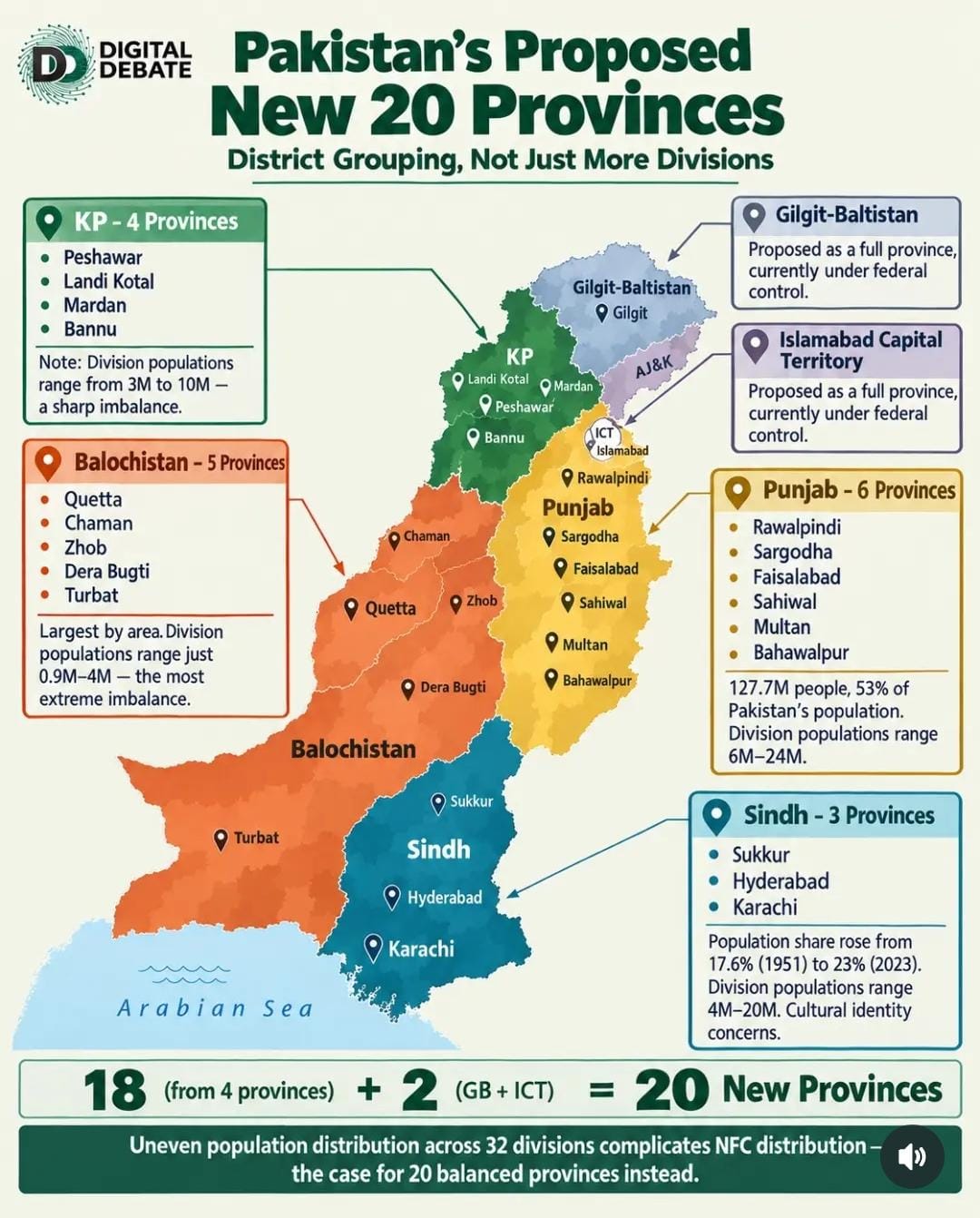
- Infolytics · Pakistan’s Proposed New 20 Provinces: District Grouping, Not Just More Divisions
- Infolytics · South Punjab vs Hazara vs Bahawalpur
What to Watch
A Published Draft
Whether the 28th Amendment text is tabled, and whether new provinces are in it or left for later.
A joint sitting on a referrendum
Any Article 48(6) reference by the Prime Minister to Parliament.
Provincial assemblies
Resolutions in Punjab, Khyber Pakhtunkhwa or Balochistan in favour, which would isolate Sindh’s position or reshape the plan.
Watch:
- Event · The Cost of Four Provinces
- The Debate · All episodes
- YouTube · Digital Debate on YouTube

DD Briefs
Digital Debate is an independent policy and governance platform examining the structural questions facing Pakistan. Its research programme covers federalism, public finance, human security and institutional reform.