AT A GLANCE
- Grants over loans: Pakistan wants climate assistance that supports recovery without increasing vulnerable countries’ debt burdens.
- Water as security: Shehbaz Sharif called for protecting downstream communities and honoring water-sharing agreements.
- Delivery over declarations: Adaptation funding, loss-and-damage access and transparent financing terms will determine practical progress.
What Happened
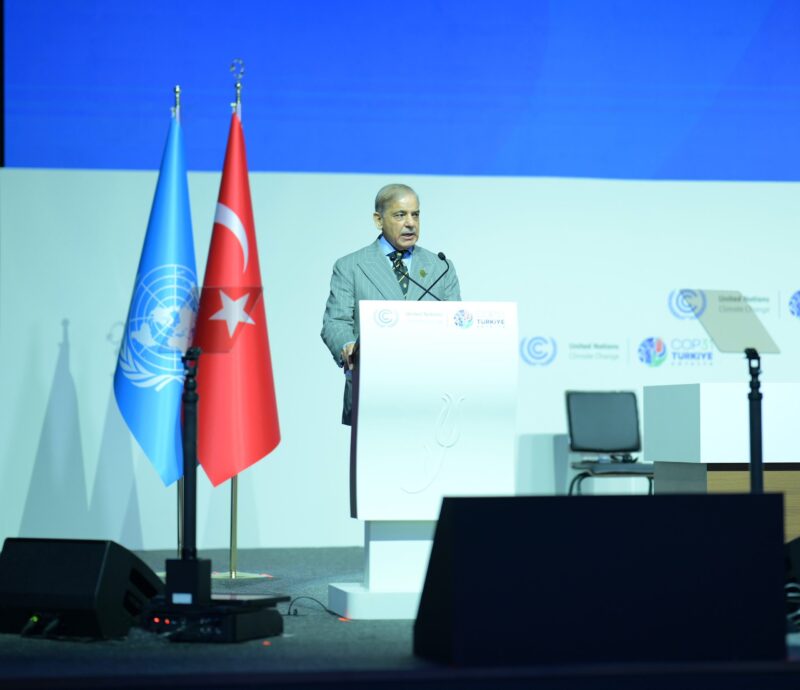
Prime Minister Shehbaz Sharif addressed COP31 in Antalya on Thursday, 12 November, calling for grant-based financing and significantly larger resilience and adaptation funds. He described such support as essential to the survival of struggling economies.
His speech combined Pakistan’s experience of devastating floods with its clean-energy efforts and concerns over shared water resources. The central argument was that domestic action cannot substitute for an equitable international response.
The policy challenge now is to translate that position into funded programmes, accessible financial mechanisms and clearly defined partnerships.
Who Said What
“When climate disasters strike, vulnerable countries need timely help and finance that does not deepen their debt.”
He called for grants, public-private partnerships and a substantial increase in adaptation and resilience funding. The emphasis places the quality and terms of assistance alongside its headline value.
“Water sharing agreements must be honored.”
He warned that water must never be weaponized and that downstream lives and livelihoods must be protected. This framed shared water management as a matter of human security.
“At COP31, let our success be measured not by promises we make here, but by the families we protect, the resources we deliver, and the meaningful action we sustain.”
“Negotiations and mediation sometimes require time, discretion, and sustained multilateral engagement.”
Diplomatic Source, Islamabad
The Context
The 2022 floods remain the foundation of Pakistan’s climate-justice case. The joint post-disaster assessment estimated $14.9 billion in damage, $15.2 billion in economic losses and at least $16.3 billion in rehabilitation and reconstruction needs. The scale demonstrates how a disaster can simultaneously destroy assets, interrupt livelihoods and create substantial financing requirements.
Shehbaz Sharif also recalled the human consequences of the August 2025 floods in Buner, describing a household preparing for a wedding becoming a house of mourning. His argument connected national economic figures with the experience of exposed communities.
The wider funding environment remains difficult. UNEP estimates developing countries’ annual adaptation needs at $305 billion by 2035, substantially above current international public flows. Pakistan’s appeal therefore forms part of a broader struggle over how vulnerable economies finance protection and recovery.
Reading the Statement
- Climate justice becomes fiscal policy: Grants would reduce the need to finance disaster recovery through additional borrowing.
- Water security strengthens the adaptation case: Reliable information, cooperation and treaty observance support downstream preparedness.
- Domestic action supports diplomatic credibility: Clean-energy investment demonstrates national effort alongside demands for international support.
- Delivery needs institutions: Strong proposals, transparent spending and accountable implementation will help turn commitments into protection.
Which Levers Can Deliver?
These are analytical priorities arising from the speech, rather than announced funding awards.
| Lever | Practical priority | Evidence of progress |
| Adaptation finance | Prepare costed flood, water, agriculture and early-warning programmes | Approved grants and implementation schedules |
| Loss and damage | Establish eligible needs and pursue available funding channels | Verified applications, approvals and disbursements |
| Debt terms | Assess interest, repayment, currency exposure and guarantees | Published terms showing the fiscal burden |
| Energy partnerships | Match investment with viable clean-energy and resilience projects | Affordable services and manageable public liabilities |
Why It Matters
- For Pakistan: Affordable climate support can protect development spending while strengthening disaster preparedness.
- For Asia: Floods, heat and shared water systems make resilience a regional economic and security concern.
- For vulnerable economies: Financing terms determine whether recovery strengthens public finances or adds repayment pressure.
- For international partners: Prepared projects and transparent reporting offer practical opportunities for cooperation.
What to Watch
Finance outcomes by 20 November: Whether COP31 clarifies adaptation funding, access arrangements and implementation responsibilities.
Pakistan’s funding pipeline: Named projects, requested amounts, financing instruments and responsible institutions.
Loss-and-damage access: The fund’s published timetable anticipates an initial approval package at its December board meeting. Any Pakistan-specific application or allocation requires confirmation.
Water and energy follow-through: Practical cooperation on forecasting, resilient infrastructure and clean power, supported by transparent agreements and measurable results.

DD Briefs
Digital Debate is an independent policy and governance platform examining the structural questions facing Pakistan. Its research programme covers federalism, public finance, human security and institutional reform.