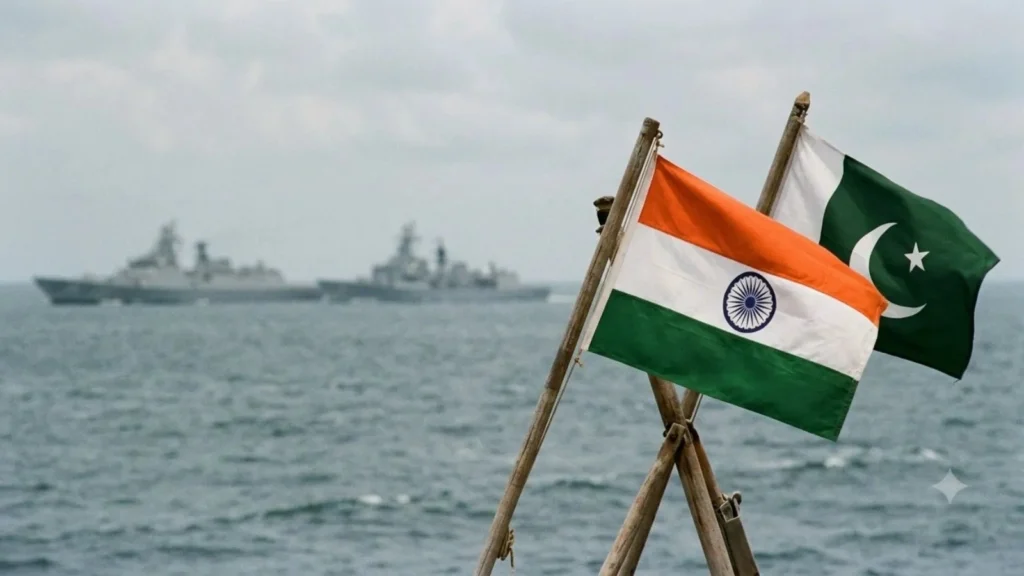
On February 28, 2026, the United States and Israel launched coordinated strikes on Iran. On June 11, 2026, President Trump told reporters at the White House that he had reached a great settlement of the war with Iran. In between, 105 days changed the Middle East.
The 2026 conflict did not begin in a vacuum. Here is the order in which it happened.
The First War: June 2025
June 13, 2025 – Israel launched a major military operation against Iran, targeting nuclear facilities, military sites, and regime leadership. It came after almost two years of conflict between Israel and Iranian-backed militants, including two direct missile assaults between Israel and Iran in 2024.
June 21, 2025 – The United States joined the war. American forces struck three Iranian nuclear sites: Fordow, Natanz, and Isfahan, marking the first direct US military attack on Iranian nuclear infrastructure. Iran countered by launching ballistic missiles at Israel, including attacks on Tel Aviv and Ramat Gan on June 22.
June 23, 2025 – Trump announced a ceasefire on social media. Iran’s Supreme National Security Council claimed victory. Israel waited hours before acknowledging the ceasefire.
June 24, 2025 – Ceasefire went into effect, ending a Twelve-Day War. It was mediated by the United States and Qatar, set to expire on February 28, 2026.
The Second War: February to April 2026
January and February 2026 – Talks to replace the ceasefire with a formal nuclear agreement failed. US-Iran negotiations in Geneva, mediated by Oman, ended without a breakthrough.
March 25, 2026 – The US Treasury announced sanctions against over 30 people, entities, and vessels associated with Iran’s oil network.
February 28, 2026 – The ceasefire expired, and the second war began. Combined US-Israeli airstrikes opened the conflict. Iranian Supreme Leader Ayatollah Ali Khamenei was killed in strikes on his office in Tehran, along with dozens of senior political and military leaders. Iran launched a swift counteroffensive against Israel, the United States, and its allies. In the first few days, Iran attacked targets in Bahrain, Saudi Arabia, Qatar, the UAE, and Iraq.
March 12, 2026 – A US KC-135 refueling aircraft went down over western Iraq, killing six airmen.
March 17, 2026 – Ali Larijani, secretary of Iran’s Supreme National Security Council, was killed in an Israeli strike in Tehran.
March 18, 2026 – The Israeli military struck the South Pars gas field in the Persian Gulf, shared by Iran and Qatar. In response, Tehran threatened to attack critical infrastructure.
March 31, 2026 – Secretary of State Marco Rubio told Fox News: “We can see the finish line. It’s not today, it’s not tomorrow, but it’s coming.” At that point, 348 US service members had been wounded and 13 killed. The war had lasted 31 days.
April 1, 2026 – Trump announced the war would end within two to three weeks.
April 5, 2026 – Pakistan introduced a 45-day two-phase ceasefire framework. Iran rejected it and submitted its own 10-point peace plan.
April 7-8, 2026 – Pakistan brokered a two-week ceasefire between the United States and Iran. The ceasefire came hours before Trump’s threatened deadline to destroy Iranian bridges and power plants. No mutual written text was released. Both sides released separate press releases that offered conflicting statements.
April 11-12, 2026 – A US delegation led by Vice President JD Vance met with Iranian counterparts in Islamabad. It was the highest-level US-Iran diplomatic engagement since 1979. Trump said afterward: “Most points were agreed to, but the only point that mattered, NUCLEAR, was not.”
April 13, 2026 – Trump announced a US naval blockade on Iranian shipping. The Strait of Hormuz was blocked to the Western-allied commercial ships.
April 21, 2026 – Trump extended the ceasefire indefinitely.
May 1, 2026 – the White House stated that “hostilities that began on February 28, 2026, have terminated” and declared Operation Epic Fury complete.
May 4, 2026 – Iran conducted its first attacks since the ceasefire, striking targets in the UAE. The US responded.
May 7, 2026 – The exchange continued, as US military vessels transited out through the Strait.
May 13, 2026 – Secretary Rubio formally declared Operation Epic Fury complete. CENTCOM reported 67 commercial vessels redirected since the April 13 blockade began.
June: The Final Escalation and Announcement
June 7-8, 2026 – Iran fired approximately 30 ballistic missiles at Israel overnight. It was the most acute single escalation since the April ceasefire.
June 9-10, 2026 – the US resumed strikes on Iran.
June 11, 2026 – Trump announced he had cancelled scheduled strikes after discussions were “brought to the highest level of Iranian leadership and approved.” From the Oval Office, he announced “a great settlement” to end the war, saying a memorandum of understanding would be signed within days, potentially in Europe, with Vice President Vance attending. He said the Strait of Hormuz would reopen once the document was signed, and the naval blockade would remain until then. Iran’s foreign ministry has responded the same day. Spokesman Baghaei said, “Iran has not concluded any agreement yet.
June 12, 2026 – Iran’s prime minister and Pakistan’s prime minister both confirmed a deal had been reached. Israel, not a signatory, got Trump’s pledge that the final deal will include the removal of enriched nuclear material, dismantling of nuclear enrichment infrastructure, limits on Iran’s ballistic missile program, and an end to Iranian proxies all over the region.
June 14, 2026 – Mediators released a memorandum of understanding to be signed on June 19 that seeks to formally end the conflict within 60 days.
The Strait of Hormuz remained closed to Western-allied commercial shipping as of mid-June 2026. The naval blockade remained in place. No formal signing ceremony had taken place. The war had run 105 days from the first strike to Trump’s announcement.

Our Editorial Desk is the intellectual engine of Digital Debate, responsible for the rigorous research that anchors every conversation. Our team deep-dives into data, checks every source, and consults academic literature to move beyond headlines and identify the questions behind the questions.