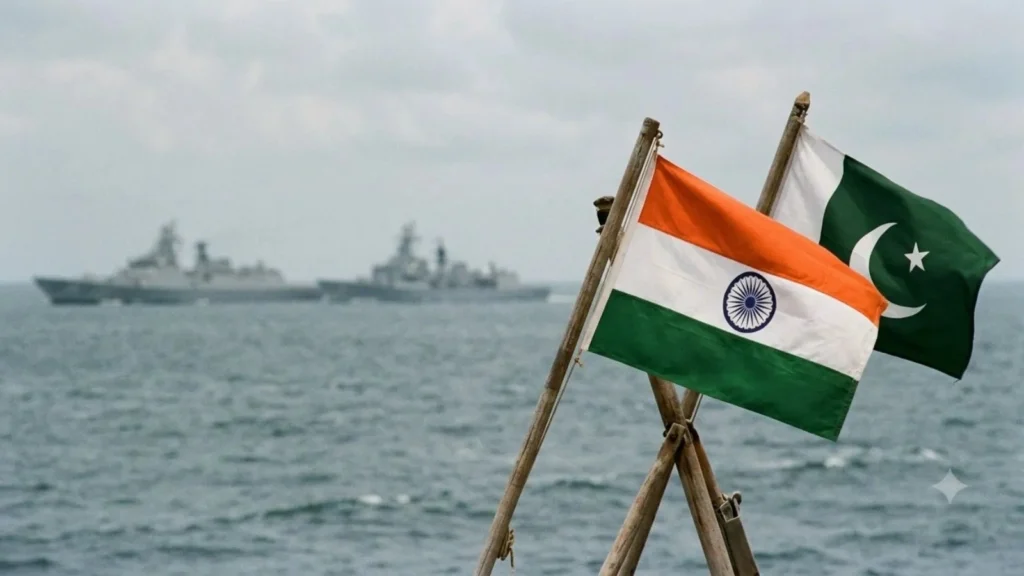
India spent a decade trying to remove Kashmir from the world’s agenda. In four days of May 2025, that project collapsed. The policy had a name. The late 1990s saw New Delhi move towards what analysts referred to as “de-hyphenation”, a conscious policy of developing India’s international image without relying on India-Pakistan relations. The goal was to make India legible to the world as a rising power, a trade partner, a democratic counterweight to China, not as one half of a nuclear standoff with a smaller, poorer neighbour.
By 2025, the strategy was working. India had become a member of the Quad, tightened relations with Washington, Tokyo and Brussels, and was being mentioned as a possible permanent member of the UN Security Council. Pakistan, by contrast, spent much of that decade managing default risks, IMF programmes, and the international reputational damage of hosting groups connected to terrorist attacks abroad.
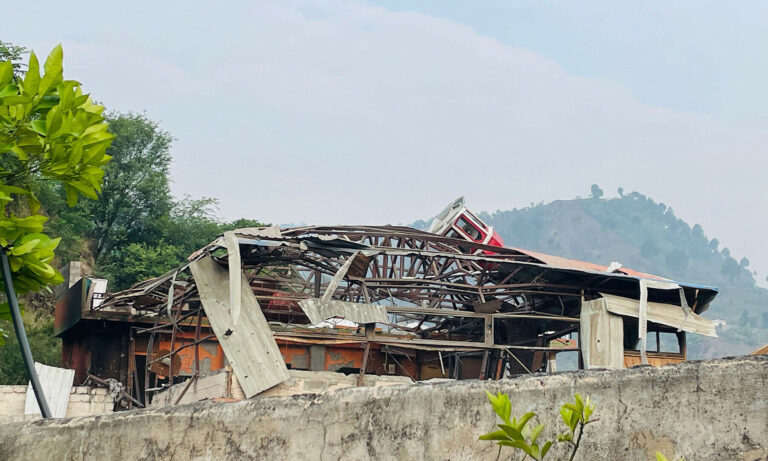
Then came the pahalgam. The April 22 attack killed 26 civilians, most of them Hindu tourists, in the Baisaran Valley. India blamed Pakistan within hours, without presenting public evidence. It suspended the Indus Waters Treaty, blocked border crossings, canceled Pakistani visas and demoted Pakistan’s diplomatic presence. Pakistan withdrew from the Simla Agreement and offered a neutral international investigation. India refused.
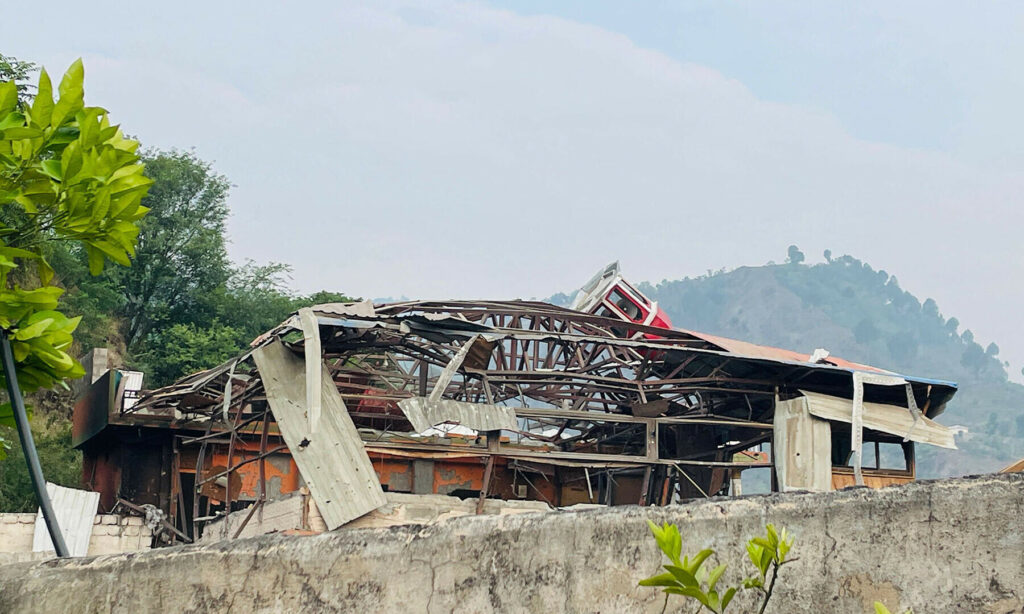
On 7 May India launched Operation Sindoor, attacking targets within Pakistani territory. Pakistan responded with Operation Bunyan-un-Marsoos. A ceasefire held from May 10. The Kashmir dispute, which New Delhi had spent years treating as a closed domestic matter, was back on the front pages of every major newspaper on earth. A year later, the diplomatic impact of the four days has been the most significant change in the Kashmir file since 2019.
What Re-Hyphenation Did to India’s Position
The ceasefire was brokered publicly by US President Donald Trump. That single fact carried disproportionate diplomatic weight. Trump on May 10 announced a “full and immediate ceasefire” between India and Pakistan, calling them “equal sides in a dispute” that he has personally resolved. India’s Foreign Secretary then held a separate briefing to insist the ceasefire had been initiated by Pakistan’s DGMO. The contradiction was public and damaging. India could not simultaneously accept the ceasefire and reject the framing that required a third party to produce it.
The analysis of the Carnegie Endowment was straight to the point, the Trump administration “crossed the third rail of Indian foreign policy by offering to act as a third-party mediator in the Kashmir dispute. The Lowy Institute noted that Trump’s handling of the crisis signalled Washington was willing to hyphenate India and Pakistan whenever it served American interests. The National Bureau of Asian Research concluded that US talking points during the crisis “de facto acknowledged Pakistani equities in Jammu and Kashmir,” with potential long-term consequences for India-US relations.
India had sent seven all party delegations, with 51 MPs travelling to 33 world capitals to articulate its stance on terrorism. The effort produced sympathy for the victims of Pahalgam. It did not create isolation of Pakistan. The Financial Times assessed that the ceasefire gave Islamabad a “diplomatic upper hand,” as US intervention placed India, the “fifth-biggest economy,” in the same bracket as what New Delhi itself describes as a “terrorism-backing rogue state.” It had taken twenty years to develop the de-hyphenation project. One US press conference put it back to 2003.
What Pakistan Actually Gained, and What It Did Not
Pakistan’s achievements since May 2025 are genuine but require precise accounting. Conflating diplomatic momentum with a resolution of the underlying dispute would be a serious misreading of where things stand. The internationalisation of Kashmir is confirmed. Al Jazeera’s analysts noted Pakistan’s gains as including the internationalisation of the Kashmir issue and the aerial engagements.
At an “atrocious price,” wrote Chatham House, “Pahalgam brought the Kashmir issue back onto the international agenda. The UN Security Council condemned the Pahalgam attack but also called for accountability and urged both states to resolve the dispute through peaceful means. That framing, “both states,” is precisely the multilateral recognition Pakistan sought.
This was reinforced by the UN human rights dimension. UN human rights experts said in November 2025 they had been “shocked” at India’s crackdown after 2,800 people were arrested, communications were cut off, Muslim houses in Gujarat and Assam were razed and they termed the demolitions as “collective punishment”. The report urged both governments to “peacefully resolve the long-running conflict over Jammu and Kashmir.” In December 2025, a UN expert report identified India as the aggressor in the April 22 attack’s aftermath, citing serious human rights violations. India’s efforts to prevent international attention on its conduct inside Kashmir had failed.
The overall international outlook of Pakistan also changed. In April 2026, Pakistan was called a “deft handler of global power politics” by The Economist. Pakistan hosted indirect US-Iran engagements in April 2026. Relations with Saudi Arabia, formalised with a mutual defence pact, deepened. Bilateral trade with Iran crossed $3 billion. CPEC 2.0 deals worth $8.5 billion elevated Pakistan-China relations to new heights.
Kashmir’s status has not changed. No referendum has been called. The Line of Control remains where it was. Indus Waters Treaty (IWT) suspension by India continues to act as an economic threat, which the National Bureau of Asian Research termed as a direct impact on the agriculture sector in Pakistan. Trump’s mediation offer has produced no formal dialogue mechanism. The Indo Pacific pivot of India has been thrown off track, however, that does not automatically mean a gain for Pakistan on the ground in Kashmir, added the analysis of the East Asia Forum. Pakistan’s own credibility problem, which Chatham House identified as its enduring weakness, has not been resolved by the military standoff. Pakistan’s diplomatic argument resonated with the international community. It did not absolve its institutional record on militant groups.
The honest assessment of where Kashmir diplomacy stands one year on is the dispute is internationalised again, but internationalisation has never, in 77 years, produced a resolution. What changed in May 2025 is that India’s ability to manage and contain the Kashmir file through bilateral insistence and economic leverage has been publicly and durably weakened. The world is paying attention again. Whether that attention will bring results is dependent on Pakistan’s efforts to follow it up.

Our Editorial Desk is the intellectual engine of Digital Debate, responsible for the rigorous research that anchors every conversation. Our team deep-dives into data, checks every source, and consults academic literature to move beyond headlines and identify the questions behind the questions.