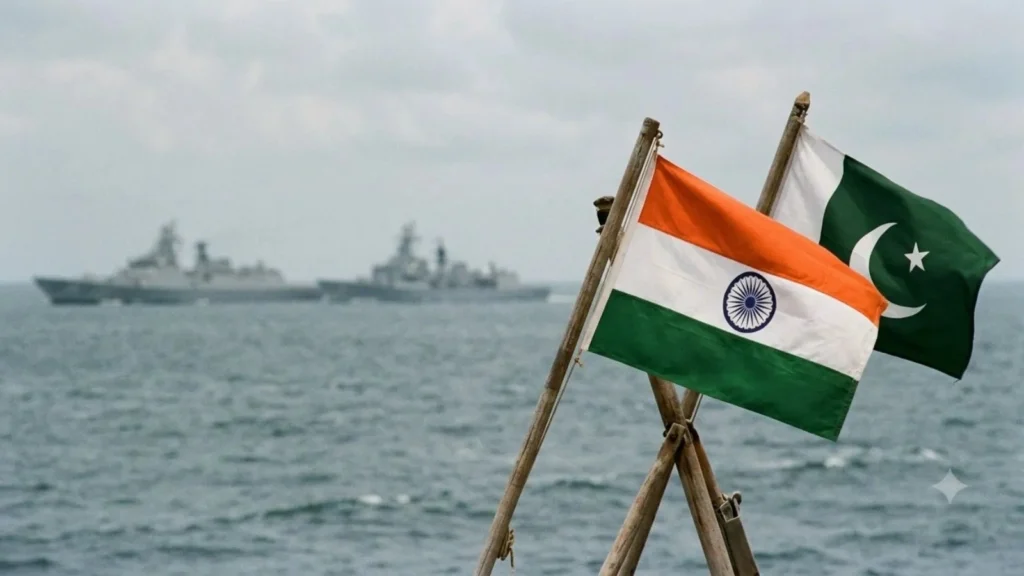
Between September 2025 and April 2026, Pakistan achieved three things that most states manage once in a generation: a mutual defense pact with the world’s largest oil exporter, the first direct engagement between Washington and Tehran since 1979, and the internationalisation of Kashmir at the United Nations Security Council. The central analytical question this moment demands is not whether these wins are real; they are, but whether Pakistan possesses the doctrinal architecture to sustain them. The evidence suggests it does not.
Pakistan’s current foreign policy posture is defined by sophisticated strategic opportunism. Its instincts are sound, its execution increasingly impressive, and its positioning in a multipolar order more valuable than at any point since the Cold War. What it lacks is the one thing that converts tactical success into structural influence: a codified, institutionally embedded foreign policy doctrine that specifies ends, articulates means, sets limits, and survives changes in government.
Strategic Hedging Is Not a Grand Strategy
The dominant framework for understanding Pakistan’s foreign policy behaviour is strategic hedging, the deliberate maintenance of multi-layered partnerships across competing great powers to preserve autonomy and maximise economic gains. This is an accurate description of what Pakistan does. But hedging is an explanatory category, not a prescriptive one. A state can hedge indefinitely and still lack a grand strategy, a coherent, publicly articulated conception of national interest that tells allies and adversaries alike what a state stands for and what kind of power it intends to become.
The Institute for Security and Development Policy has observed that Pakistan’s foreign policy “has tended to improvise reactions to regional and global events rather than being characterized by a deliberate and cohesive strategy.” That diagnosis was rendered before the Islamabad Talks. It remains structurally accurate. Pakistan’s growing dependence on Beijing. Research finds an 87% alignment with China in UN voting patterns since 2020, directly constraining the equidistance upon which its mediating credibility depends. A state cannot simultaneously project itself as a neutral broker and deepen an alignment that compromises that neutrality, not without a doctrine that consciously manages the tension between the two.
Three Wins, Three Vulnerabilities
Each of the landmark achievements of the past eighteen months carries a structural vulnerability that only a doctrine can address. The ceasefire dividend from Operation Bunyan um Marsus yielded Pakistan meaningful gains: the internationalisation of Kashmir at the Security Council and a diplomatic dynamic that the Financial Times described as giving Islamabad the “upper hand.” But normative achievements are not operative ones. Pakistan’s Security Council tenure expires in 2026 and momentum built on crisis-driven attention requires sustained institutional architecture, legal case-building, coordinated OIC engagement and SCO diplomacy to outlast the crisis that generated it. That architecture does not yet exist in codified form.
The Strategic Mutual Defense Agreement with Saudi Arabia is the most structurally significant of the three. An Article 5-style collective defense clause between a nuclear-armed state and the world’s largest oil exporter represents a genuine reconfiguration of Gulf security architecture. Yet the Middle East Institute’s F. Gregory Gause has noted that Riyadh has “few military assets to contribute to Pakistan in a conflict with India,” and whether Saudi Arabia would penalise India economically to honour its obligations remains, in his words, “a very open question.” The pact’s deterrent value lies in deliberate ambiguity. But ambiguity as deterrence is a tactical tool, not a strategic framework.
The Islamabad Talks, meanwhile, represent a feat of what can only be termed kinetic diplomacy, the integration of military credibility with high-level negotiation. Yet the Stimson Center has identified the core fragility: Pakistani officials have “struggled to develop a direct channel of communication with the powerful Islamic Revolutionary Guards Corps,” which dominates Iranian decision-making. More broadly, Chatham House has assessed that “history offers few grounds for optimism” that Pakistan will extract durable strategic returns from its mediating role with Washington, a judgment grounded in the repeated pattern of Pakistan performing strategic services in exchange for transactional, time-limited rewards.
The Saudi pact and the Iranian mediation role also generate a direct structural contradiction. If Iranian proxy activity against Gulf targets resumes, Riyadh will expect Pakistani activation of SMDA commitments. Pakistan’s credibility as Tehran’s interlocutor would be the first casualty. Managing competing commitments is precisely what doctrines are designed to do.
The Institutional Constraint
Any rigorous analysis must engage with Pakistan’s enduring institutional constraint. Since 1947, parliament has failed to establish meaningful agency over foreign policy, while military institutions have dominated its formulation across successive governments. This produces military continuity across the China relationship, the nuclear deterrent, and the broad architecture of Kashmir policy, but military continuity is not doctrinal continuity. It produces coherence without accountability, and consistency without the public articulation that embeds foreign policy in a socially robust framework. When Vice President Vance praised Pakistan’s leadership as “incredible hosts” following the Islamabad Talks, he was addressing a personal relationship. Personal rapport does not survive principals. Doctrines do.
The Doctrine Pakistan Needs
A viable foreign policy doctrine need not be ideological. It requires coherence, durability, and institutional embedding across three pillars implicit in current Pakistani statecraft but never made explicit or binding.
The first is geo-economic primacy, publicly articulating Pakistan’s $8 trillion mineral wealth, Gwadar’s connectivity potential, and CPEC as the material basis of its diplomatic relationships, not merely its economic ones.
The second is institutionalised equidistance in great-power competition, transforming Pakistan’s de facto mediating neutrality into a formal and publicly defended strategic posture. The third is a formalised Islamic world security role, converting Pakistan’s status as the only nuclear-armed Muslim-majority state from an implicit asset into a codified diplomatic mandate.
The bilateral wins are on the record. The doctrine that would make them durable is not. Whether the post-Marka-e-Haq moment is remembered as a turning point or a high watermark depends entirely on what Islamabad chooses to build next.

Haris Ihsan is a Researcher with a background in Peace and Conflict Studies from National Defence University, Islamabad, offering research-based insights on regional conflicts, security dynamics, and peacebuilding strategies.