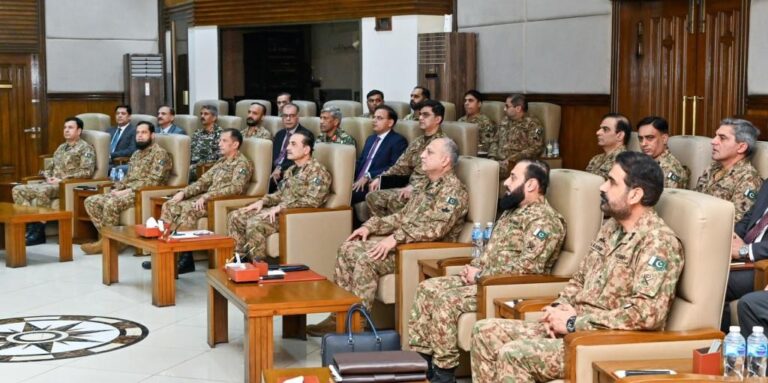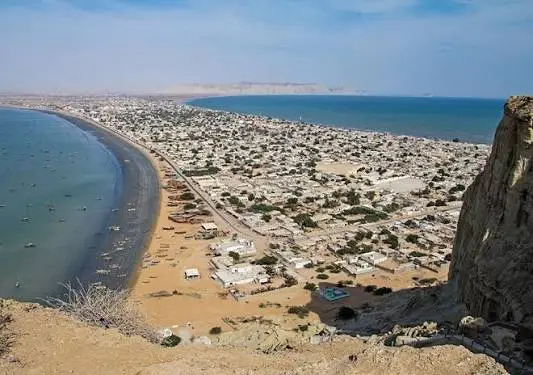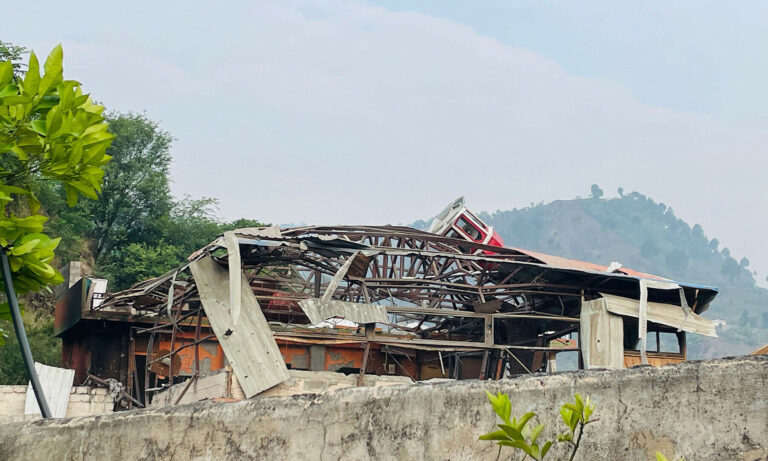
The international community celebrates India as the world’s largest democracy. Meanwhile, it ignores the situation in Punjab, Kashmir, and Nagaland. In the latest episode of Digital Debate London, diaspora advocates, a Sikh human rights lawyer, Ranjit Singh Srai, based in the UK, a Naga independence activist, Frans Welman, and Muzzammil Ayyub Thakur, as a host, sat down to lay out the facts on India’s conduct across three conflict zones.
A Common Thread Since 1947
The three struggles are usually examined individually. Khalistan as a Pakistani proxy. Kashmir is a bilateral dispute. Nagaland is an obscure northeast insurgency that nobody covers. All three framings prove false.
The common thread, according to the Sikh human rights lawyer Ranjit Singh Gill, is self-determination. The Sikh desire for sovereignty in Punjab predates the 1940s. It was not in reaction to Pakistan but as a long-standing national sentiment crystallized during the independence process from Britain. The same applies in Kashmir and in Nagaland.
The Naga activist Frans Wellman also added a fact that most people don’t know that the Naga people declared independence one day before India did, on August 14, 1947. The United Nations acknowledged receipt of that declaration. Britain said nothing. India said nothing. And the statement was swept under the rug. Since then, India has regarded Nagaland as a territory inherited by it, although the British never formally ceded it.
What the Oppression Looks Like
The Armed Forces Special Powers Act was enacted in India in 1955 and was first used in Nagaland in that same year. A soldier entering a home, killing a civilian, or detaining someone without charge faces no legal consequences. Frans Wellman described it plainly as state-sponsored terrorism written into law.
In Punjab, the scale is documented. An estimated 200,000 Sikhs have been killed by the Indian state over the past four decades. The military attack on Harmandir Sahib, the holiest place in Sikhism, resulted in the deaths of tens of thousands of people in 1984. For decades thereafter, there were mass disappearances.
Today, India uses its Unlawful Activities Prevention Act, a counterterrorism legislation that is commonly used to prosecute journalists, academics, and peaceful political activists. Detention without trial is the norm. As Gill pointed out, the Indian law does not check the executive branch. It operates under it.
The scenario is not different in Kashmir either. In August 2019, the autonomous status of the region was removed by the revocation of Article 370. Millions of domicile certificates were issued to non-Kashmiris. Land ownership rules changed. The stated goal was for integration to take place. It is demographic replacement that is the actual effect.
The Narrative War
India’s standard response to all three movements is the same: foreign interference. Khalistan is a Pakistani project. Kashmir resistance is Pakistani-sponsored. Nagaland separatism has Chinese fingerprints. The discussion dismissed this argument directly. Article One of the International Covenant on Civil and Political Rights, adopted in 1966 and ratified worldwide, states the right to self-determination.
International law is clear that a state that denies self-determination by force loses its right to hide behind the principle of territorial integrity. Borders are drawn and redrawn. It is going on right now in Europe, in the Middle East, and in talks on Greenland and Panama. The argument that “what’s done is done” in 1947 is not a legal position.
India Killing People Abroad
The most significant recent development is India’s transnational repression campaign. In 2023, Sikh activist Hardeep Singh Nijjar was assassinated in Canada. A separate plot to kill another activist in New York was disrupted. Both cases are now the subject of criminal and extradition proceedings.
Gill interpreted this as a straightforward statement; the killing in India outside its borders is a reflection that it sees that it is losing the battle at home and internationally. These are not covert successes. They are documented failures that have handed diaspora activists more attention and more credibility than they had before.
In fact, diaspora communities in the UK, Canada, and the United States have turned their activism up a notch, rather than down, after the killings. They have appeared before foreign governments, briefed journalists and diplomats, and taken the narrative to international forums. India’s violence has made the movements it intended to put down stronger.
The Cost India Pays
Frans Wellman had pointed out a specific calculation that India has a standing army of around 200,000 in Nagaland alone. Add the deployments in Punjab and Kashmir. Annual costs are in the tens of billions of dollars. Not to mention the diplomatic fallout, the human rights complaints, the downgrades by Freedom House, and the legal actions in Western courts.
As Gill stated, empires don’t last because they’re strong. They fall under their own weight. India is an empire, in the classical sense, with dozens of different nations, different languages, and different religions ruled by military might and not by real consent.
What Britain Owes
Britain never officially transferred Nagaland to India. It simply left and said nothing. The Naga people declared independence. Britain acknowledged nothing. Decades of conflict followed. Britain has legal and moral responsibility. The legal foundation of India’s claim will become much shakier if Britain explicitly declares that it never ceded sovereignty of Nagaland to India. The same holds for Punjab and Kashmir. The partition was designed by Britain. It drew the lines. It escaped before the consequences were realized.
What the Diaspora Wants
The end goal is not complicated. Be it Scottish devolution, Kosovar independence, or any of the many successful self-determination processes this century, the underlying principle is that political will, expressed freely, takes precedence over military force.
For the Sikhs, a declaration of independence for Khalistan was made on April 29, 1986. The 40th anniversary passed recently. That declaration remains a political aspiration rather than a geographic reality because India occupies Punjab militarily.
The starting point for the Nagas is recognition. Most of the world does not know Nagaland exists. Western missionaries arrived there under British rule and converted the people to Christianity. The United States sent those missionaries. It now ignores the people entirely.
The path forward, as both speakers described it, runs through international forums, through foreign governments, and through sustained pressure on the argument that India’s territorial integrity argument has no standing when that territory was acquired and held by force. The argument is being made. India is losing it. That is precisely why its citizens are turning up dead in Canada and New York.

Our Editorial Desk is the intellectual engine of Digital Debate, responsible for the rigorous research that anchors every conversation. Our team deep-dives into data, checks every source, and consults academic literature to move beyond headlines and identify the questions behind the questions.