
Marka-e-Haq has instilled in Pakistan what it lacked for years: confidence. The nation had shown it could defend itself, withstand an invading army, and command a degree of respect on the international stage. However, military achievement is meaningless if Pakistan fails to follow up with economic results. The window is open. The point is whether Pakistan’s institutions, people, and political will exist to move forward.
Geopolitical Relevance Is Perishable
Pakistan’s geographical location has always been important. It is surrounded by the major regional dynamics, China and Central Asia to the north, India to the east, Afghanistan to the west, and the Arabian Sea to the south.
But geography alone does not create prosperity. Pakistan had been engrossed in security threats for decades, so it could not pay attention to the economic architecture. The Afghan war, the war on terror, and internal insurgencies; these drained the country’s attention and resources. Marka-e-Haq changed the strategic equation. For the first time in a long time, Pakistan is not an unlucky nation. It’s a nation that others wish to be involved with.
But this relevance has an expiry date. If Pakistan does not translate diplomatic capital into trade agreements, industrial partnerships, and long-term investment frameworks, the window closes. Dialogues and meetings produce no jobs. Deep economic understandings do.
The Governance Problem No One Wants to Fix
The key challenge to the economic future of Pakistan is not external. It is the civil service. The Central Superior Services examination (CSS) in Pakistan is conducted to recruit approximately 200 officers from the applicant pool of 20,000 to 40,000. The minimum qualification is a bachelor’s degree. The selected ones then serve for 35-38 years in the government, where they are not even trained for or have studied what they do.
A stark comparison exists. There are 24 civil service specializations in the United Kingdom. An IT secretary in the UK has an IT background. A commerce secretary is one who knows about trade. In Pakistan, a generalist with a BA in history becomes the Secretary of Information Technology and makes decisions on digital infrastructure and Pakistan’s tech policy.
The results are predictable. Independent power plant contracts were signed without anyone calculating surplus or shortage in electricity demand. Economic agreements have been negotiated without economists at the table. Policy after policy has been formulated by outsiders from the World Bank or the United Nations and then imposed on civil servants who are not at all interested in implementing it.
The solution is not too complicated. Implement 24 specializations in the CSS process right away. Restructure in-service training through universities and research institutions, not internal bureaucratic workshops. Instead of comparing IT officers to generalists, compare them to other IT officers. And measure performance through transparent, documented accountability.
None of this has happened. In the first 32 years of Pakistan’s CSS system, not a single government servant was dismissed for corruption or inefficiency. Civil servants are constitutionally protected. There is organized opposition to politicians trying to reform. Self-protecting system.
The 85 Percent Problem
In Pakistan, less than 10 per cent of government interaction is done by officers; most is done by clerks. These are low-level administrative workers who have received little training and have no specialization or accountability. Normally, citizens who approach the government do not encounter a real official. They deal with clerks.
Australia faced the same problem and eliminated the role entirely. Junior officers now handle what clerks once did, with actual authority and training to match. Pakistan still continues to pay tens of thousands of surplus clerks on public money, which includes salaries, pensions, office space, electricity, and equipment.
If the surplus manpower could be put to productive use and the workers retired instead of being laid off, the estimated savings would be between 1,000 and 1,200 billion rupees annually. Political cost is real; mass retirement means protests, resistance. But the economic cost of inaction is higher.
Pakistan as a Bridge Economy
A positive aspect of what Pakistan has to offer is its human capital. Pakistan has a workforce of 240 million people. Close to two million Pakistanis are already running key industries in the UAE. Another two million are embedded in Saudi Arabia’s economy. These workers are adaptable, skilled, and competitive.
None of the Gulf states has a population base large enough to support industrial infrastructure. The UAE’s population is nine million. The same limitations apply to Saudi Arabia’s local labor force. Pakistan is able to provide the human capital, in the required quantity, at the required price, and with a cultural orientation that is important in these markets.
One way to utilize Pakistan’s potential can be to build small industrial complexes of 40 units, established every 25 kilometers throughout Pakistan, utilizing local workforce and solar energy. Workers reside in the immediate area. The cost of transport is low. Wages are competitive. The industrial production supplies local markets in Iran, Afghanistan, Turkey, and the Gulf.
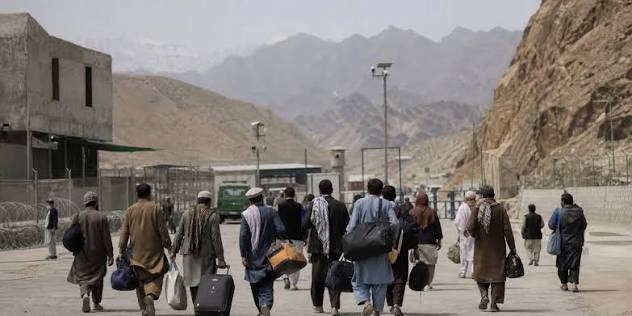
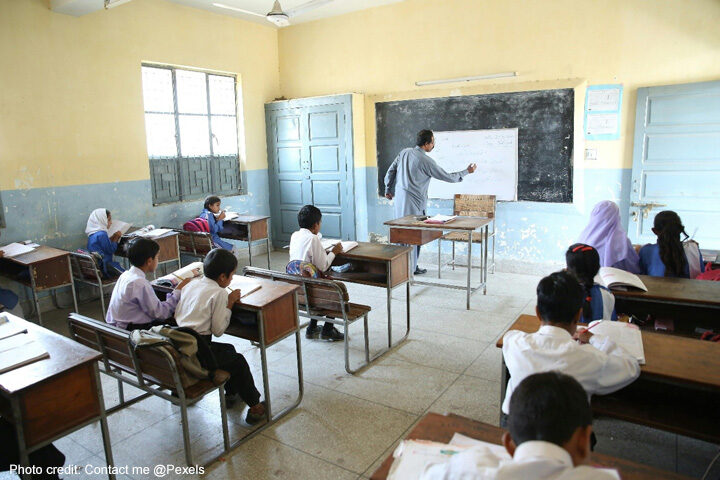
For Afghanistan specifically, a direct education and skills pipeline can help create good relations. There are already thousands of Afghan students studying in Pakistan. Scaling this, assigning five Afghan children to every Pakistani school, costs an estimated 12 billion rupees. The return is a literate, Pakistan-oriented neighbor instead of a hostile and unstable one.
The Team Pakistan Does Not Have
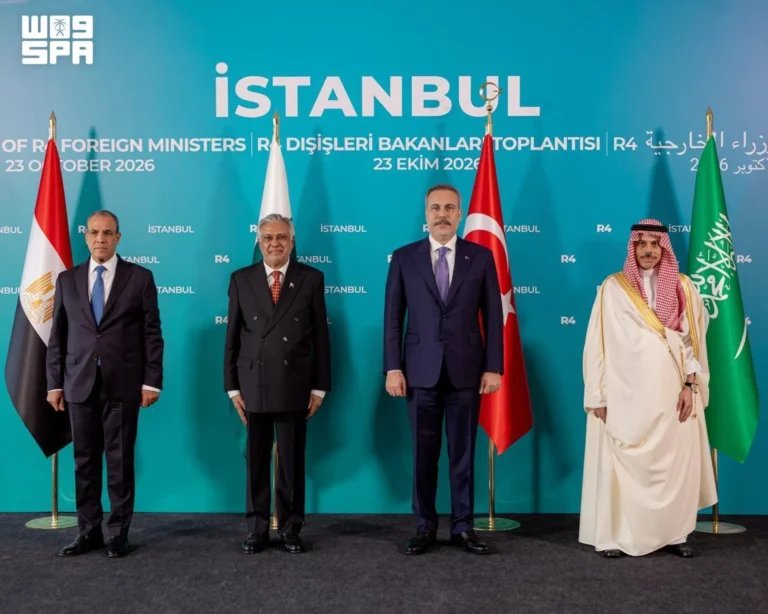
Pakistan’s diplomatic corps has improved dramatically. The foreign policy of the country after Marka-e-Haq indicated the maturity of strategic thinking. No other nation in the region enjoys such a level of trust as Pakistan does with Iran, Saudi Arabia, China, and Turkey. But diplomatic skill without economic expertise produces meetings, not outcomes.
There is a need for a permanent team of 30 young, trained, and well-qualified economists and sectoral experts for economic diplomacy in Pakistan. Without that team, every trade discussion becomes a procedural exchange. The brokers make arrangements for the next meeting. Nothing gets built.
Marka-e-Haq provided Pakistan with credibility. The confidence that permeates this nation now is true and legitimate. Pakistan built its own weapons. It trained its own pilots. It developed its own software. That same capacity exists in economics. The brain is here. The population is here. The geographical location is here. What has been lacking is a government structure to organize it.
Reforming the CSS exam, restructuring in-service training, retiring surplus clerks, building a dedicated economic diplomacy team, and developing regional industrial zones, none of this is theoretically difficult. There is nothing easy about it politically. The difference between Pakistan’s next decade and its last one depends on which of those two facts ends up mattering more.
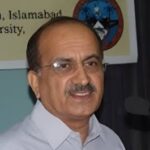
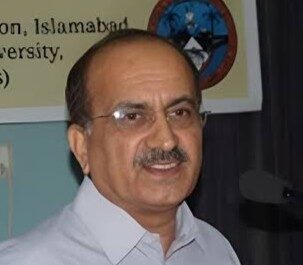
Dr. Syed Tahir Hijazi is a senior economist and the Vice Chancellor of Muslim Youth University, Islamabad. A veteran academician with experience teaching in the USA, Greece, and the UAE, he is a leading expert on Islamic banking and governance reform. He has held top executive roles at the University of Central Punjab (UCP) and the International Islamic University (IIUI) and continues to advise the Government of Pakistan on civil service modernization and economic planning.