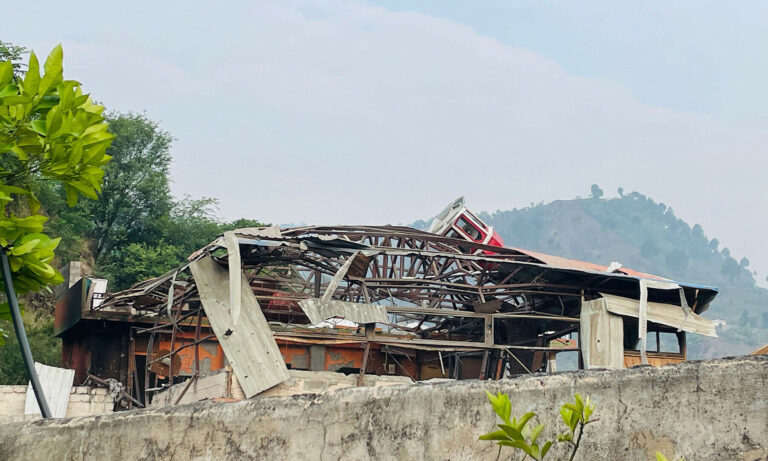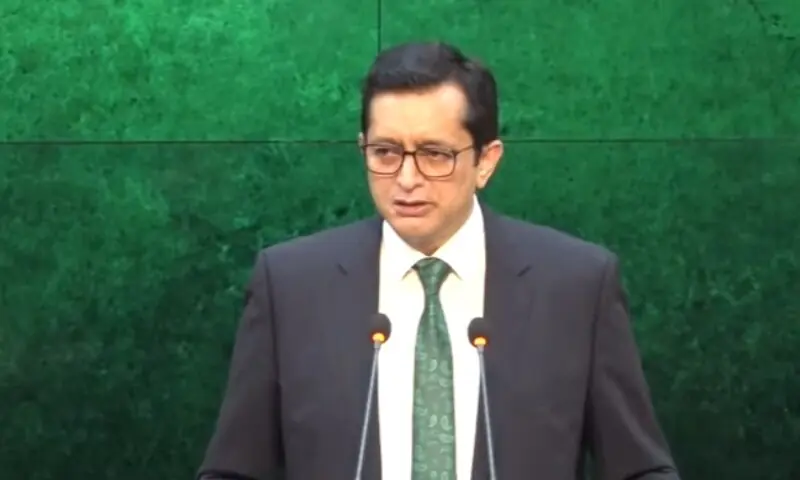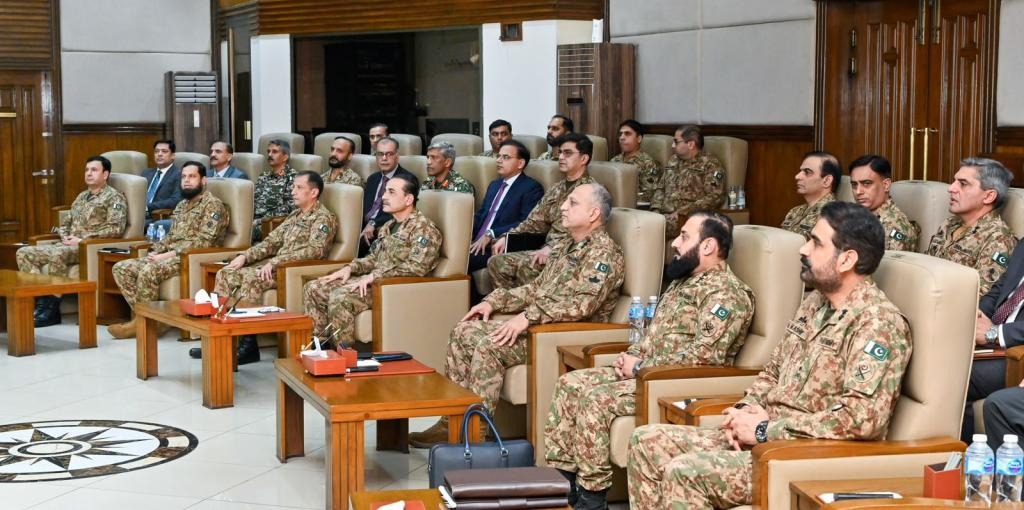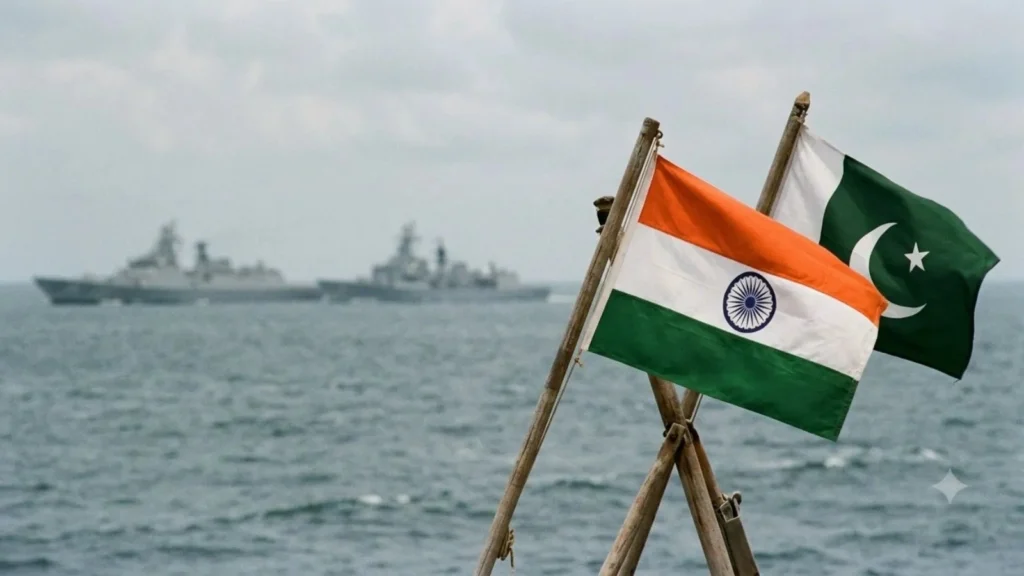
History is often written by the victors, but in the modern era, history is written in real-time by those who control the screens. May 2025 is a historic event, a turning point in the history of conflict, an event that is now inscribed in collective memory as ‘Marka-e-Haq’. It was a four-day war that transcended the physical boundaries of trenches and airspace, moving instead into the volatile territory of public perception and digital narratives. This was not just a war of arms; it was a multi-domain conflict, a war of information where the bullets were facts, and the injured were the truth itself.
The Anatomy of a Multi-Domain Conflict
Spring 2025 saw a fundamental change in the nature of regional crises. As the fighting played out on the ground, a secondary, perhaps more significant battle was being fought on the smartphone and television screens. Multi-domain warfare implies that the achievement of success is no longer measured in territorial conquest alone. Rather, it is about synchronizing the land, air, sea, cyber, and information domains.
The information domain was the main stage in Marka-e-Haq. In such an environment, the pace of a Breaking News ticker may even exceed that of a supersonic jet, and the reality created by the public can actually be in place before the smoke clears from the site of an explosion.
A Critique of Indian Media
One of the important features of the Marka-e-Haq crisis was a dramatic spectacle. In the midst of the conflict, the Indian media seemed to have morphed from journalism to aggressive performance art. This rhetoric consisted of unverifiable claims, emotional escalation, and even hyperbole.
Sensationalist headlines said that Islamabad had fallen, that power grids all over Pakistan were cut off for good, and that Karachi was being set on fire. These reports were not simply false; they were a ploy to create a false reality through repetition. A story of the internal revolt in the Pakistani army was relentlessly pushed, with no relevance to the ground realities.
This kind of journalism, which thrives on ratings and nationalistic fervor, eventually had a negative effect. When the gap between televised claims and physical reality becomes too wide, the credibility of the medium collapses. This was highly criticized by those involved in the event and by international observers, who recognized the dangers of unverified reporting in a nuclear fringe environment.
The Pakistani Response
In contrast to the high-decibel reporting across the border, the Pakistani media’s approach during Marka-e-Haq was characterized by responsibility over sensationalism. The decision to depend on trusted facts and official updates at this time of national anxiety had two purposes.
First of all, it provided a stabilizing influence in the domestic population. The media did not fall into the trap of emotional escalation, thereby forestalling mass panic and keeping civil order. Second, it enhanced the country’s image in the international arena. When the international community compared the two narratives, the more sober, evidence-based reporting from Pakistan gained the upper hand in terms of trustworthiness.
This means that in today’s wars, sometimes it is better to be quiet than to be loud. The media’s balanced opinion and its adherence to the facts made this military operation a national success. The victory was not just in defending borders but in successfully defending the integrity of the national story.
The Role of International Observers
The international media and analysts found the Pakistani reporting more credible. This is an important lesson to learn for future wars. In a globalized world, a local war is always a global event. In the end, the third-party observers themselves serve as the jury of public opinion. Geopolitical sympathy changes when one side is perceived as making noise, and the other side is telling the truth.
The organized journalistic approach adopted by Pakistan during these four days in May 2025 demonstrated that a narrative built on truth is more resilient than one built on propaganda. Propaganda is brittle; it shatters when it hits the hard wall of reality. Truth, however, is cohesive.
Lessons from Marka-e-Haq
Marka-e-Haq is a stark reminder of the importance of peace and justice in the future of the world’s security. It teaches us that today’s battles aren’t fought just with weapons. The courage of the soldiers on the frontline was essential, but the other key triumph of the 2025 campaign was the way in which the truth was presented to the world responsibly.
History does not just record what happened in the physical world; it records what the world was told. The four-day war of May 2025 will be remembered not only for the military moves but also for the clarity of the story that came out of that war. Marka-e-Haq stands as a testament to the fact that in the age of information, the ultimate victory belongs to those who can maintain their integrity under fire. The campaign helped us understand that with weapons, we can stop an army, but with the truth, we can win a war.

Batool Rajput is a senior news anchor, working at various media platforms. A veteran of the Pakistani media industry, she is recognized for her investigative rigor and her analysis of international relations, particularly regarding CPEC and Middle Eastern stability.