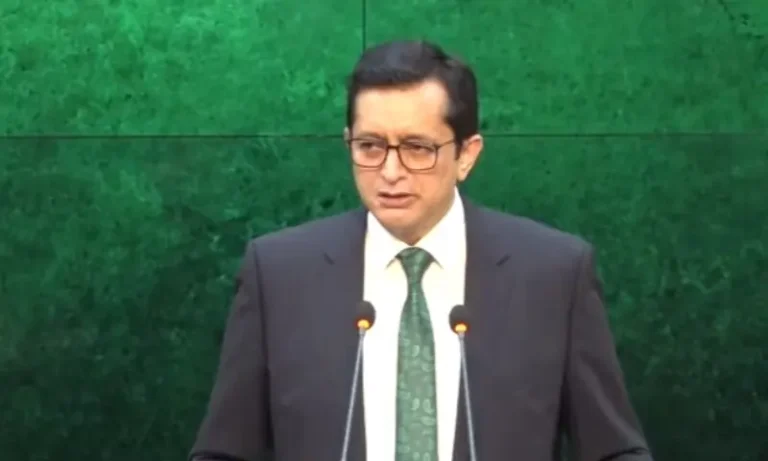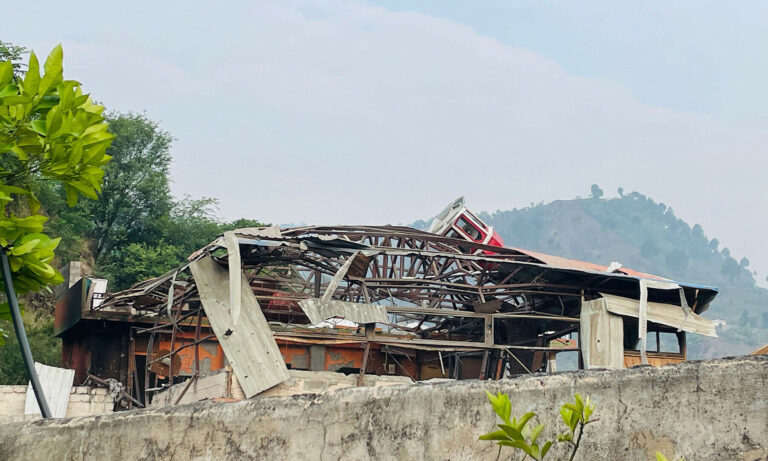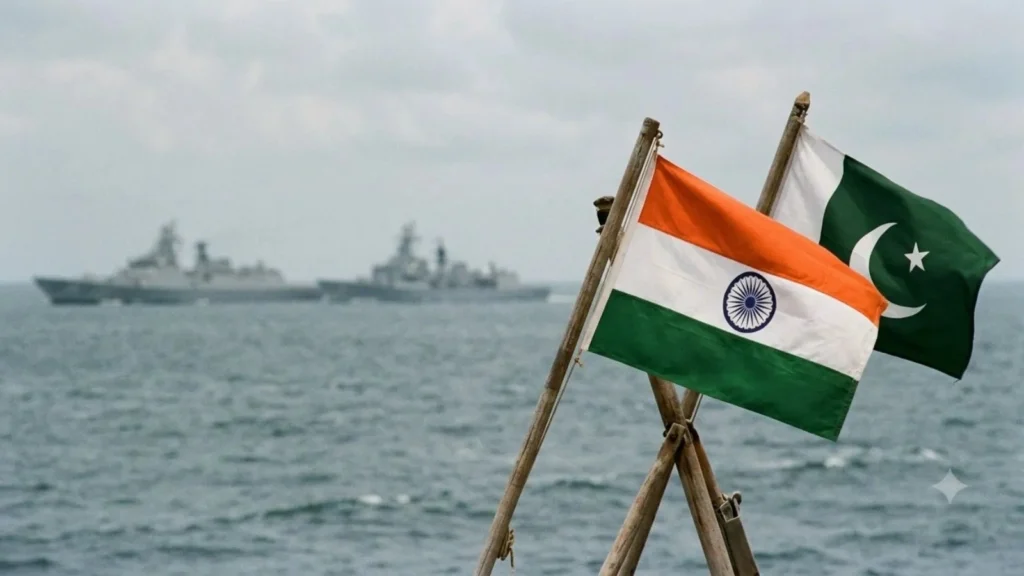
On May 12, 2025, two days after the ceasefire that ended the most intense India-Pakistan military confrontation in decades, Pakistan’s Prime Minister announced that May 10 would be observed every year as Youm-e-Marka-e-Haq, a National Day of Remembrance for Operation Bunyan-un-Marsoos. The announcement was accompanied by offers of compensation for civilian families, promises to rebuild the destroyed mosques and homes in Indian violence, and a guarantee that the children of martyrs would receive free education until graduation.
This was not just a political statement to institutionalize May 10. It was an awakening that what had transpired from April 22 to May 10, 2025, was a pivotal moment in the nation’s history requiring a lasting memorial.
A year later, that recognition is being celebrated everywhere and internationally. The people participated in large numbers in the rallies, walks, and seminars to commemorate the anniversary in various parts of KP, from DI Khan to Chitral, Waziristan to Kohistan. A multi-faith conference was held in Rawalpindi where religious scholars, civil society representatives, traders, a bishop, and a Sikh community leader sat together to pay respect to both the military and civilian leadership.
Senior government officials, diplomats, and community leaders attended the gathering of overseas Pakistanis in Dallas, marking what the Pakistani diaspora called the defining moment of its country. The impact of the commemoration from KP’s mountain valleys to the hotel in Texas reflects what May 10 created in the national consciousness of Pakistan.
The term Marka-e-Haq, meaning the Battle of Truth, refers to the entire period of the 2025 conflict with India, beginning with the Pahalgam attack on April 22 and ending with the ceasefire on May 10 following Operation Bunyan-un-Marsoos. The name carries a moral claim. It places Pakistan’s response within a framework of justice, not aggression. India struck first, without presenting evidence, and killed 31 Pakistani civilians, including women and children.
Pakistan withstood the first salvo, shot down 77 drones, and retaliated with a precise counterattack against military infrastructure rather than civilian areas. The contrast in conduct became part of the story Pakistan presented to the world, and the international community took note.
Civil-Military Harmony as a Strategic Asset
What it gave birth to within the political domain of Pakistan, perhaps, is the most important domestic effect of Marka-e-Haq. Civil-military relations in Pakistan had been a cause of conflict and institutional tension for years before May 2025. The crisis changed that dynamic in a visible and sustained way.
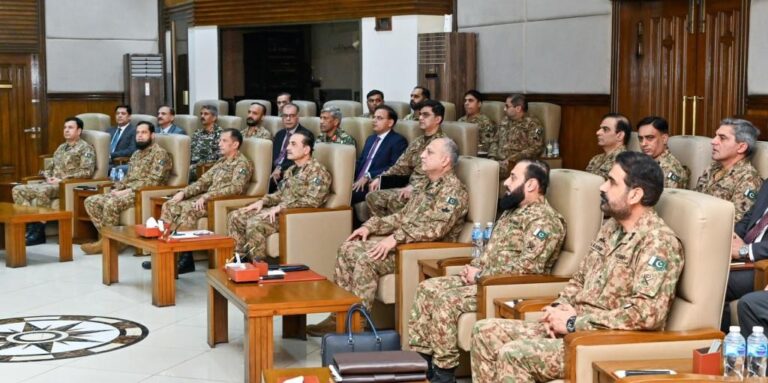
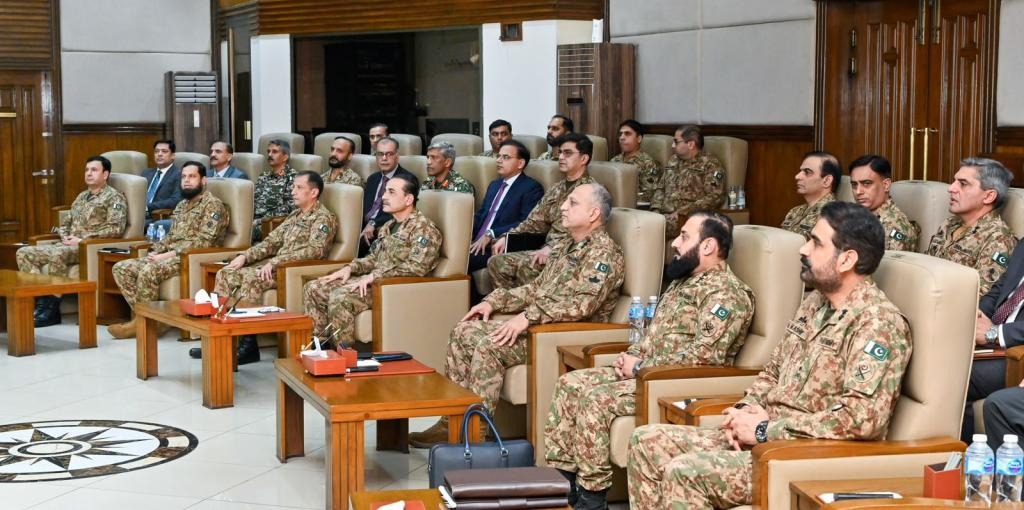
The civilian government handled diplomacy, international communications, and domestic messaging during the crisis. The military managed the battlefield. Both tracks were parallel and quite well coordinated. That alignment, visible to both Pakistani citizens and international observers, was itself a strategic asset. Pakistan’s fractured political environment, which in the years preceding 2025 was a source of significant division within the country, came together in the response to Indian aggression. That unity was not manufactured for the cameras. It could be seen in real time over the four days of the conflict.
Pakistan’s Global Standing After the Battle
The international dimension of Marka-e-Haq’s legacy is equally significant. Pakistan’s diplomatic outreach during the crisis, with the Foreign Office presenting Pakistan’s position on both bilateral and global platforms simultaneously, produced a diplomatic advantage that outlasted the military exchanges. The US-brokered ceasefire, publicly recognized by Islamabad and confirmed by Washington, put Islamabad in a ‘responsible state’ which accepted international involvement. India’s adamant that no third party was involved caused a credibility vacuum that was observed and recorded by international watchdogs.
The combat performance of Pakistan’s armed forces, particularly the downing of multiple Indian Rafale jets using Chinese-supplied J-10C aircraft and PL-15E missiles in the largest aerial engagement involving fourth-generation jets in recent history, drew serious international military attention. China’s air force chief visited Pakistan in July 2025, specifically to study how the Pakistan army had put together the kill chain employed in the aerial engagement, thereby sending a clear message to the world’s defense wings. Pakistan had not merely defended itself. It had demonstrated, in live combat conditions, a level of military integration and technological effectiveness that changed how it is assessed as a security actor in the region and beyond.
The anniversary is also being linked to Pakistan’s current diplomatic role as the lead mediator in the Iran-US peace process, with analysts noting that Pakistan’s credibility in Islamabad is inseparable from the resolve it demonstrated during Marka-e-Haq. Proving that a country that stood firm against a more powerful military force, kept its head above the water during the toughest of times, and was respected by the international community for showing restraint is a country that other actors respect during negotiations.
The military operation lasted four days. Its impact on Pakistan, as seen by itself and by the world, is still unfolding. May 10 is now a permanent date on Pakistan’s national calendar. The work it demands, investment in people, institutions, and durable peace, is the real measure of whether Marka-e-Haq’s legacy holds.

Our Editorial Desk is the intellectual engine of Digital Debate, responsible for the rigorous research that anchors every conversation. Our team deep-dives into data, checks every source, and consults academic literature to move beyond headlines and identify the questions behind the questions.