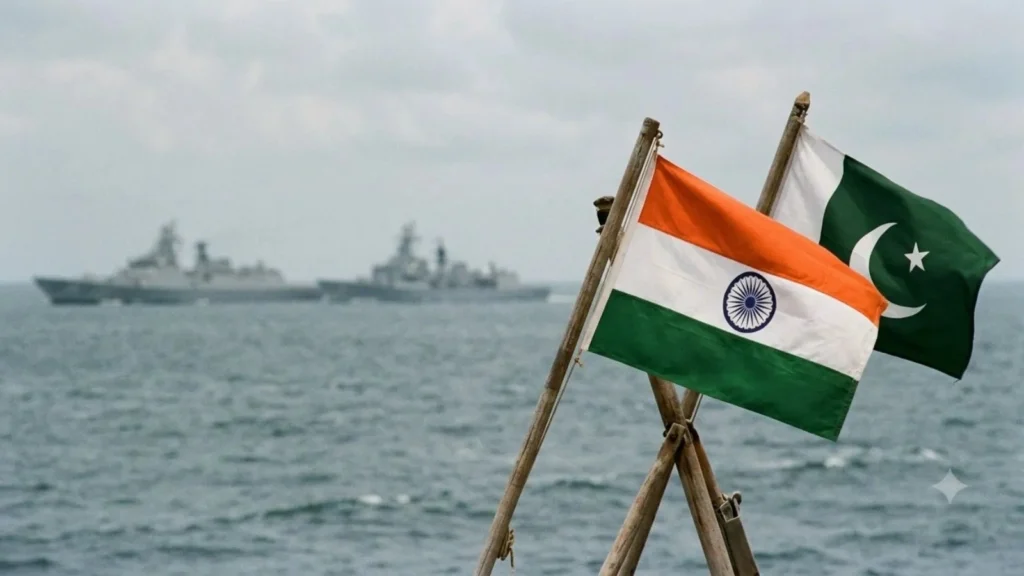

The geopolitical landscape of 2024 through 2026 has witnessed a transformative shift in the national security doctrine and foreign policy orientation of Pakistan. Once characterized primarily as a security-centric state preoccupied with its eastern neighbor or a peripheral ally in Western-led global initiatives, Pakistan has reconstructed its identity as an emerging middle power. This transition is not merely rhetorical but is grounded in a sophisticated strategy of “strategic hedging,” whereby the state leverages its nuclear deterrent, geographical pivotality, and combat-tested military institutions to project influence across the Middle East, North Africa, and South Asia. The period is defined by a series of landmark mutual defense pacts, high-value arms exports, and decisive kinetic operations that have collectively repositioned Islamabad as an indispensable broker in a multipolar world order.
Theoretical Framework of Pakistan’s Middle Power Identity
The conceptualization of Pakistan as a middle power rests upon its move away from the traditional “frontline state” model toward a role defined by regional influence, norm entrepreneurship, and strategic flexibility. Unlike traditional middle powers such as Canada and Australia, which rely on liberal norms and stable economic bases, Pakistan represents a new class of pivotal states from the Global South. This identity is forged at the intersection of nuclear capability, economic fragility, and geographic importance, where the state converts its security value into diplomatic and financial capital.
Pakistani foreign policy elites have increasingly adopted middle-power diplomacy traits, such as active multilateralism in the United Nations (UN) and the Organization of Islamic Cooperation (OIC), and the use of soft power through peacekeeping missions and religious advocacy. A central pillar of this new identity is strategic hedging, maintaining multi-layered partnerships with China, the West, and the Gulf monarchies to maximize autonomy while avoiding total dependency on any single global player. This approach is driven by a recognition that in a multipolar phase, flexible alignments are essential for survival and influence.
The contradiction between Pakistan’s theological/ideological underpinnings and the realities of international politics continues to shape its identity. While anti-Westernism persists as a domestic outcome of historical alliances, the state remains pragmatically engaged with international financial institutions and global powers to sustain its economic base. This duality allows Pakistan to portray itself as the fortress of the Muslim world while simultaneously acting as a bridge for mediation between rivals like Iran and the United States.
The Strategic Mutual Defense Agreement (SMDA) with Saudi Arabia
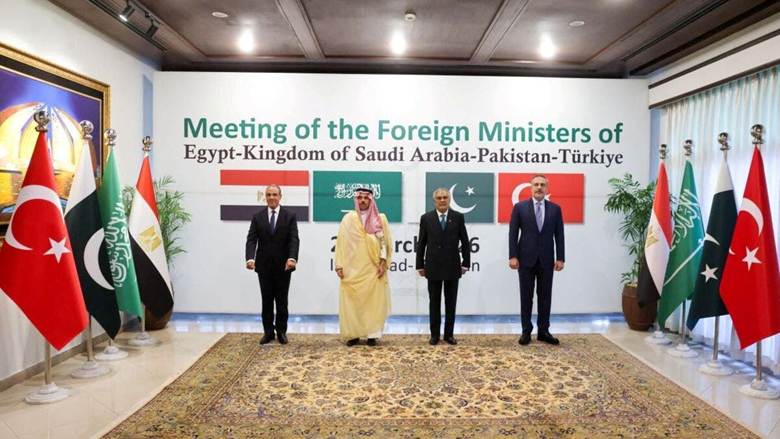
The signing of the Strategic Mutual Defense Agreement (SMDA) on September 17, 2025, in Riyadh, represents the most significant upgrade to Pakistan-Saudi relations in decades. The pact, signed by Saudi Crown Prince Mohammed bin Salman and Pakistani Prime Minister Shehbaz Sharif, formalizes a long-standing but previously informal security partnership. At its core, the SMDA stipulates that “any aggression against either country shall be considered an aggression against both,” establishing a framework for collective security and mutual defense.
This agreement emerged against a backdrop of increasing regional instability, specifically the spillover from conflicts in Gaza and the wider Middle East. The Israeli strikes on targets in Doha, Qatar, in September 2025, served as a catalyst, prompting Riyadh to seek more robust security guarantees outside the traditional U.S.-led architecture. The pact is widely interpreted as a diplomatic signal to Washington, conveying that the Gulf monarchies will diversify their security providers if U.S. commitments are perceived as insufficient.
Expansion of the Gulf Defense Framework: Qatar and Bahrain
The success of the Saudi-Pakistan SMDA has created a ripple effect across the Gulf Cooperation Council (GCC), with Qatar and Bahrain moving toward similar formalized arrangements. This movement signals a major realignment in Gulf security, with Pakistan increasingly central to regional military planning and deterrence structures.
The Qatar-Pakistan Strategic Accord
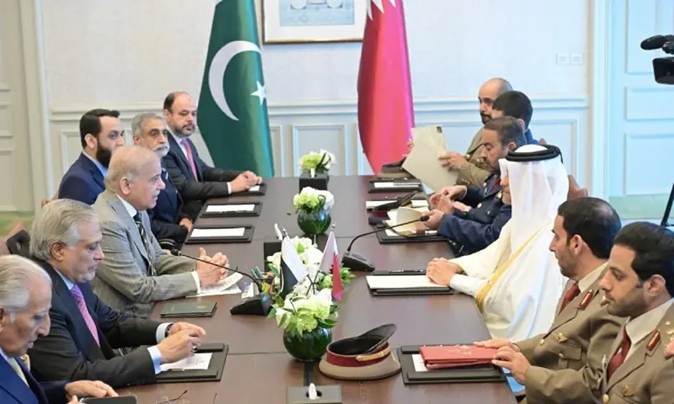
Following the Israeli strikes in Doha, Qatar accelerated negotiations for a landmark strategic defense pact with Islamabad. While the Saudi agreement focuses on an immediate collective security guarantee, the Qatari approach emphasizes practical interoperability, intelligence sharing, and defense-industrial cooperation. The proposed agreement includes:
- Joint Training and Exercises: Expanding on existing programs like the 9th Pakistan Army Team Spirit (PATS-2026) competition, where Qatari teams have successfully participated.
- Integrated Air Defense and Counterterrorism: Transferring Pakistani doctrine regarding rapid mobilization and expeditionary logistics to the Qatari military.
- Cybersecurity and Drone Technology: Collaboration on unmanned systems to address the threat of low-cost drone swarms that can bypass conventional Western air defense systems.
Defense Industrial Synergy with Turkey
The relationship between Pakistan and Turkey has evolved into a strategic industrial alliance that prioritizes technological sovereignty and self-sufficiency. Both nations have faced historical Western arms restrictions, prompting a deep collaboration in the co-production of military hardware and the transfer of cutting-edge technology.
The National Aerospace Science and Technology Park (NASTP)
A cornerstone of this partnership is the National Aerospace Science and Technology Park (NASTP) in Pakistan, which has become a hub for Turkish aerospace giants like Baykar. The collaboration includes R&D studies on unmanned aerial systems (UAS) and the production of components for extended-endurance drones. Turkish firms are increasingly viewing Pakistan as a strategic production and export partner for regional markets in ASEAN, Africa, and the Gulf.
Major Defense Programs and Co-production
The depth of the Turkey-Pakistan defense tie is reflected in several multi-billion-dollar projects:
- Naval Cooperation: The MILGEM project involves the delivery of sophisticated corvettes to the Pakistan Navy, with Turkey transferring design rights and construction expertise. This project complements the modernization of Agosta 90-B submarines and the Fleet Tanker project.
- Attack Helicopters: The sale of 30 T129 ATAK helicopters by Turkish Aerospace Industries (TAI) represents a significant milestone in air power cooperation.
- Drone Technology: Pakistan has inducted the Bayraktar TB2 and Akıncı UCAVs into its air force, while collaborating with Turkey on the integration of advanced targeting systems like the ASELPOD.
In late 2025, a high-level Turkish delegation representing fourteen aerospace and defense firms visited Islamabad to pursue further joint ventures in aviation, automotive engineering, and advanced materials. This industrial integration is paving the way for Pakistan and Saudi Arabia to eventually join Turkey’s Kaan fifth-generation fighter jet program, which would cement a powerful new defense bloc in the Muslim world.
Recalibration of Ties with Bangladesh: The Monsoon Revolution Impact
The political landscape of South Asia shifted dramatically in 2024 following the removal of Sheikh Hasina Wajid and the onset of what has been termed the “Monsoon Revolution” in Bangladesh. The subsequent interim government led by Muhammad Yunus has sought a massive recalibration of ties with Pakistan, moving toward a multi-vector foreign policy that sheds the traditional shadow of New Delhi.
The Defense Rapprochement
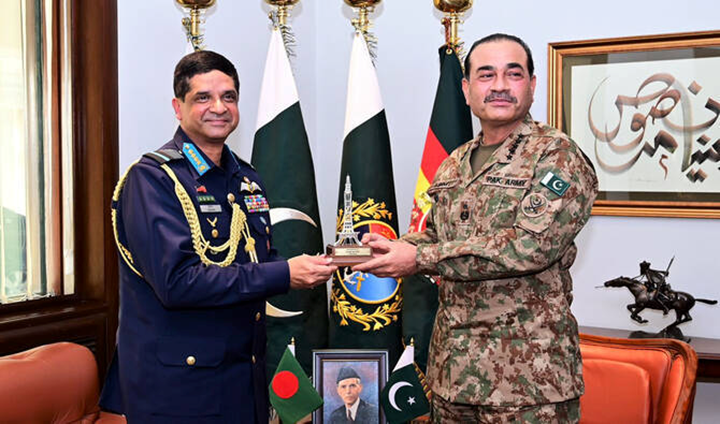
For the first time in five decades, Dhaka and Islamabad have established a joint mechanism to finalize the scope of a mutual defense agreement. This realignment has been marked by high-level military exchanges, including the first visit to Dhaka by a Pakistani intelligence chief (ISI) in over fifty years.
- Maritime Integration: The Bangladesh Navy, led by the BNS Samudra Joy, participated in Pakistan’s “AMAN-2025” naval exercise, marking a historic departure from past caution.
- The JF-17 Thunder Deal: Bangladesh is in advanced negotiations to procure as many as 32 to 48 JF-17 Thunder fighter jets from Pakistan. This acquisition would integrate Dhaka into the Pakistan-China technological ecosystem, offering a path to strategic autonomy and fleet modernization under its Forces Goal 2030 plan.
Trilateral Cooperation with China
In June 2025, a trilateral meeting between Pakistan, Bangladesh, and China in Yunnan solidified this shift, focusing on strategic defense collaboration and economic development. For Beijing, the inclusion of Bangladesh provides a critical advantage in the Bay of Bengal, while for Pakistan, it offers an opportunity to re-engage Dhaka as an equal partner in regional defense. This emerging axis is viewed with strategic vigilance by India, as it reshapes the regional chessboard and forces a recalculation of South Asian security dynamics.
Pakistan as a Conflict-Linked Arms Exporter: Libya, Sudan, and Iraq
Under the leadership of Field Marshal Asim Munir, Pakistan has transitioned into a consequential actor in the international arms market, specifically targeting regions of complex conflict and diversifying security partnerships. The “battle-tested” reputation of Pakistani hardware, bolstered by its 2025 performance against India, has made its equipment highly marketable.
The $4 Billion Libyan Defense Deal
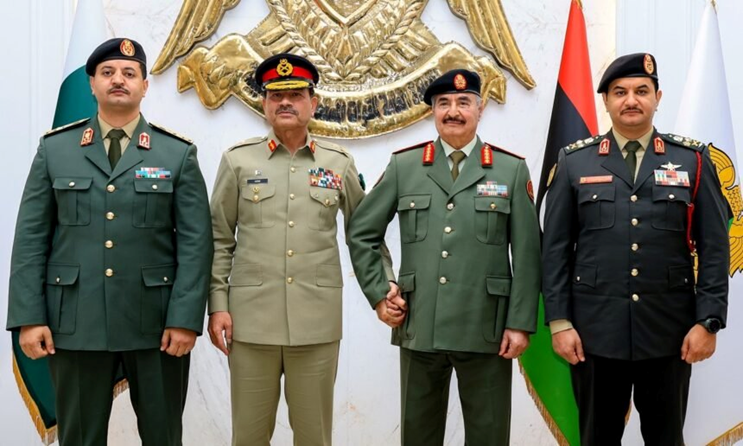
In December 2025, Pakistan reached a landmark $4 billion agreement with the Libyan National Army (LNA) commanded by Field Marshal Khalifa Haftar. This represents one of the largest arms deals in Pakistan’s history and includes the sale of 16 JF-17 fighter jets and 12 Super Mushshak trainer aircraft.
- Strategic Leverage: The acquisition of the JF-17 Block III provides the LNA with a significant air power advantage in the Libyan civil conflict.
- Political Complexity: Given the UN arms embargo on Libya, the deal is a highly sensitive diplomatic undertaking, requiring Pakistan to balance its professional military engagement with international legal frameworks.
The Sudan Arms Package and Saudi Intercession
Pakistan emerged as a vital supplier for the Sudanese Armed Forces (SAF) in their conflict against the Rapid Support Forces (RSF). A proposed $1.5 billion deal was effectively finalized in early 2026, reportedly brokered and financed by Saudi Arabia to bolster the national army.
- Package Details: The deal included 10 Karakoram-8 (K-8) light attack aircraft, over 200 reconnaissance and kamikaze drones, and advanced air defense systems.
- Sudden Suspension: By April 2026, the deal was placed on hold after Saudi Arabia withdrew financial backing. The collapse of the package underscores the decisive role of Gulf financing in shaping international arms agreements and the risks associated with Pakistan’s deal-driven activism.
Growing Interests in Iraq and Beyond
The Iraqi Air Force has signaled a keen interest in the JF-17 Thunder and Super Mushshak aircraft, following high-level visits by Pakistan’s Air Chief to Baghdad in early 2026. Iraqi commanders have lauded the professionalism of the Pakistan Air Force (PAF) and expressed a desire for joint training, capacity building, and world-class pilot training solutions.
Kinetic Success: Operation Bunyanun Marsus (May 2025)
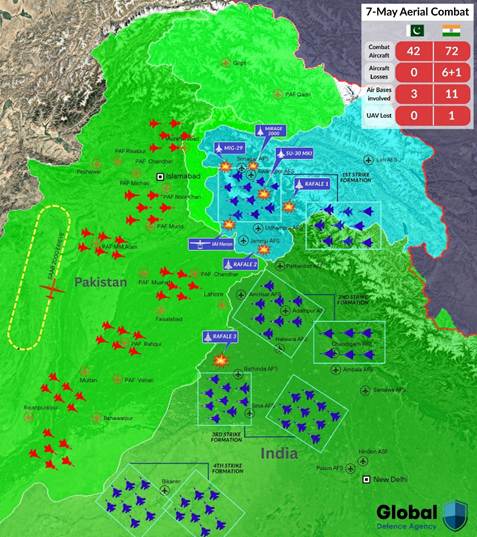
The credibility of Pakistan’s defense posture was profoundly reinforced by the successful execution of Operation Bunyanun Marsus (Arabic for a solid wall of lead), launched on May 10, 2025. The operation was a retaliatory response to a multi-day Indian assault on Pakistani territories following a terrorist attack in Pahalgam.
Air Warfare and Counter-Air Campaign
The operation featured the largest air dogfight in history, involving approximately 125 jets. The PAF, deploying high-tech aircraft including the JF-17 and J-10C, maintained air sovereignty for over 60 minutes. Pakistan claimed the destruction of five Indian aircraft, including three Dassault Rafale jets, the premier assets of the Indian Air Force, as well as a MiG-29 and a Su-30MKI. Notably, the PAF reported that not a single one of its aircraft was damaged by India’s S-400 air defense system, despite its global reputation.
Multi-Domain Degradation
Operation Bunyanun Marsus was not limited to air combat; it involved a comprehensive missile and cyber offensive that targeted critical Indian infrastructure:
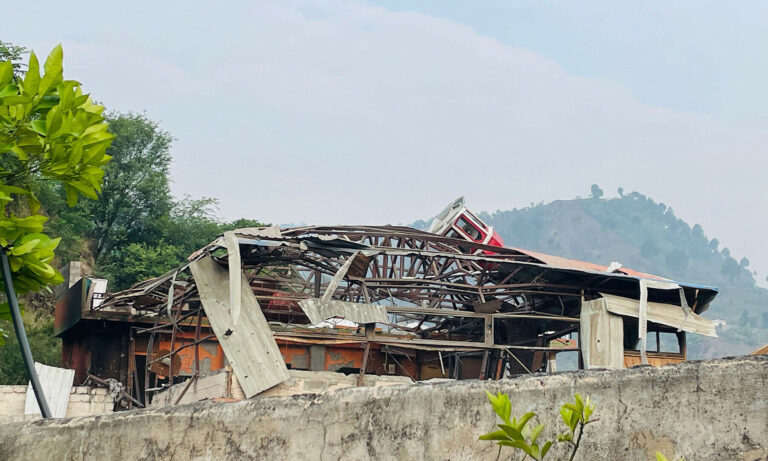
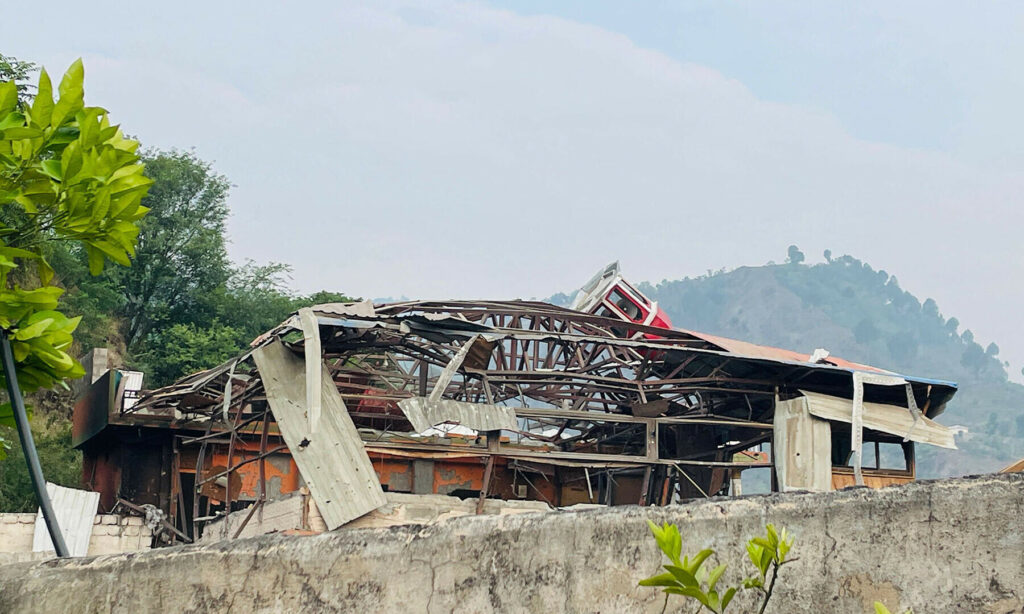
- Kinetic Strikes: Targets included the S-400 air defense system in Udhampur, BrahMos missile depots in Beas and Nagrota, and several key airbases including Pathankot and Adampur.
- Cyber Warfare: A significant digital offensive disabled 10% of India’s SCADA network and caused 70% of the Northern Grid to go offline. The digital network of Indian Railways and gas supplies in Delhi were also reportedly disabled.
The operation’s impactful execution forced an immediate ceasefire brokered by the United States and catalyzed interest from global buyers who viewed the performance of Pakistani platforms as a definitive windfall for the country’s defense industry.
Counter-Terrorism Enforcement: Operation Ghazab Lil Haq (2026)
In February 2026, Pakistan launched Operation Ghazab Lil Haq (Righteous Fury) against the Taliban regime in Kabul and Tehreek-e-Taliban Pakistan (TTP) militants. The operation signaled a major doctrinal shift from defensive deterrence to a punitive, aggressive stance designed to force a “behavioral change” within the Afghan Taliban leadership.
Tactical Achievements and Humanitarian Impact
The operation has dealt a devastating blow to militant networks operating from Afghan soil:
- Combat Results: Nearly 800 terrorists were killed, and over a thousand were injured since the launch on February 26.
- Infrastructure Destruction: Aerial strikes targeted 81 terrorist infrastructure locations, and over 180 check posts used as launch pads for attacks were destroyed.
- Border Control: In North Waziristan, Pakistani soldiers successfully crossed the border to capture the Afghan Taliban’s Markaz Post, clearing compounds and downing enemy flags in broad daylight.
Strategic Objectives and the New Normal
Operation Ghazab Lil Haq is framed as an open war by Islamabad, with the duration of operations depending entirely on Kabul’s verifiable actions to dismantle terrorist networks. The military has explicitly stated its lack of interest in regime change, focusing instead on the self-defense of Pakistani citizens, mosques, and children. This kinetic enforcement is paired with diplomatic pressure via negotiations in China, signaling a dual approach to ending the Taliban threat from Afghan soil permanently.
Mediation and Global Standing: The Peacemaker Role
In addition to its military and industrial push, Pakistan has successfully leveraged its relative neutrality to act as a global peacemaker. In mid-April, Islamabad hosted the historic “Islamabad Talks” at the Serena Hotel, the first direct, high-level engagement between the United States and Iran since 1979. Aimed at de-escalating the Iran War and reopening the Strait of Hormuz, the talks were moderated by a Pakistani team led by Prime Minister Shehbaz Sharif and Field Marshal Asim Munir.
Seizing the opportunity created by a multipolar order, Pakistan has used its military heft to counterbalance economic vulnerabilities, projecting itself as an indispensable stabilizer. Field Marshal Munir’s personal shuttle diplomacy to Tehran was instrumental in brokering an initial two-week ceasefire and navigating the complex whole-of-the-system mediation required to engage both Iran’s civilian and security leadership. While a permanent deal remains elusive due to a renewed U.S. naval blockade and disputes over maritime traffic, Pakistan’s sophisticated kinetic diplomacy has firmly integrated military credibility with high-level negotiation, making Islamabad the central node for Middle Eastern security architecture. As of 25th April 2026, there are concrete efforts for a second push to facilitate the mediation process through a second round of intensive talks.
Pakistan: A Middle Power Security Guarantor
The trajectory of Pakistan’s national security and foreign policy between 2024 and 2026 marks a definitive departure from its legacy as a frontline state toward a more assertive role as a Middle Power security hub. By pivoting away from a posture of dependency and toward one of strategic autonomy, Pakistan has successfully commodified its military credibility, technological advancements, and geographical positioning to create a new paradigm of regional influence. This transition is evidenced by the emergence of Pakistan as a potential security guarantor in the Gulf; formalized agreements like the Strategic Mutual Defense Agreement (SMDA) with Saudi Arabia and burgeoning pacts with Qatar and Bahrain signify that Gulf monarchies now view Islamabad as a vital pillar of their collective defense. By offering sovereign security umbrellas and exporting battle-tested solutions, such as the JF-17 Block III, Pakistan has effectively moved from being a buyer of security to a net provider of it, offering states a path to high-tech defense independent of traditional global powers.
Furthermore, the successful facilitation of the historic Islamabad Talks between the United States and Iran in April 2026 acts as a force multiplier for Pakistan’s global standing, redefining its value proposition to the international community. By hosting the first direct, high-level engagement between these rivals since 1979, Pakistan has proven it possesses the unique relative neutrality required to bridge seemingly irreconcilable gaps. This sophisticated kinetic diplomacy, which integrates Field Marshal Munir’s military credibility with high-level civilian negotiation, positions Islamabad as the central node in a new Middle Eastern security architecture. As the chief potential facilitator for the reopening of the Strait of Hormuz, Pakistan has elevated its status from a regional player to an indispensable global stabilizer, converting its security value into immense diplomatic and strategic capital in a multipolar world.

Syed Abdullah Anwer is a leading legal expert and international media analyst appearing regularly on platforms such as Russia Today (RT) and TVRI World. As a Senior Associate at TAHOTA Law Firm and a CIArb-accredited neutral, he offers authoritative insights into the intersection of regional geopolitics, treaty obligations, and international diplomacy. He is widely recognized for his unique ability to navigate the legal complexities of the China-Pakistan Economic Corridor (CPEC) and maritime law.