The Human Rights World Report 2026 is a wakeup call, and an eye-opener of a world in transition; a world where the rules-based international order is being undermined from within. Although the executive summary of the report describes a “generation-defining challenge” to halt a wave of authoritarianism in big powers, the most terrifying manifestation of the failure is observed in the growing conflict zones across the globe. From the depths of Africa to the shores of Europe and in the streets of the Caribbean, 2026 shows the world a global order characterized by the normalization of the unthinkable.
Sudan: The World’s Worst Humanitarian Catastrophe
The 2026 report presents Sudan as the epicenter of global agony. The current war between the Sudanese Armed Forces (SAF) and the Rapid Forces (RSF) has pushed close to 25 million people into a state of acute hunger, and famine has been officially announced in North Darfur. The report records an ongoing cycle of atrocity, particularly with reference to the collapse of El Fasher in late 2025, when RSF troops were involved in mass extrajudicial executions and organized sexual violence.
Sudan is an example of the so-called death of accountability, discussed in the preface to the report. Although the war has been documented with war crimes such as the use of starvation as a weapon, the international response has been described as staggeringly negligent. The report points out that the global powers have been unable to do anything despite the evidence of mass graves appearing in Khartoum, and the conflict has become the biggest displacement crisis on earth.
Afghanistan: Institutionalized Gender Apartheid
A dismal picture of Afghanistan is drawn by the 2026 report, the only nation in the world that officially prohibits girls and women from receiving a secondary and university education. In 2025, the Taliban further extended what the UN experts termed as gender apartheid by presenting the Law on the Promotion of Virtue and the Prevention of Vice. It is a draconian code that does not allow the voices of women to be heard in society and mandates strict face-covering, effectively erasing women from the public sphere.
On top of the social repression, there is a humanitarian crisis in Afghanistan. The report shows that over 22 million individuals are facing food insecurity due to a colossal reduction of foreign aid and repatriation of over 2.6 million refugees. The shutting down of more than 400 health facilities because of insufficient funds has resulted in the vulnerable having almost no access to life-saving care services.
Kashmir: The Information Black Hole
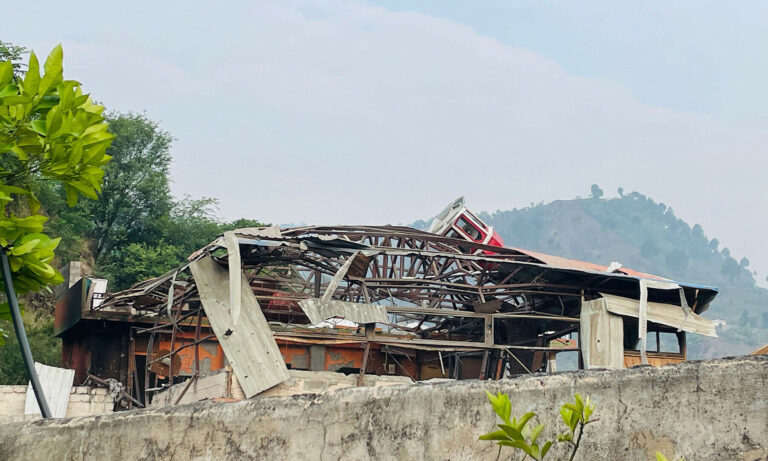
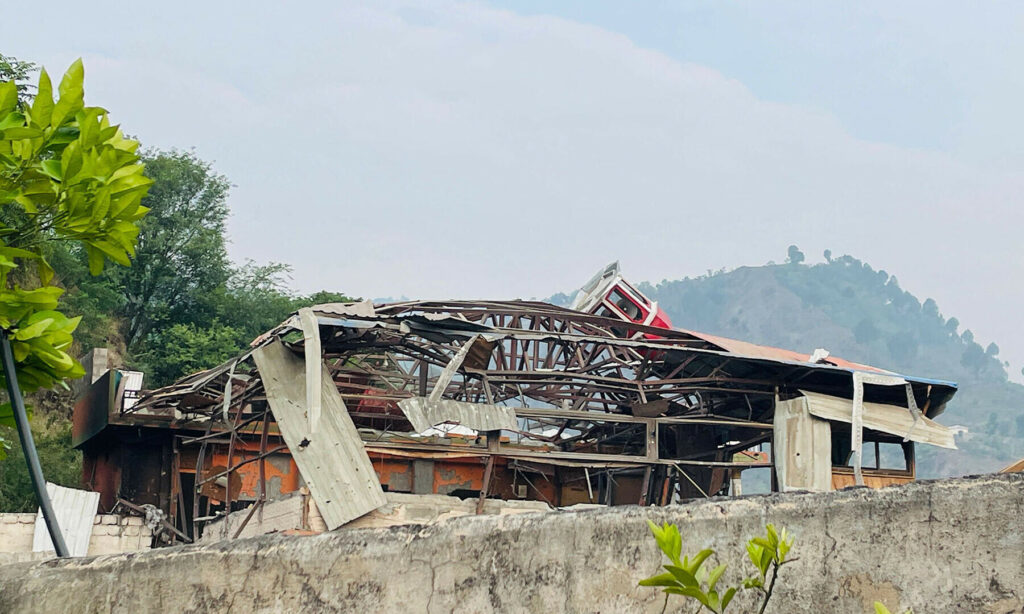
The report describes a worsening crisis in Jammu and Kashmir in South Asia. After the revocation of the autonomy of the region in 2019, HRW claims that the region has become an information black hole. Although the 2024 regional elections were being sold as a restoration of normalcy, the report explains that it was a veneer of democracy because a lot of power was redistributed in favor of a New Delhi-appointed lieutenant governor right before the elections.
A spiral of impunity, the Armed Forces (Special Powers) Act (AFSPA) defines the human rights situation. Cases of arbitrary arrests, including the arrest of journalists and human rights activists such as Khurram Parvez, are documented in the report under the Unlawful Activities Prevention Act (UAPA). Moreover, the report also sheds light on the concept of communalization of retribution, noting how incidents in Kashmir are used to fuel mob attacks against Kashmiris across other Indian states.
Myanmar: Surge in Atrocities Five Years Post-Coup
In Southeast Asia, the Myanmar military junta has reacted to massive losses of territory with a campaign of scorched-earth desperation. Five years after the 2021 coup, the report documents a rise in the number of atrocities carried out by the junta, including the use of motorized paragliders to make indiscriminate attacks on civilian villages.
The new disturbing trend in Myanmar mentioned in the report is the forced recruitment of the vulnerable. Since the 2024 conscription law was fully implemented, the junta is creating forced labor and human shields out of the Christian minority and the Rohingya minority. The report warns that the junta’s plan for sham elections in early 2026 is a fraudulent claim for credibility that will likely trigger even further violence.
Ukraine: The Escalation of Direct Attacks
Though the global community has sometimes seemed to miss it, 2025 was the most lethal year to Ukrainian civilians since the invasion. In 2025 alone, Russian strikes killed and injured almost 15,000 civilians, 30% more than last year. The report focuses on the weaponization of winter, documenting waves of strikes on energy facilities.
Perhaps most chilling is the documentation of “drone hunting” in Kherson, where Russian forces have allegedly used quadcopter drones to systematically track and kill individual civilians. Such a technological advancement in war is what the UN Commission of Inquiry refers to as crimes against humanity.
Gaza and Palestine: A Crisis of International Law
The 2026 report addresses the catastrophic situation in Gaza with unprecedented gravity. It records the complete failure of the health care system and asserts that the deliberate deprivation of survival needs constitutes crime against humanity of extermination.
The report focuses on the crisis of consistency among the Western democracies. The report contends that by still supplying arms even with obvious signs of war crimes, countries such as the US and UK have grossly compromised their authority to impose morality. This two-sided approach has turned into one of the main weapons that autocrats employ to discredit human rights as a Western political means.
Haiti: The Rise of the Gang-State
In the Americas, the report points to the total disembowelment of state power in Haiti. The capital is now dominated by criminal gangs that control 85% of the capital and exercise control over the city through a campaign of organized sexual violence and kidnapping that displaced more than 700,000. The report has recorded the predatory exploitation of children, with the recruitment of children increasing by an estimated 70% as gangs occupy the gap left by the collapse of the national police force.
Extreme hunger and the closing of more than 900 schools have forced thousands of children to join gangs since schools have been transformed into recruitment centers. Moreover, the report highlights a cycle of double victimhood because Haitians escaping this violence are often met with mass deportations by neighboring states, often being sent directly back to ports controlled by the very gangs they escaped.
Conclusion
It is the gender apartheid in Afghanistan, the information black hole in Kashmir, or the famine of intent in Sudan; the 2026 World Human Rights Report documents a world in which the floor of human decency is being eroded. In his introductory keynote as Executive Director, Philippe Bolopion cautions that the world is facing a “generation-defining challenge” as leading powers are progressively swapping basic rights in favour of short-term political and transactional gains. Inevitably, the fraying fabric of international rights will completely unravel unless the international community begins to see these conflicts as signs of a systemic failure, not as isolated tragedies.

Our Editorial Desk is the intellectual engine of Digital Debate, responsible for the rigorous research that anchors every conversation. Our team deep-dives into data, checks every source, and consults academic literature to move beyond headlines and identify the questions behind the questions.