What if the next nuclear crisis doesn’t start with an attack, but with a fake report of an attack? A fake warning of a military emergency, altered battlefield footage, or a believable fabricated official statement could go viral before governments determine what actually happened. Digital platforms can spread misleading claims before they are verified. According to the SIPRI Yearbook 2026, the risks of nuclear escalation are increasing. Reliable information is therefore increasingly important to nuclear crisis management.
Misinformation can spread without an intention to deceive, while disinformation is deliberately designed to mislead. Both may affect public expectations during the crises. The United Nations principles for information integrity clarify how fast-spreading falsehoods can erode the trust in the information environment. But rumors and intelligence gathered by the nuclear decision makers are not of the same quality and are not shared amongst the public. Governments have identified sources and procedures. The risk increases when misleading information creates political pressure, fake official messages cause confusion, or false reports influence important decisions that must be made in a short time.
Whether rival states accurately perceive each other’s capabilities and intentions is a key factor in nuclear deterrence. Crisis stability is when neither the states wish to take the plunge in case of crisis. The United Nations Institute for Disarmament Research identifies misperception as one of the chronic nuclear dangers, along with failures of communication. These problems can arise without deliberate deception. Experimental studies conducted at Carnegie Endowment indicate that in some instances the chance of rash military decisions might be raised by uncertainty on whether a missile contains a nuclear or a conventional warhead. If the alert is false, more chaos will develop in the already turmoil of a military mobilization.
The manipulation of information can take place on multiple pathways that are interconnected. Photographs of “troop movements” can be misleading and underscore a perceived threat in the moment. Such a claim, if it had been concocted by a defense official, could be troublesome for diplomatic signaling. Repeated television or social media claims may make restraint appear politically costly. Artificial intelligence increases realism, even documents with edits and re recordings become convincing. A 2025 SIPRI assessment of military artificial intelligence separately warns of how automated decision support can shorten decision time. The 2026 SIPRI study on multidomain escalation identifies information operations as one of the new challenges to nuclear stability.
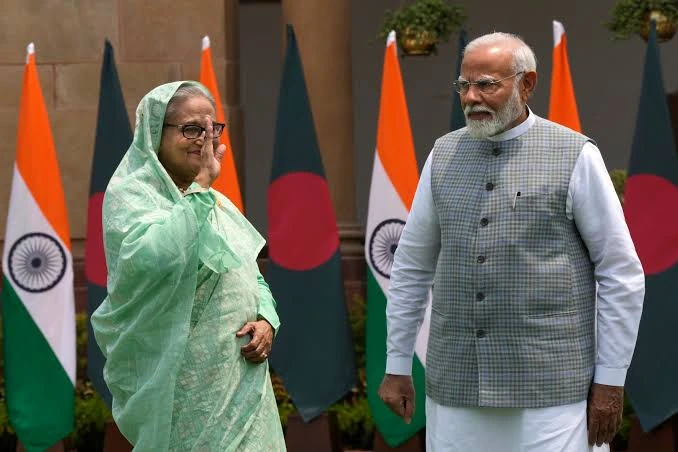
The May 2025 standoff between India and Pakistan illustrates how disinformation may affect the military situation, even though it remains unclear whether it impacted the nuclear scenario in any way. On 22 April 2025, there was an attack on Pahalgam, after which both the countries engaged in military operations between 7 and 10 May. This was the most escalatory military move between the two countries in decades, according to the International Institute for Strategic Studies. While military operations created the immediate danger, false claims and conflicting reports made the situation more difficult to assess.
The Institute for Strategic Dialogue found a false claim regarding the “destruction” of Karachi port that went viral with around 2 million views on X. It also documented a “video manipulation” where one Pakistani military spokesperson admitted the loss of fighter aircraft. The independent fact checking organization BOOM found that the audio in the video was AI-generated. Fabrications are important as misinformation regarding the position of a military official during a crisis may be taken as a sign of official direction.
Rumours about strategic facilities are especially sensitive. A Stimson Center assessment claims that India attacked Pakistan’s Kirana Hills region, which some sources have identified online as a nuclear storage site. It pointed out that there is little evidence of the strike, which India has denied. Meanwhile, Full Fact has pointed out the out-of-context images and footage used as examples of contemporary combat. Neither example establishes that military leaders acted on a false report. Rather, they demonstrate how “accusations of attacks and strategic assets” can be a component of an unstable information environment.
The Reuters Institute documented how misleading claims spread on television as well as social media, complicating fact-checking. A 2025 study by the Center for the Study of Organized Hate examined misleading narratives across social platforms during the confrontation. But no evidence of a direct link is identified between online misinformation and nuclear decision making. As a 2026 Carnegie analysis of South Asian crises suggests, interpreting signals between these rivals is difficult even without manipulated information. The wider lesson applies to any nuclear armed adversaries facing mistrust and pressure to respond.
The fallout from nuclear escalation may be much more serious than the misinformation that led to it. The International Committee of the Red Cross estimates that a nuclear detonation near a populated area could result in “massive casualties due to blast, heat, radiation and disrupt critical medical services. Hospitals, transport networks and water supplies could be destroyed, at the time survivors are most in need. The impact of radiation exposure may result in a loss of life and bring about long term health effects; destruction of homes and basic services may result in forced relocation from the community. Civilians, including children, would suffer the greatest harm despite having no role in military decisions.
The impacts of any nuclear exchange would not be limited to the battlefield. A 2022 study published in Nature Food explored the implications of nuclear fire smoke for climate and global food production. One India-Pakistan scenario estimated that over two billion people might perish due to food shortages. However, this estimate is based on a model with specific assumptions rather than a prediction of an actual conflict. The study illustrates the impacts of regional nuclear war on crop yields, food supply and hunger in distant nations. Nuclear misperception, therefore, is a global issue of humanitarian importance.
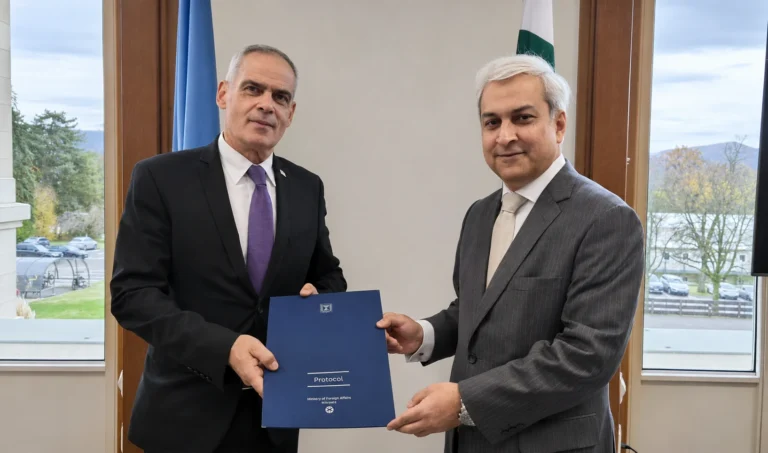
The current safety mechanisms can be strengthened diplomatically. In January 2026, India and Pakistan exchanged their list of nuclear installations for the year. Their agreement on advance notification of ballistic missile tests also helps reduce the risk of misunderstanding. The deals provide evidence that even hostile nations can join forces to minimize the nuclear threat. The same cross-border coordination is required to confirm reports of attacks on nuclear installations and other strategic sites, particularly as fake allegations quickly proliferate via social media.
One practical step is setting up a confidential verification process for sensitive claims, with an authorized official. Any report of missile launches, attacks on nuclear facilities or change in nuclear readiness should be verified promptly by way of secure communication channels. The images themselves and the use of automatic systems should not be the sole criteria for governments to assess the legitimacy of such reports. The ability to act fast and effectively is essential during wartime so that any move may be made to counter the real attack. Routine crisis management drills could help officials make sure that the right people receive and understand the real message.
The protection of public information is also required. Media must be able to distinguish between real military achievements and any falsehoods, and publicly correct any mistakes. Digital platforms must review videos that seem to depict military and political leaders but do not actually show them. The UNESCO guidelines for digital platform governance provide possibilities to fight misinformation without breaking the principles of freedom of speech. These measures must not restrict the freedoms of the press and the right to the truth.
Fake crisis communications must be discussed internationally. UN General Assembly Resolution 80/23, adopted in December 2025, increased the need for human oversight of nuclear command systems using artificial intelligence. However, when officials get the incorrect information, only the human factor can help to detect the mistake. Nuclear-armed countries should agree on the obligation to refrain from disinformation related to nuclear attacks or interfere with official warnings of a nuclear strike. Although such agreements are quite difficult to monitor, they may decrease the probability of misunderstanding.
Even if the disinformation itself does not cause nuclear war, it could increase the uncertainty of already unstable situation. It is important to safely navigate communication, verification and independent reporting. Foreign policy will not guarantee the accuracy of all reports, but it will help to ensure that the Military does not make irreversible decisions due to false information. Finding out later that the nuclear warning had been false would provide little consolation following the catastrophe.

Humair Naeem
Humair Naeem is an MPhil scholar in Defence and Strategic Studies at the National Defence University, Islamabad. He holds a bachelor's degree in Social Sciences, with majors in International Relations and Development Studies. His research interests include strategic stability, nuclear deterrence, emerging technologies, and international security. He has previously worked with government institutions, diplomatic missions, research think tanks, and UN-affiliated initiatives.