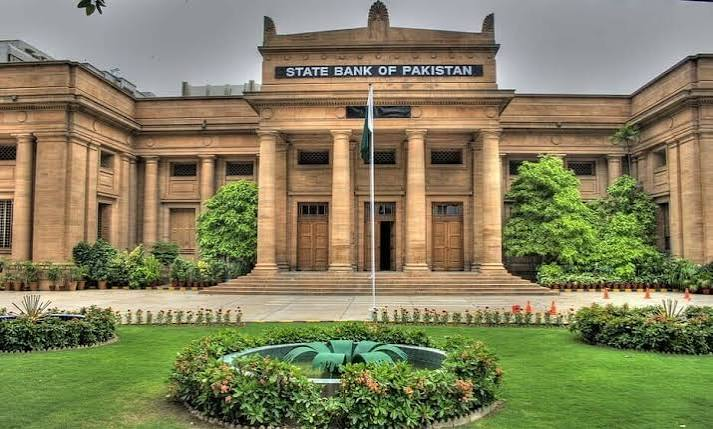
In July, when the State Bank of Pakistan worked out how fast prices would rise this financial year, it pencilled in oil at $80 a barrel. By late October, the Governor was telling reporters that oil had stayed above $100.
That gap is why the central bank now says it will scrap its inflation forecast and write a new one in January. The revision will not change what households already pay. But it will shape what comes next: how long borrowing stays expensive, what the June budget assumes, and how Pakistan’s numbers look to the IMF.
In One Line. Oil has outrun the State Bank’s assumptions, so January’s forecast is likely to be higher, and the wait for 5–7% inflation longer.
The Number Everyone Misread
When the State Bank published its annual report on 16 November, the headlines in Dawn and The News said inflation would ease to 5–7% this year. That is not quite what the Bank said.
Five to seven per cent is the Bank’s medium-term target, the band it is aiming for. Its press release says only that inflation should “gradually ease towards” it.
The forecast proper is a different number. In its August Monetary Policy Report, the Bank projected average inflation of 5.5–7.5% in FY27, on the assumption that oil would average $80 a barrel. The annual report, Arab News reported, says this range “will be revised in January 2027”. January is when the Bank routinely updates its projections, after its 25 January policy meeting. What is unusual is that it has warned in advance that the number will move.
The rest of the Bank’s outlook stands for now: growth of 3.5–4.5% and a current account deficit of up to 1% of GDP. Prices have risen at double-digit rates since April, after the Middle East war began in late February. In October, inflation eased to 9.6%.
A Rule of Thumb, and What It Implies
Buried in the annual report is a telling number. In a box on the second-round effects of the energy shock, the State Bank estimates that a 10% rise in global energy prices adds about 1.2 percentage points to headline inflation a year later, and the effect lingers for two years. Food inflation rises by 1.3 points and core inflation by 0.7, figures Arab News also reported.
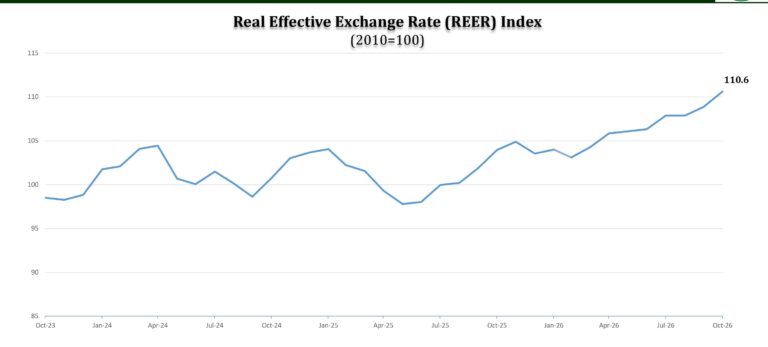
Oil above $100 is at least 25% dearer than the Bank assumed in July. Apply the rule of thumb in a straight line, and inflation would run roughly 3 points above the July forecast.
That is DD’s arithmetic, not the State Bank’s, and economies seldom move in straight lines. The exchange rate, subsidies and government-set prices can soften or sharpen the blow. But it shows why the Bank could not leave its forecast alone.
Where the Shock Shows Up
For households, the oil shock is not an abstraction. It arrives in the kitchen and at the petrol pump. In October, prices overall were 9.6% higher than a year earlier. Cooking gas was up by more than two-thirds.
| October 2026 CPI item | Change on a year earlier |
| Headline CPI | 9.6% |
| Liquefied hydrocarbons (LPG) | 69.1% |
| Motor fuel | 41.3% |
| Electricity charges | 22.9% |
| Wheat | 39.0% |
| Core inflation, urban (non-food, non-energy) | 7.8% |
The gap between the headline and the core rate matters. Much of the pressure is arriving through imported fuel rather than building at home, and that is the part of inflation a central bank can do least about.
Figures are from the Pakistan Bureau of Statistics, as reported by Business Recorder on 3 November.
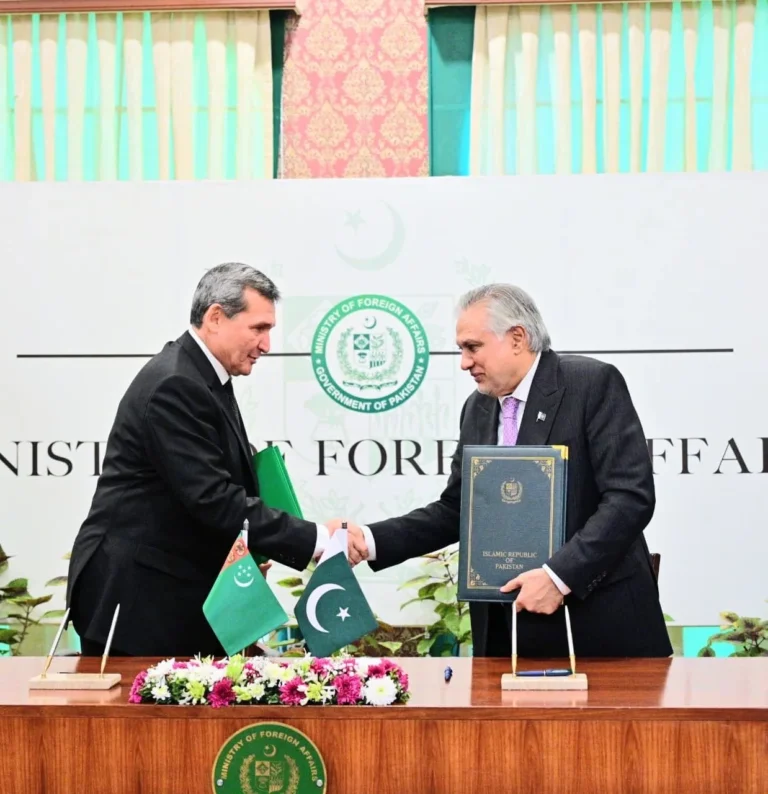
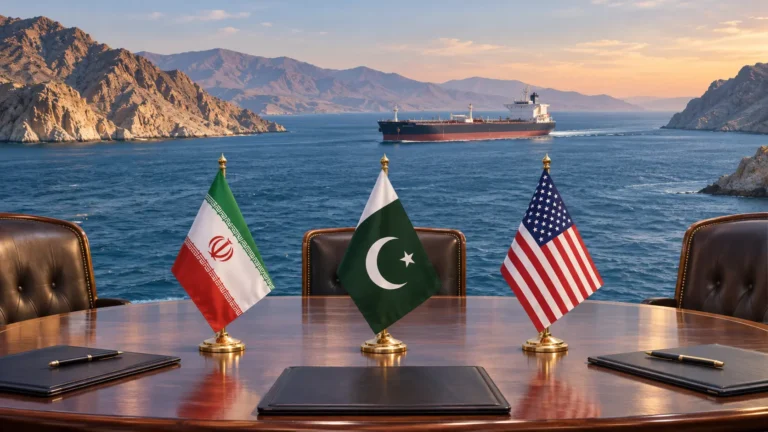
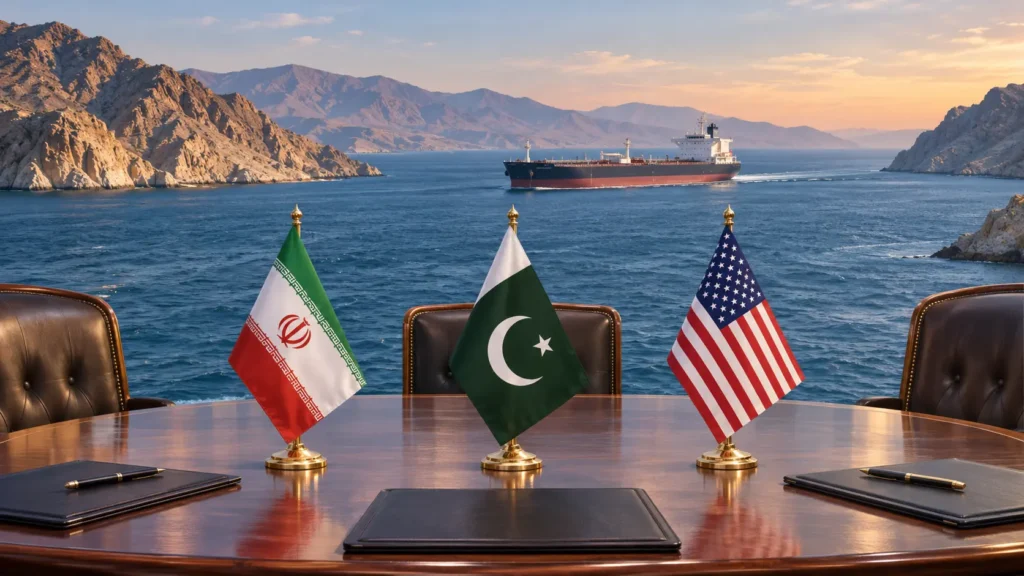
The wild card is the Strait of Hormuz. Its closure has driven up oil prices and hurt Pakistan’s economy. Iran has proposed reopening it, and Pakistan, a mediator, is still waiting for Washington’s reply. Until that reply comes, nobody, the State Bank included, can be sure what oil will cost.
What It Means for Borrowers, the Budget and the IMF
A higher forecast is bad news for anyone hoping for cheaper loans.
In October the State Bank raised its policy rate by half a point to 12%, after holding it at 11.5% in September. Nine of the ten members of its Monetary Policy Committee voted for the rise, and the tenth wanted a bigger one. A higher inflation forecast makes an early cut unlikely and leaves room for another rise.
The forecast also runs through the budget. Press coverage of the report puts this year’s fiscal deficit at 3–4% of GDP. Higher inflation raises the cost of subsidies and of interest on government debt, and those bills will land in the June 2027 budget.
Then there is the IMF. On 8 October, Pakistan and the Fund reached a staff-level agreement worth about $1.2bn: roughly $1bn from the fourth review of the $7bn Extended Fund Facility and about $210m from the climate-focused Resilience and Sustainability Facility. Finance Minister Muhammad Aurangzeb has confirmed that the IMF Executive Board will meet in December to approve the money. A higher inflation path will be part of the backdrop when the Fund next looks at Pakistan’s numbers.
What the State Bank Is Saying
The Bank has been blunt about the cause. “The inflation outlook deteriorated significantly because of the ongoing geopolitical crisis,” Governor Jameel Ahmad said on 26 October.
On the same day, its policy committee said the Middle East conflict was “keeping global energy prices at persistently elevated levels”.
Three weeks later, the annual report said the energy shock was “anticipated to exert upward pressure on inflation”. It also said the forecast range “will be revised in January 2027 to account for higher oil prices”.
What to Watch in the Next Six to Twelve Months
- Early December, November’s inflation figure. The Pakistan Bureau of Statistics releases it at the start of the month. A second fall below 9.6% would suggest the shock is easing. A rise would point to a bigger revision in January.
- 14 December, the next rate decision. The Monetary Policy Committee meets on 14 December, with no press conference scheduled. The question is whether it holds at 12% or raises again.
- 25 January, the new forecast. The Committee’s January meeting brings a press conference and revised projections, followed by a Monetary Policy Report on 8 February. Watch the new oil assumption, the size of the revision, and whether the Bank still expects inflation to reach its 5–7% target in FY27 or quietly pushes that into FY28.
Before Publishing
- ☐ Second review, per house rules
All facts checked on 18 Nov against SBP documents (August 2026 Monetary Policy Report, Annual Report FY26 Chapter 3, MPC calendar, October Monetary Policy Statement) and named press reports. The roughly 3-point illustration is labelled in the text as DD’s own calculation.
Pairing. An Infolytics graphic on how oil feeds into inflation, showing the $80 assumption, oil above $100 and the SBP’s 10% sensitivity estimate. A Quick Byte on what the January revision means for borrowers.
Sensitivity. No embassy angle. Mention Gulf oil supply and Hormuz neutrally; no blame on any country.
Sources
- SBP Releases Annual Report on The State of Pakistan’s Economy, SBP press release, 16 Nov 2026
- Monetary Policy Statement, SBP Monetary Policy Committee, 26 Oct 2026
- Pakistan central bank flags inflation forecast revision as Mideast war lifts energy costs, Ismail Dilawar, Arab News, 17 Nov 2026
- SBP says inflation to ease to 5-7pc target range during FY2027, Dawn/Reuters, 16 Nov 2026
- SBP projects inflation at 5-7% during FY27, The News, 16 Nov 2026
- SBP hikes policy rate to 12% on inflation, energy price concerns, Business Recorder, 26 Oct 2026
- Oct CPI rises 9.6pc YoY, Abdul Rasheed Azad, Business Recorder, 3 Nov 2026
- Pakistan vows to proceed with US-Iran diplomacy, urges Afghanistan to act on terrorism, Arab News/AP, 17 Nov 2026
- Monetary Policy Report, August 2026, State Bank of Pakistan
- Monetary Policy Committee meeting calendar, State Bank of Pakistan
- Pakistan, IMF reach staff-level agreement for $1.2bn tranche, Khaleeq Kiani, Dawn, 8 Oct 2026
- The State of Pakistan’s Economy, Annual Report FY26, Chapter 3, State Bank of Pakistan
- IMF to consider approving $1.2b disbursement for Pakistan next month, Imran Ali Kundi, The Nation, 8 Nov 2026

DD Briefs
Digital Debate is an independent policy and governance platform examining the structural questions facing Pakistan. Its research programme covers federalism, public finance, human security and institutional reform.